

2 Pence – Scotland
United Kingdom
Context
Years: 1677–1679
Country: United Kingdom 
Issuer: Scotland 
Ruler: Charles II
Currency:
(1136—1707)
Demonetized: Yes
Material
References
KM: #Click to copy to clipboard114
Numista: #43470
Obverse
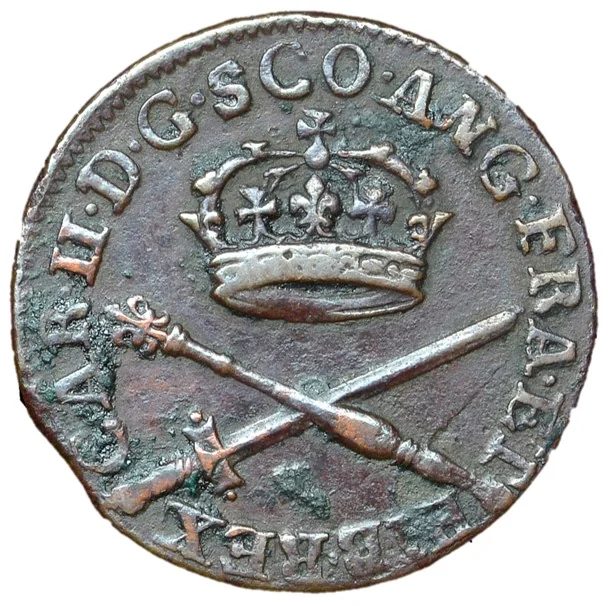
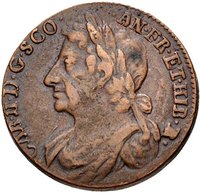
Description:
Crowned sword and sceptre crossed.
Inscription:
CAR · II · D · G · SCO · ANG · FRA · ET · HIB · REX
Script: Latin
Reverse
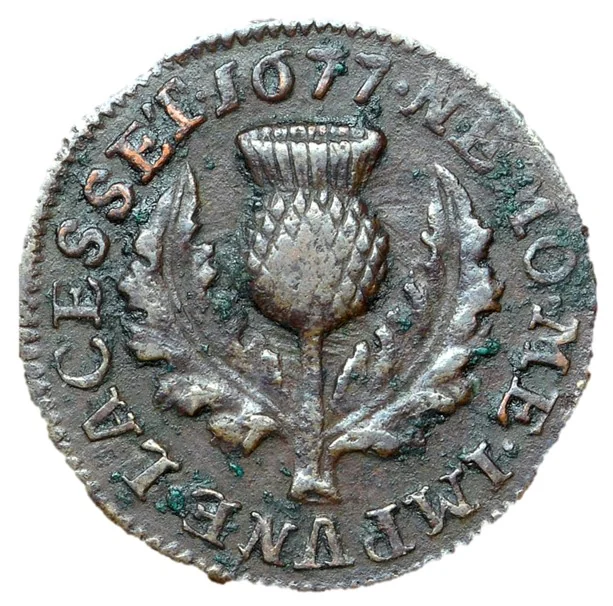
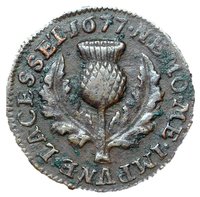
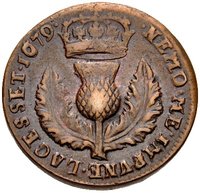
Description:
Thistle: a spiny, flowering weed.
Inscription:
· NEMO · ME · IMPVNE · LACESSET · 1677
Script: Latin
Edge
Plain
Mints
| Name | Mark |
|---|---|
| Edinburgh | — |
Mintings
| Year | Mint Mark | Mintage | Quality | Collection |
|---|---|---|---|---|
| 1677 | — | — | ||
| 1678 | — | — | ||
| 1679 | — | — |
Historical background
In 1677, Scotland operated under a distinct and often precarious monetary system separate from its southern neighbour, England. The official currency was the Scottish pound (Scots), which had been pegged at a fixed exchange rate of 12:1 with the English pound sterling since 1603. However, this official parity belied a stark economic reality, as the Scots pound's actual market value was significantly lower due to decades of economic weakness, trade deficits, and past debasements. The circulating coinage was a limited and chaotic mix, heavily reliant on foreign specie, particularly French écus, Dutch rijksdaalders, and Spanish-American pieces of eight, which were essential for international trade.
The domestic coinage in circulation was largely outdated and insufficient. While Charles II had authorised a Scottish mint in 1663, its output of coins like the merk (13 shillings and 4 pence Scots) was inadequate for the needs of the economy. Consequently, there was a severe shortage of small-denomination coins for everyday transactions, a problem that hampered local commerce. To cope, people often resorted to cutting foreign silver coins into segments or using promissory notes and tokens issued by merchants and burghs, leading to a fragmented and unreliable medium of exchange.
This unstable monetary environment reflected and exacerbated Scotland’s broader economic challenges in the late 17th century. The scarcity of sound coinage constrained domestic trade and investment, while the weak Scots pound made imports more expensive. The situation created persistent pressure for monetary reform, which would culminate two decades later in the ill-fated Darien Scheme—a desperate attempt to acquire foreign specie—and ultimately pave the way for the full monetary union with England established by the Treaty of Union in 1707.
The domestic coinage in circulation was largely outdated and insufficient. While Charles II had authorised a Scottish mint in 1663, its output of coins like the merk (13 shillings and 4 pence Scots) was inadequate for the needs of the economy. Consequently, there was a severe shortage of small-denomination coins for everyday transactions, a problem that hampered local commerce. To cope, people often resorted to cutting foreign silver coins into segments or using promissory notes and tokens issued by merchants and burghs, leading to a fragmented and unreliable medium of exchange.
This unstable monetary environment reflected and exacerbated Scotland’s broader economic challenges in the late 17th century. The scarcity of sound coinage constrained domestic trade and investment, while the weak Scots pound made imports more expensive. The situation created persistent pressure for monetary reform, which would culminate two decades later in the ill-fated Darien Scheme—a desperate attempt to acquire foreign specie—and ultimately pave the way for the full monetary union with England established by the Treaty of Union in 1707.
💎 Very Rare