

½ Penny – Ireland
Ireland
Context
Material
References
KM: #Click to copy to clipboard91
Numista: #26728
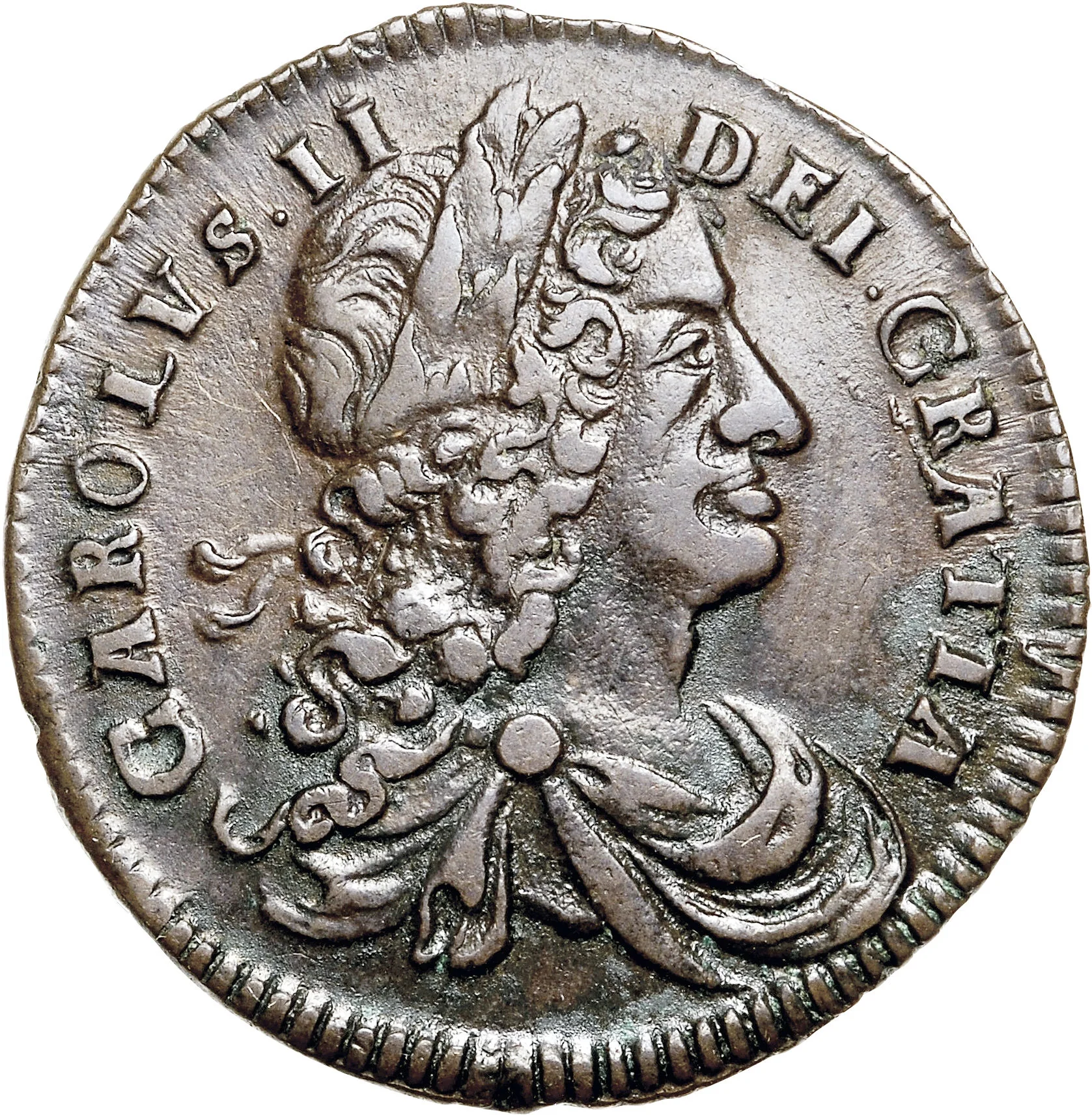
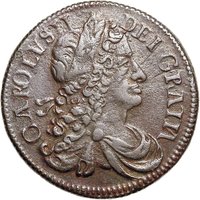
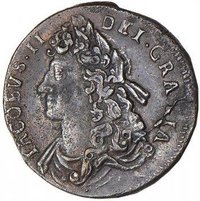
Obverse
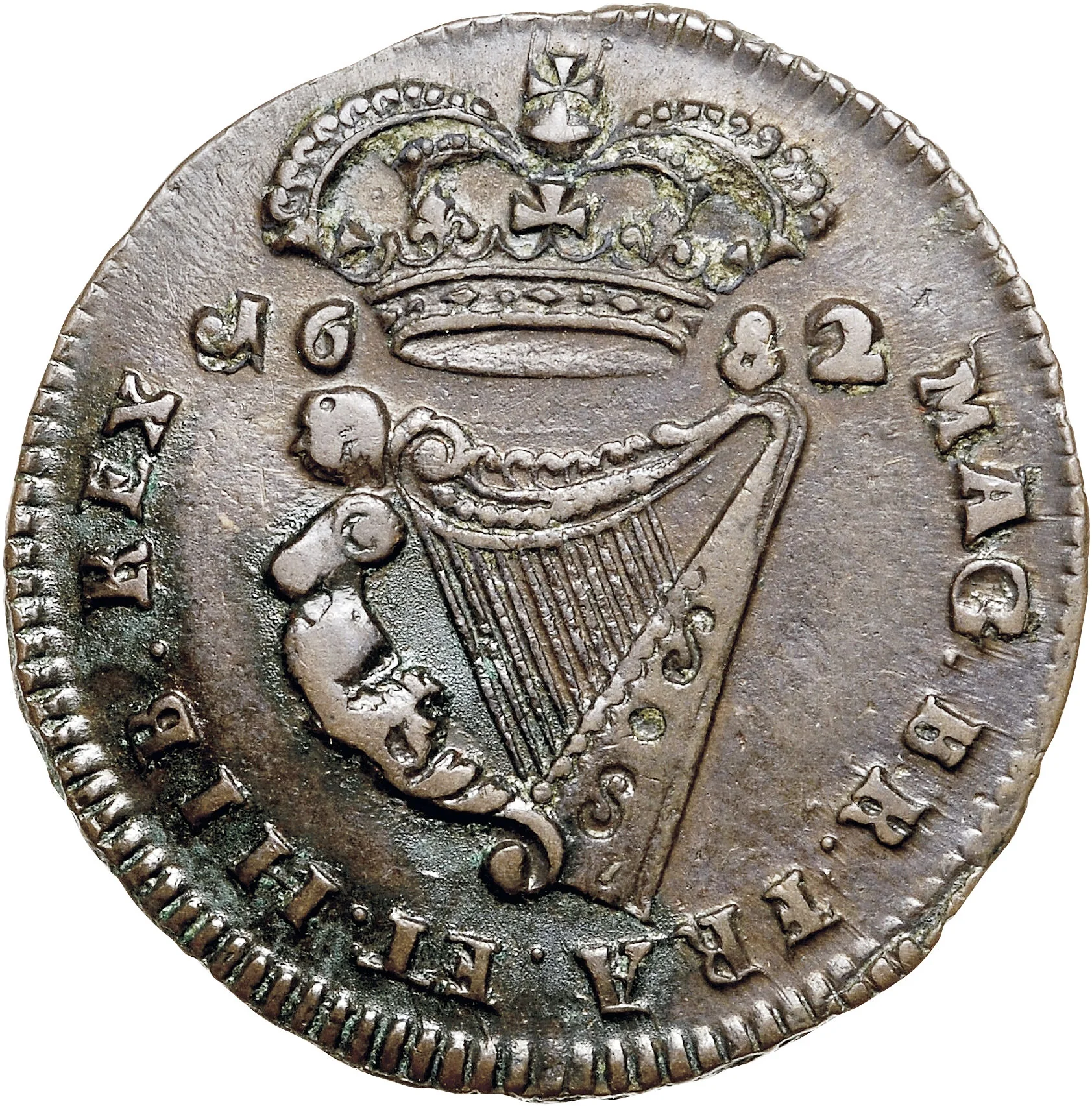
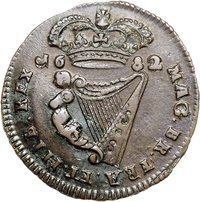
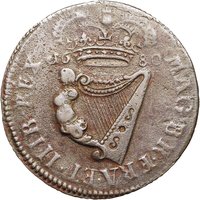
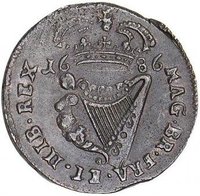
Reverse
Edge
Mintings
| Year | Mint Mark | Mintage | Quality | Collection |
|---|---|---|---|---|
| 1681 | — | — | ||
| 1682 | — | — | ||
| 1683 | — | — | ||
| 1684 | — | — |
Historical background
In 1681, Ireland operated under a complex and inadequate monetary system, a legacy of its status as a kingdom subordinate to England. The official currency was based on the English system of pounds, shillings, and pence, but there was a severe shortage of official coinage in circulation. This scarcity was a chronic problem, exacerbated by trade imbalances that saw silver coins, the lifeblood of commerce, flow out to pay for imports from England. Consequently, economic activity was heavily reliant on a chaotic mix of worn and clipped English coins, foreign coins (especially Spanish pieces of eight and Portuguese johannes), and promissory notes.
To address this crisis, the Irish government had resorted to episodic and controversial solutions. Most notably, in the 1660s, they had introduced "gunmoney" – emergency coinage minted from melted-down brass cannon and other metals – but these issues were of poor quality and widely distrusted. By 1681, the state was attempting to reassert control by recalling and reminting old, degraded silver. However, these efforts were only partially successful and did not solve the fundamental structural issue. The value and acceptability of any coin were uncertain, hindering trade and creating opportunities for fraud.
This unstable currency environment reflected and reinforced the broader political and social tensions of Restoration Ireland. The economy was largely controlled by the Protestant Ascendancy, whose interests were closely tied to England, while the majority Catholic population faced land dispossession and punitive trade restrictions like the Cattle Acts. The monetary chaos thus existed within a colonial framework, where economic policy was designed to benefit England first. The lack of a reliable, sovereign currency in 1681 was both a symptom of this dependency and a significant drag on Ireland's internal economic development.
To address this crisis, the Irish government had resorted to episodic and controversial solutions. Most notably, in the 1660s, they had introduced "gunmoney" – emergency coinage minted from melted-down brass cannon and other metals – but these issues were of poor quality and widely distrusted. By 1681, the state was attempting to reassert control by recalling and reminting old, degraded silver. However, these efforts were only partially successful and did not solve the fundamental structural issue. The value and acceptability of any coin were uncertain, hindering trade and creating opportunities for fraud.
This unstable currency environment reflected and reinforced the broader political and social tensions of Restoration Ireland. The economy was largely controlled by the Protestant Ascendancy, whose interests were closely tied to England, while the majority Catholic population faced land dispossession and punitive trade restrictions like the Cattle Acts. The monetary chaos thus existed within a colonial framework, where economic policy was designed to benefit England first. The lack of a reliable, sovereign currency in 1681 was both a symptom of this dependency and a significant drag on Ireland's internal economic development.
⭐ Rare