

1 Ducat – Denmark
Denmark
Context

References
KM: #Click to copy to clipboard394
Numista: #427852
Value
Bullion value: $569.90
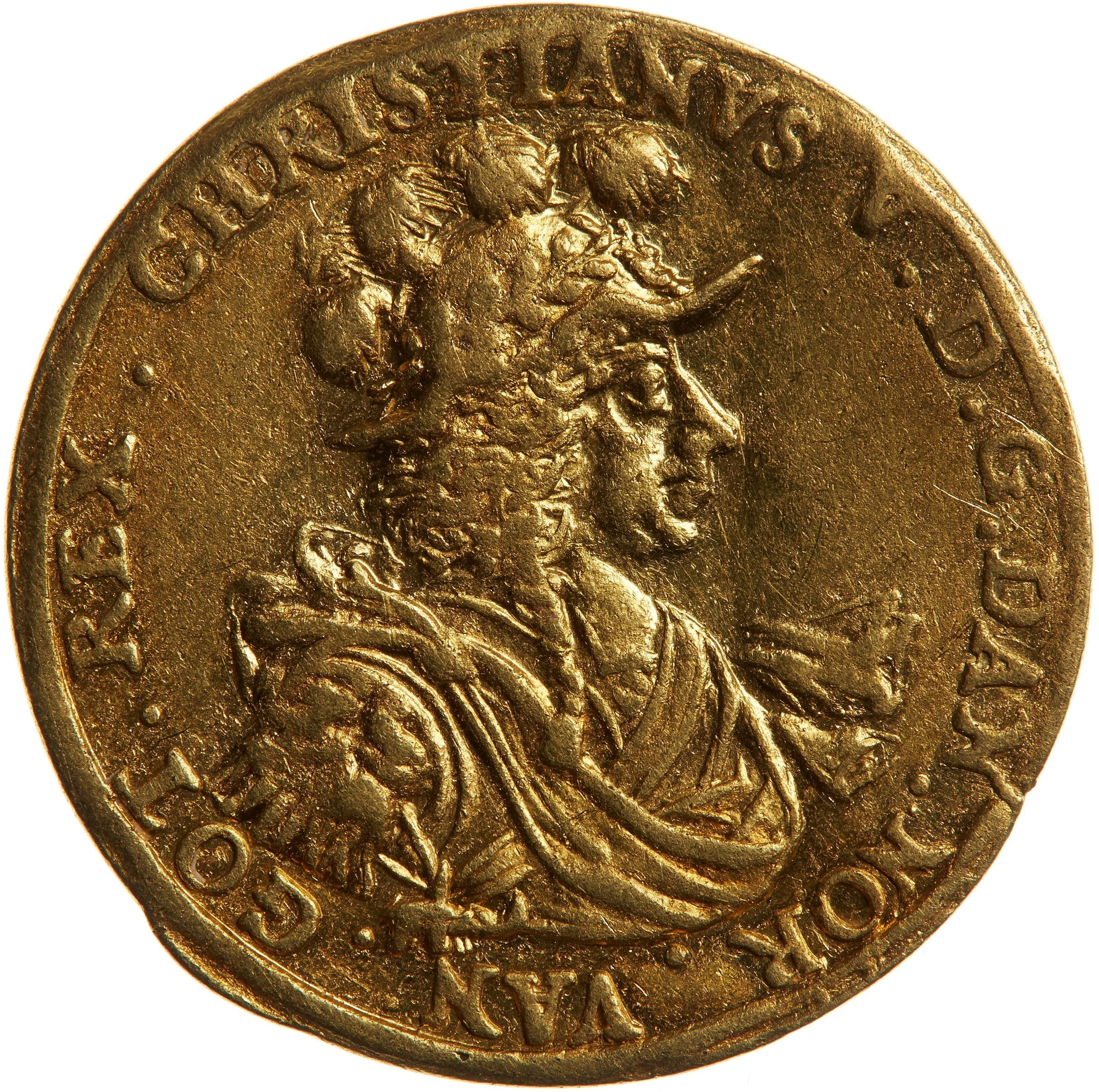
Obverse
Description:
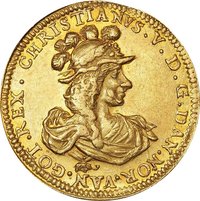
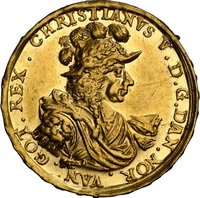
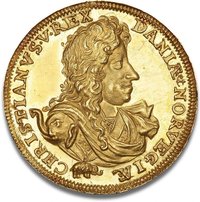
Bust of King Christian V wearing a large feathered hat, draped robes, and the Order of the Elephant pendant.
Inscription:
CHRISTIANVS . V . D . G. DAN . NOR. VAN. GOT . REX
Script: Latin
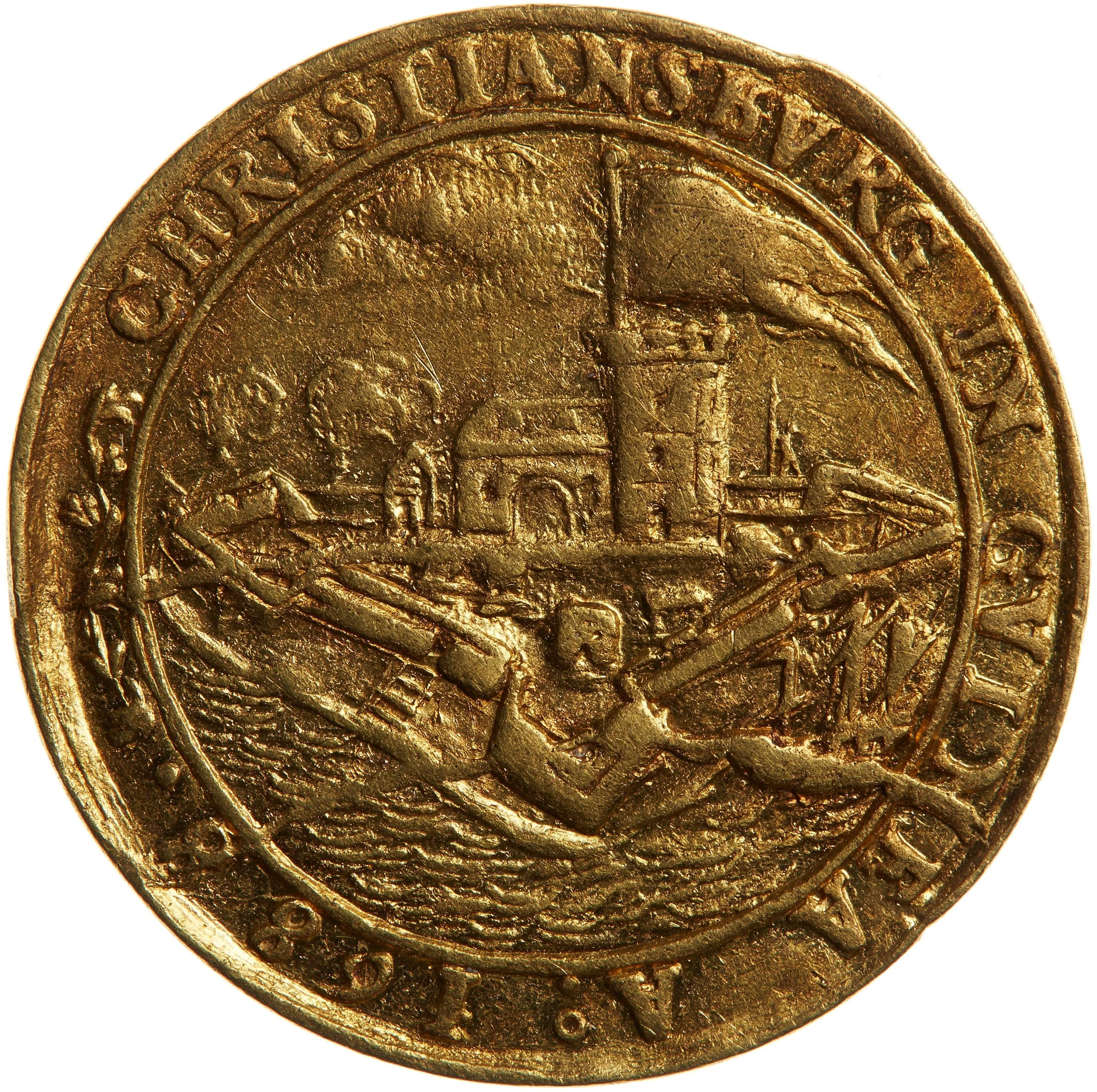
Reverse
Description:
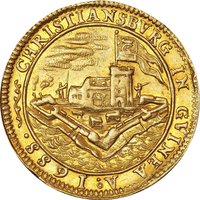
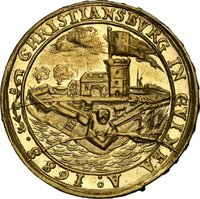
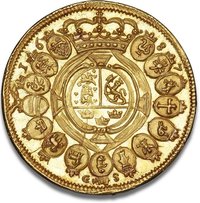
Aerial view of Christiansborg Fortress on an island, with a banner. Beaded ring border. Legend and date between circles.
Inscription:
CHRISTIANSBVRG IN GVINEA Ao 1688 .
Script: Latin
Edge
Categories
| Building> Castle or fortification |
Mintings
| Year | Mint Mark | Mintage | Quality | Collection |
|---|---|---|---|---|
| 1688 | — | — |
Historical background
In 1688, Denmark operated under a bimetallic monetary system, anchored by the rigsdaler (rix-dollar) as the primary unit of account. The system was legally defined by the Kongelig Forordning (Royal Ordinance) of 1683, which established fixed exchange rates between silver and gold coins. The silver rigsdaler was the cornerstone, divided into 96 skilling, while gold coins like the carolin and louis d'or circulated at officially decreed values. However, this official parity often conflicted with fluctuating market prices for precious metals, leading to persistent instability.
The period was marked by significant currency manipulation and debasement, largely driven by the state's need to finance costly wars, particularly the Scanian War (1675-1679) against Sweden. To raise funds, the monarchy, under King Christian V, repeatedly reduced the silver content in smaller coins (skilling and mark) while demanding taxes be paid in full-weight silver rigsdaler. This practice, known as "forringelse," caused widespread inflation, eroded public trust, and created a complex hierarchy where older, purer coins were hoarded or exported, leaving poorer-quality money in domestic circulation.
Consequently, by 1688, Denmark faced a fractured monetary environment. The coexistence of old "good" coins, new debased coins, and various foreign currencies created confusion and hindered commerce. The government's attempts to enforce the official rates were largely ineffective, leading to a de facto market-driven valuation of coins. This unstable situation placed a heavy burden on the peasantry and merchants, contributing to economic strain and setting the stage for further monetary reforms in the following decades under King Frederick IV.
The period was marked by significant currency manipulation and debasement, largely driven by the state's need to finance costly wars, particularly the Scanian War (1675-1679) against Sweden. To raise funds, the monarchy, under King Christian V, repeatedly reduced the silver content in smaller coins (skilling and mark) while demanding taxes be paid in full-weight silver rigsdaler. This practice, known as "forringelse," caused widespread inflation, eroded public trust, and created a complex hierarchy where older, purer coins were hoarded or exported, leaving poorer-quality money in domestic circulation.
Consequently, by 1688, Denmark faced a fractured monetary environment. The coexistence of old "good" coins, new debased coins, and various foreign currencies created confusion and hindered commerce. The government's attempts to enforce the official rates were largely ineffective, leading to a de facto market-driven valuation of coins. This unstable situation placed a heavy burden on the peasantry and merchants, contributing to economic strain and setting the stage for further monetary reforms in the following decades under King Frederick IV.
✨ Legendary