

2 Ducats – Denmark
Denmark
Context

References
KM: #Click to copy to clipboard390
Numista: #328531
Value
Bullion value: $1140.00
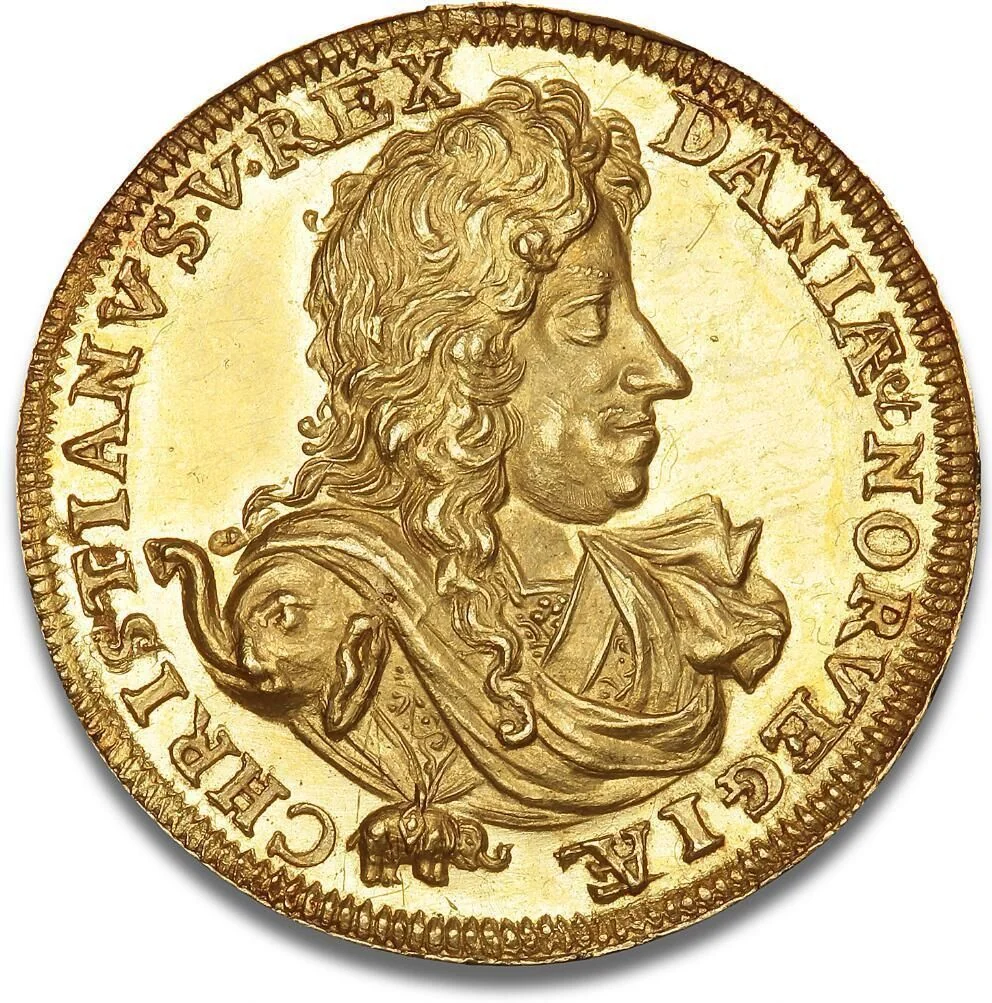
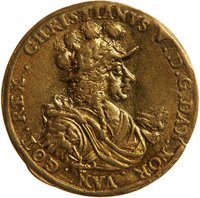
Obverse
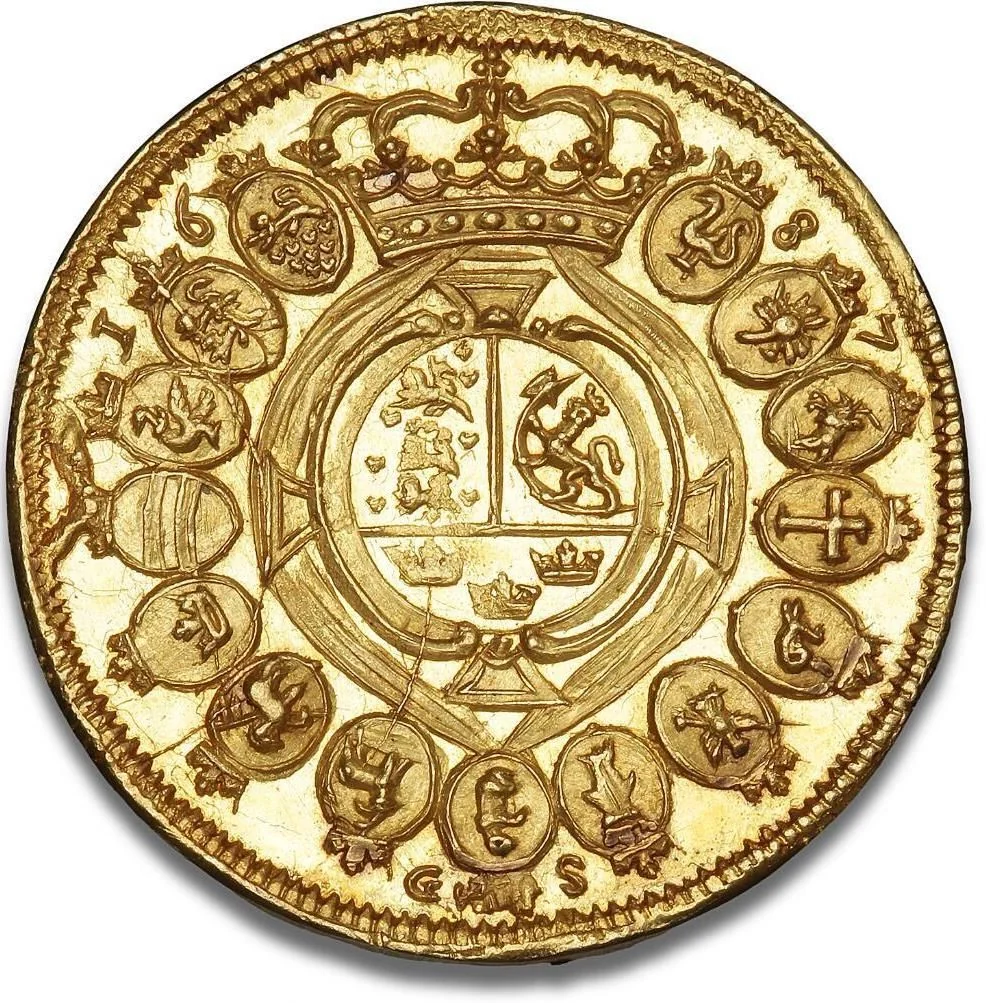
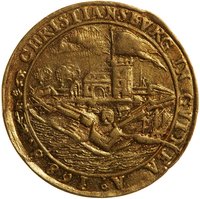
Reverse
Description:
Crowned arms encircled by fifteen shields, date above.
Inscription:
16 87
G S
G S
Script: Latin
Edge
Mintings
| Year | Mint Mark | Mintage | Quality | Collection |
|---|---|---|---|---|
| 1687 | — | — |
Historical background
In 1687, Denmark operated under a complex and strained monetary system, a legacy of the earlier "Kiøbenhavnske Bank" established in 1737, but the foundations for that future instability were being laid. The kingdom was on a silver standard, with the primary unit being the rigsdaler specie, valued against a defined weight of fine silver. However, the reality of circulation was a chaotic mix of domestic and foreign coins, including Dutch rijksdaalders, German thalers, and various smaller skilling denominations. The state frequently struggled to control the quality and value of this circulating medium, as clipping, counterfeiting, and the fluctuating silver content of foreign coins created significant problems for trade and public trust.
The period was marked by persistent fiscal pressure on the Danish crown, primarily due to the costs of maintaining a standing army and the recent absolute monarchy established in 1660. King Christian V and his government, seeking revenue, periodically engaged in currency manipulations. This included the practice of forringelse (debasing the coinage), where the state would recall coins, re-mint them with a lower precious metal content, and profit from the seigniorage. While providing short-term treasury relief, these actions eroded confidence, distorted prices, and disrupted both domestic commerce and international exchange, as merchants and foreign partners demanded a premium for debased Danish money.
Consequently, by 1687, the Danish monetary situation was characterized by a growing gap between the official "bank" currency (kurant) used for large transactions and accounting, and the actual "current" money (species) of varying intrinsic worth. This duality sowed confusion and economic inefficiency. The systemic weaknesses of this period would culminate, decades later, in the severe crises of the 1720s that ultimately led to the founding of the Danish central bank, an institution conceived as a necessary remedy for the very monetary disorder evident in the late 17th century.
The period was marked by persistent fiscal pressure on the Danish crown, primarily due to the costs of maintaining a standing army and the recent absolute monarchy established in 1660. King Christian V and his government, seeking revenue, periodically engaged in currency manipulations. This included the practice of forringelse (debasing the coinage), where the state would recall coins, re-mint them with a lower precious metal content, and profit from the seigniorage. While providing short-term treasury relief, these actions eroded confidence, distorted prices, and disrupted both domestic commerce and international exchange, as merchants and foreign partners demanded a premium for debased Danish money.
Consequently, by 1687, the Danish monetary situation was characterized by a growing gap between the official "bank" currency (kurant) used for large transactions and accounting, and the actual "current" money (species) of varying intrinsic worth. This duality sowed confusion and economic inefficiency. The systemic weaknesses of this period would culminate, decades later, in the severe crises of the 1720s that ultimately led to the founding of the Danish central bank, an institution conceived as a necessary remedy for the very monetary disorder evident in the late 17th century.
✨ Legendary