

1 Mohar – Patan Kingdom
Nepal
Context
Year: 1715
Nepal Sambat Year: 835
Country: Nepal 
Issuer: Patan Kingdom
Ruler: Riddhi Narasimha
Currency:
(1546—1932)
Demonetized: Yes
Material
References
KM: #Click to copy to clipboard375
Numista: #42601
Value
Bullion value: $14.71
Obverse
Description:
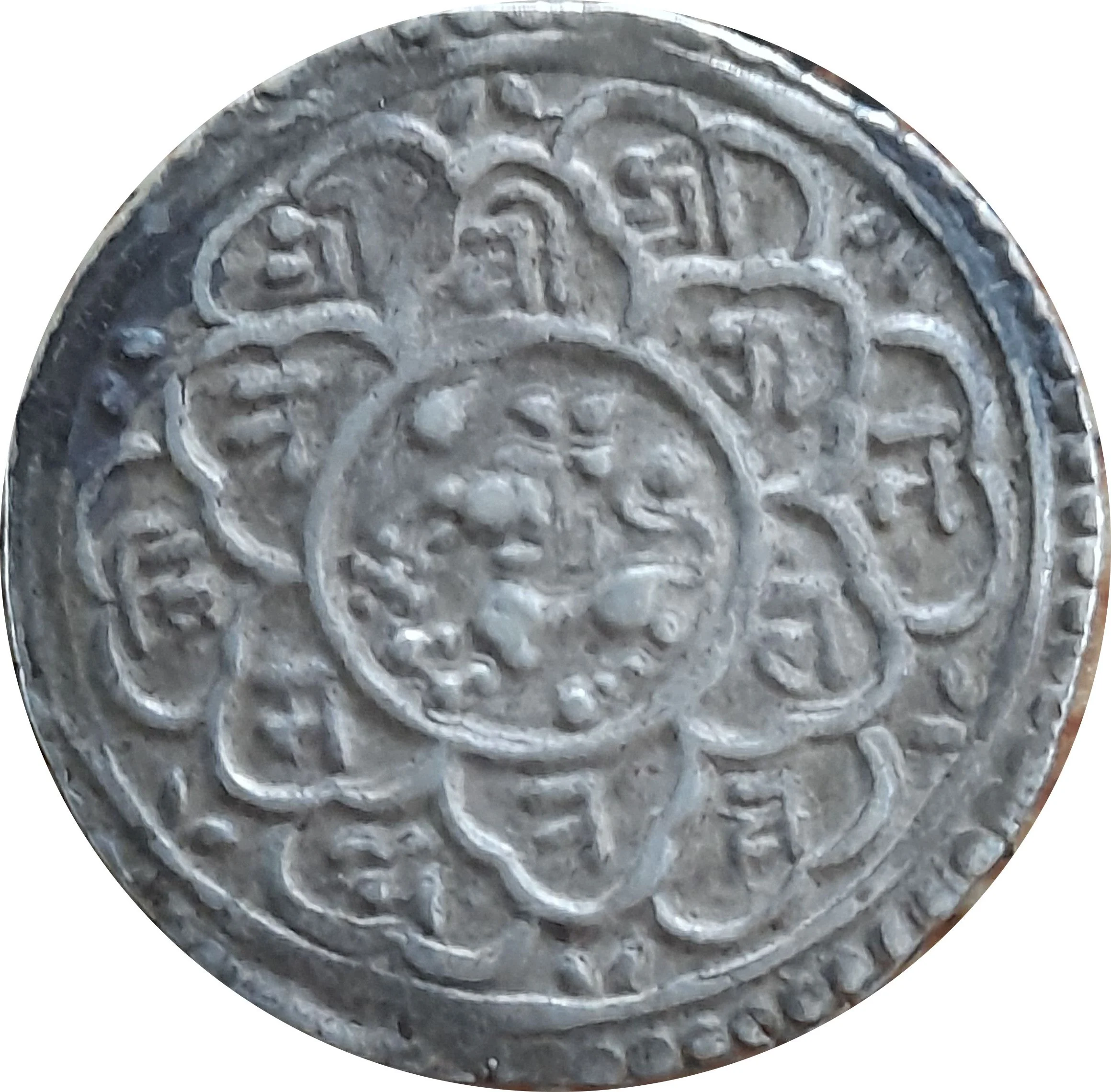
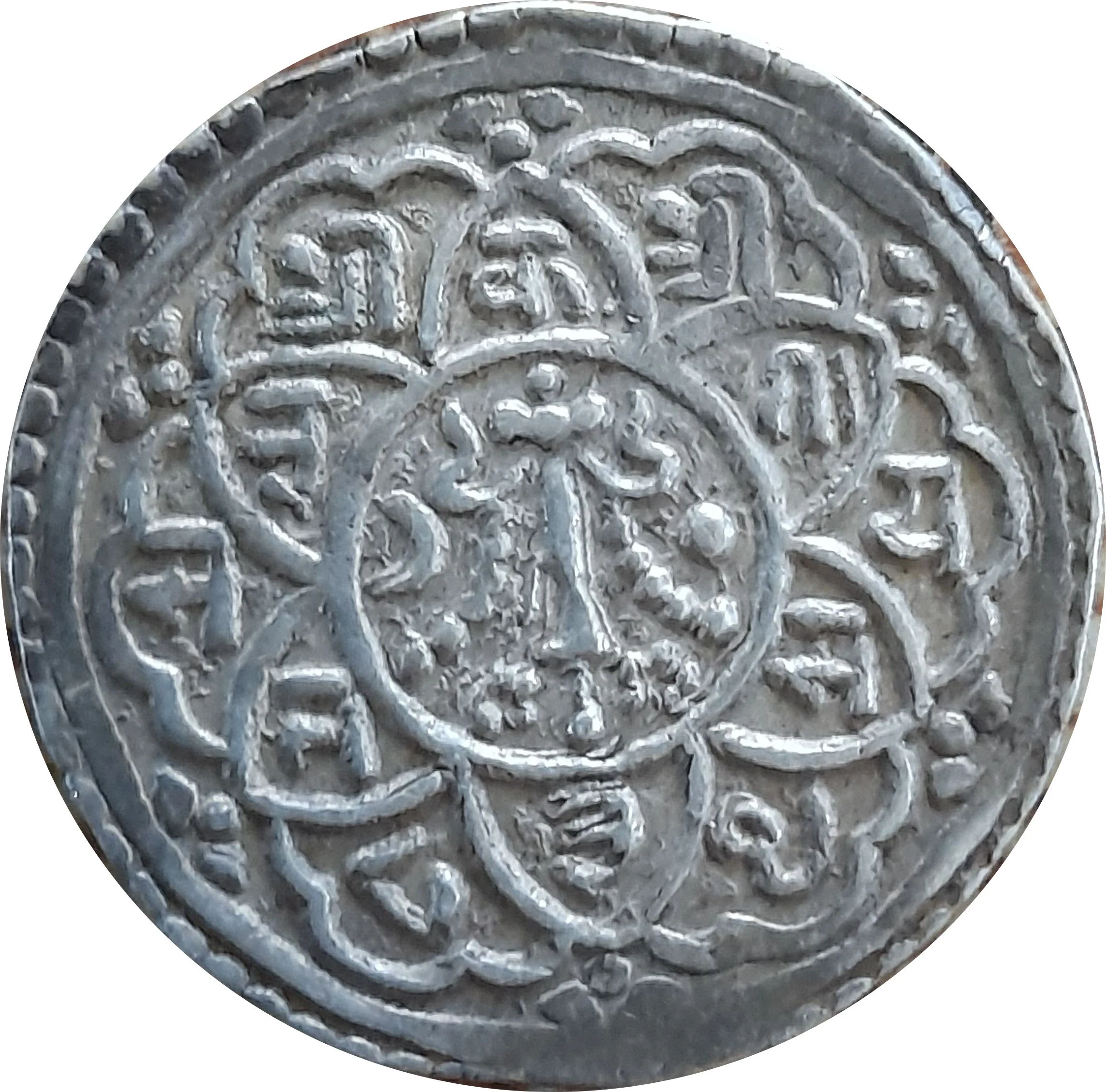
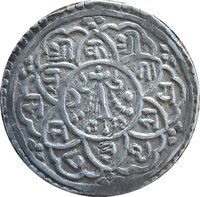
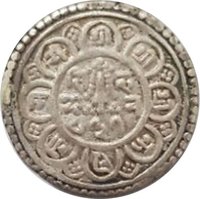
Floral legend with ornate center; NS dare in lower petals.
Reverse
Description:
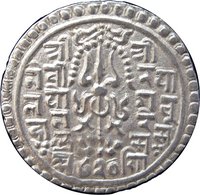
Floral design with central left-facing lion.
Edge
Mintings
| Year | Mint Mark | Mintage | Quality | Collection |
|---|---|---|---|---|
| 1715 | — | — |
Historical background
In 1715, the currency system of the Patan Kingdom (one of the three main city-states in the Kathmandu Valley, now part of Nepal) was a complex and hybrid one, deeply influenced by both its robust trans-Himalayan trade and its political subordination. The kingdom minted its own distinctive silver coins, known as Mohars (or Mahendra Malli), which bore Sanskrit legends and the symbols of the ruling Malla dynasty. These coins were the official standard for significant religious donations, state payments, and larger commercial transactions within the valley, serving as a symbol of royal authority and economic sovereignty.
However, the practical daily economy relied heavily on a flood of foreign specie, primarily silver coins from the Mughal Empire to the south. Mughal rupees, especially those from the mints of Bengal and Awadh, circulated widely due to the valley's integral role in the lucrative trade between Tibet and India. Furthermore, Tibetan silver tangkas and even Chinese bullion entered the system via northern trade routes. This created a multi-currency environment where merchants and money-changers (sarrafs) were essential, constantly assessing and exchanging coins based on weight, purity, and prevailing exchange rates.
This monetary landscape existed under a shadow of political vulnerability. By 1715, Patan was a weakened state, facing intense rivalry from neighboring Kathmandu and Bhaktapur, and was effectively under the influence of the rising Gorkha Kingdom to the west. The circulation of foreign coins underscored Patan's economic interdependence, while its own minting rights were a cherished but increasingly precarious privilege. The currency situation thus mirrored the kingdom's broader condition: locally autonomous in tradition but economically integrated and politically fragile, standing on the brink of the major geopolitical shifts that would soon unify Nepal.
However, the practical daily economy relied heavily on a flood of foreign specie, primarily silver coins from the Mughal Empire to the south. Mughal rupees, especially those from the mints of Bengal and Awadh, circulated widely due to the valley's integral role in the lucrative trade between Tibet and India. Furthermore, Tibetan silver tangkas and even Chinese bullion entered the system via northern trade routes. This created a multi-currency environment where merchants and money-changers (sarrafs) were essential, constantly assessing and exchanging coins based on weight, purity, and prevailing exchange rates.
This monetary landscape existed under a shadow of political vulnerability. By 1715, Patan was a weakened state, facing intense rivalry from neighboring Kathmandu and Bhaktapur, and was effectively under the influence of the rising Gorkha Kingdom to the west. The circulation of foreign coins underscored Patan's economic interdependence, while its own minting rights were a cherished but increasingly precarious privilege. The currency situation thus mirrored the kingdom's broader condition: locally autonomous in tradition but economically integrated and politically fragile, standing on the brink of the major geopolitical shifts that would soon unify Nepal.
✨ Legendary