

1 pagoda – Dutch India
Add to wishlist
India
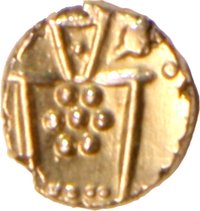
Obverse
Description:
Degenerate Vishnu, missing lazy "J" at three.
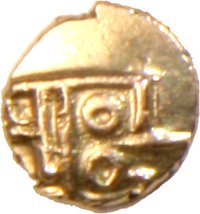
Reverse
Description:
Granulated.
Edge
Mintings
| Year | Mint Mark | Mintage | Quality | Collection |
|---|---|---|---|---|
| — | — | 7,100 |
Historical background
In 1784, the currency situation in Dutch India, centered on the Coromandel Coast (chiefly at Nagapatnam) and the declining Malabar settlements, was characterized by profound instability and complexity. The Fourth Anglo-Dutch War (1780-1784) had just ended disastrously for the Dutch East India Company (VOC), with the Treaty of Paris confirming the loss of key trading posts like Negapatam to the British. This military and political collapse severely disrupted the VOC's economic framework, leading to acute shortages of reliable specie (coinage) and a crippled credit system. The local economy operated on a bewildering multiplicity of currencies, including various Indian gold pagodas, silver rupees (from Mughal and regional regimes), and a debased array of VOC copper duiten and silver fanams, whose values fluctuated wildly between different presidencies and even local markets.
The core of the problem was the VOC's persistent bullion drain. The Company required vast amounts of silver and gold coin to purchase Indian textiles and spices for the European market, but the war had halted the regular inflow of precious metals from the Netherlands. This forced local VOC authorities to engage in desperate monetary manipulations, such as issuing paper credit (kreditiefbrieven) and repeatedly debasing their own coinage to stretch their limited bullion supplies. Consequently, public confidence in VOC currency plummeted, leading to widespread discounting and rampant inflation in Company-controlled areas. Trade increasingly relied on older, trusted foreign coins like the Spanish silver real or various Mughal rupees, over which the VOC had little control.
Ultimately, the currency chaos of 1784 was a direct symptom of the VOC's rapid decline as a territorial and commercial power in India. With its political sovereignty shattered and its financial integrity in ruins, the Company could no longer enforce a unified monetary standard. The situation left merchants, soldiers, and the local population navigating a precarious landscape of unreliable money, hindering economic recovery and accelerating the VOC's retreat to a mere marginal player in the subcontinent, increasingly overshadowed by the British East India Company and its more stable rupee currency system.
The core of the problem was the VOC's persistent bullion drain. The Company required vast amounts of silver and gold coin to purchase Indian textiles and spices for the European market, but the war had halted the regular inflow of precious metals from the Netherlands. This forced local VOC authorities to engage in desperate monetary manipulations, such as issuing paper credit (kreditiefbrieven) and repeatedly debasing their own coinage to stretch their limited bullion supplies. Consequently, public confidence in VOC currency plummeted, leading to widespread discounting and rampant inflation in Company-controlled areas. Trade increasingly relied on older, trusted foreign coins like the Spanish silver real or various Mughal rupees, over which the VOC had little control.
Ultimately, the currency chaos of 1784 was a direct symptom of the VOC's rapid decline as a territorial and commercial power in India. With its political sovereignty shattered and its financial integrity in ruins, the Company could no longer enforce a unified monetary standard. The situation left merchants, soldiers, and the local population navigating a precarious landscape of unreliable money, hindering economic recovery and accelerating the VOC's retreat to a mere marginal player in the subcontinent, increasingly overshadowed by the British East India Company and its more stable rupee currency system.

✨ Legendary