

½ courant ducat – Denmark
Add to wishlist
Denmark
Context
Year: 1715
Issuer: Denmark
Ruler: Frederick IV
Currency:
(1625—1813)
Subdivision: ½ courant ducat = 1 Riksdaler Courant
Demonetized: Yes
Total mintage: 598
Material
References
KM: #
Numista: #113765
Value
Bullion value: $192.09
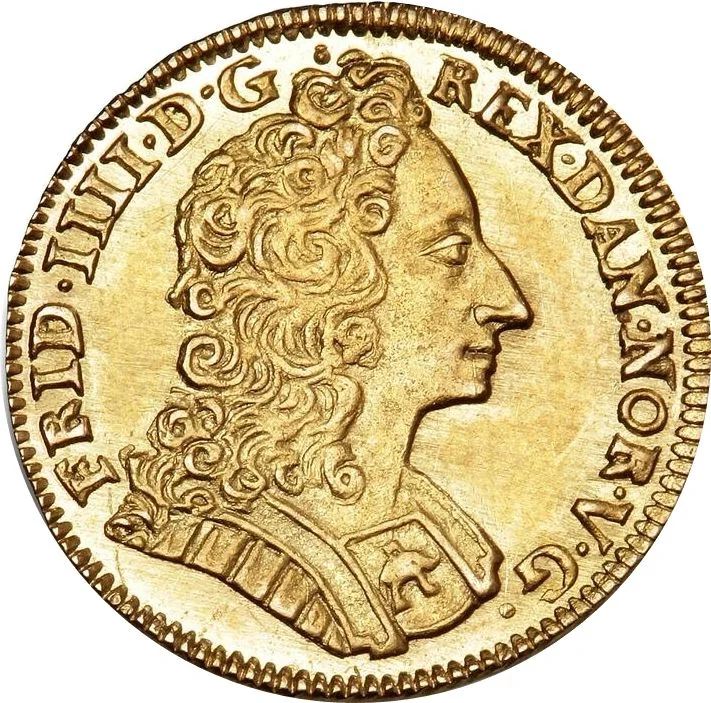
Obverse
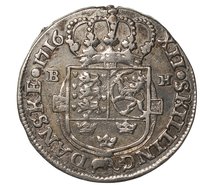
Description:
King's bust right, curly hair dividing legend.
Inscription:
FRID.IIII.D.G.REX DAN.NOR.V.G
Script: Latin
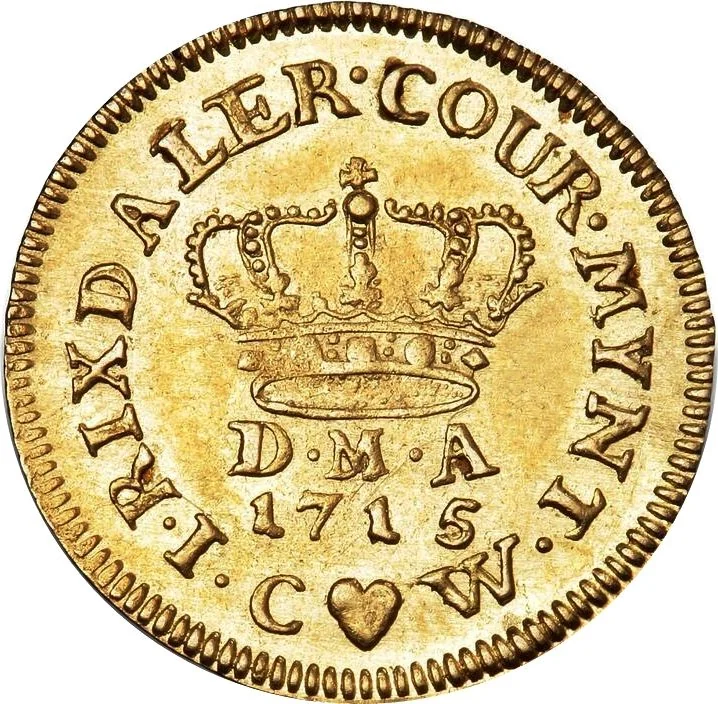
Reverse
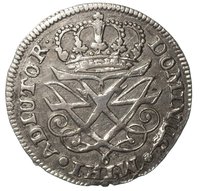
Description:
Crown above D.M.A. and date; heart divides date below. Value in legend around rim.
Inscription:
I • RIXDALER • COUR • MYNT
D • M • A
1715
• C ♥ W •
D • M • A
1715
• C ♥ W •
Script: Latin
Edge
Mints
| Name | Mark |
|---|---|
| Copenhagen | ♥ |
Mintings
| Year | Mint Mark | Mintage | Quality | Collection |
|---|---|---|---|---|
| 1715 | CW; | 598 |
Historical background
In 1715, Denmark found itself in a precarious monetary situation following the immense financial strain of the Great Northern War (1700-1721). King Frederick IV’s government had resorted to repeated currency debasements to fund the war effort, significantly reducing the silver content of the coinage. This led to a severe loss of public confidence, rampant inflation, and a chaotic circulation of both old, high-value coins and new, degraded ones. The state's credit was exhausted, and the economy was burdened by heavy taxation and widespread disruption to trade.
The situation demanded drastic reform, which was initiated that same year with the introduction of a new currency system by Finance Minister Count Christian Gyldenløve. The 1715 reform aimed to stabilize the economy by introducing a fixed standard based on the rigsdaler specie, a silver coin containing a defined and guaranteed amount of pure silver. This move was intended to restore trust by tying the currency's value directly to a tangible precious metal and withdrawing the debased coins from circulation.
While the 1715 reform laid the essential foundation for future stability, its immediate implementation was challenging and partially unsuccessful. The state lacked the necessary silver reserves to fully back the new currency and recall all the old money, leading to a prolonged period of adjustment. Nevertheless, this decisive action marked a critical turning point, ending the period of reckless debasement and setting Denmark on a path toward the sounder monetary system that would be fully realized later in the century.
The situation demanded drastic reform, which was initiated that same year with the introduction of a new currency system by Finance Minister Count Christian Gyldenløve. The 1715 reform aimed to stabilize the economy by introducing a fixed standard based on the rigsdaler specie, a silver coin containing a defined and guaranteed amount of pure silver. This move was intended to restore trust by tying the currency's value directly to a tangible precious metal and withdrawing the debased coins from circulation.
While the 1715 reform laid the essential foundation for future stability, its immediate implementation was challenging and partially unsuccessful. The state lacked the necessary silver reserves to fully back the new currency and recall all the old money, leading to a prolonged period of adjustment. Nevertheless, this decisive action marked a critical turning point, ending the period of reckless debasement and setting Denmark on a path toward the sounder monetary system that would be fully realized later in the century.
✨ Legendary