

12 skilling – Denmark
Add to wishlist
Denmark
Context
Material
References
KM: #
Numista: #88660
Value
Bullion value: $5.60
Obverse
Description:
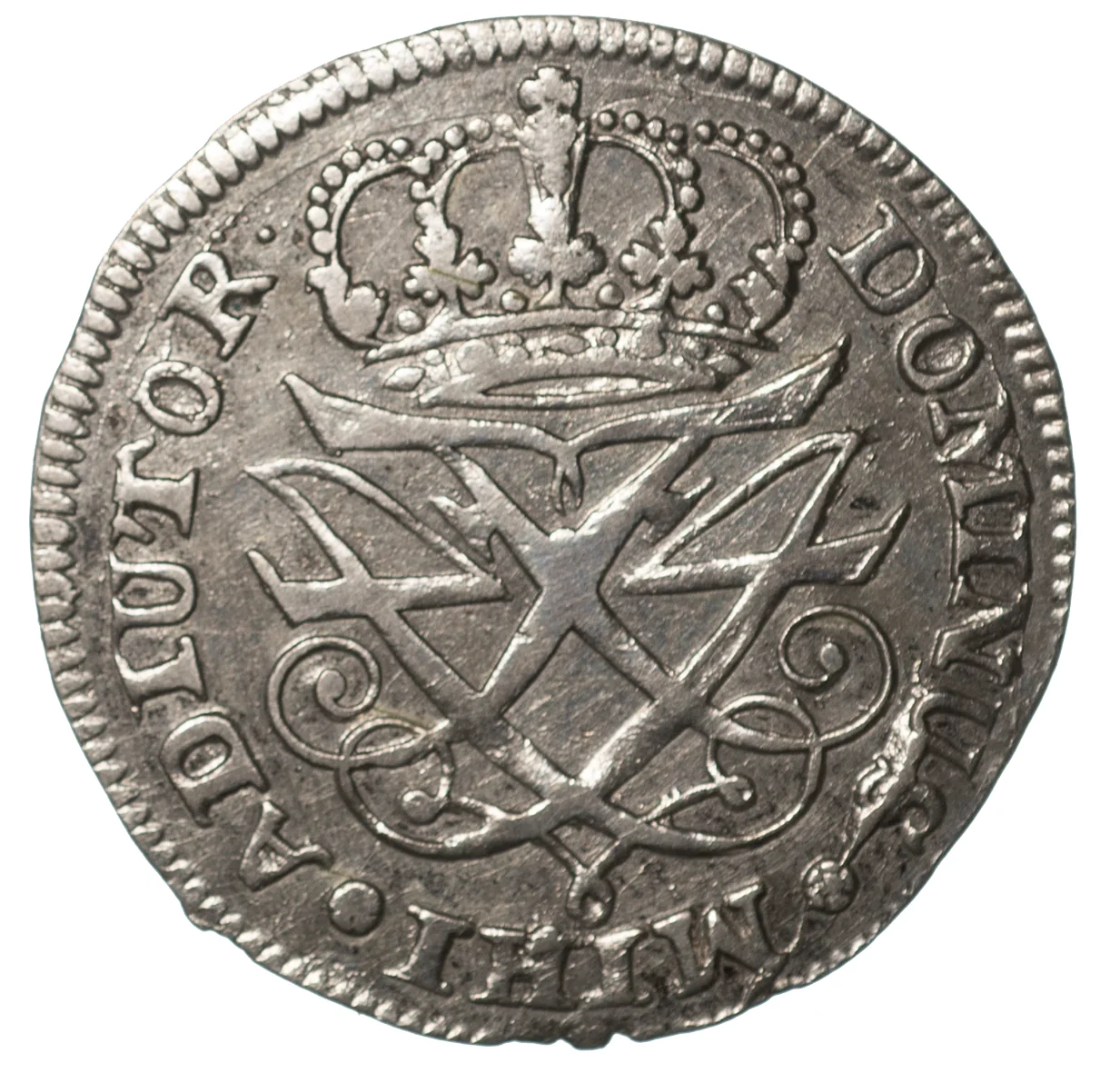
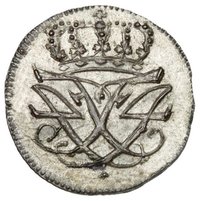
Crown over mirrored royal monogram. Motto encircling.
Inscription:
DOMINVS · MIHI · ADIVTOR ·
Script: Latin
Reverse
Description:
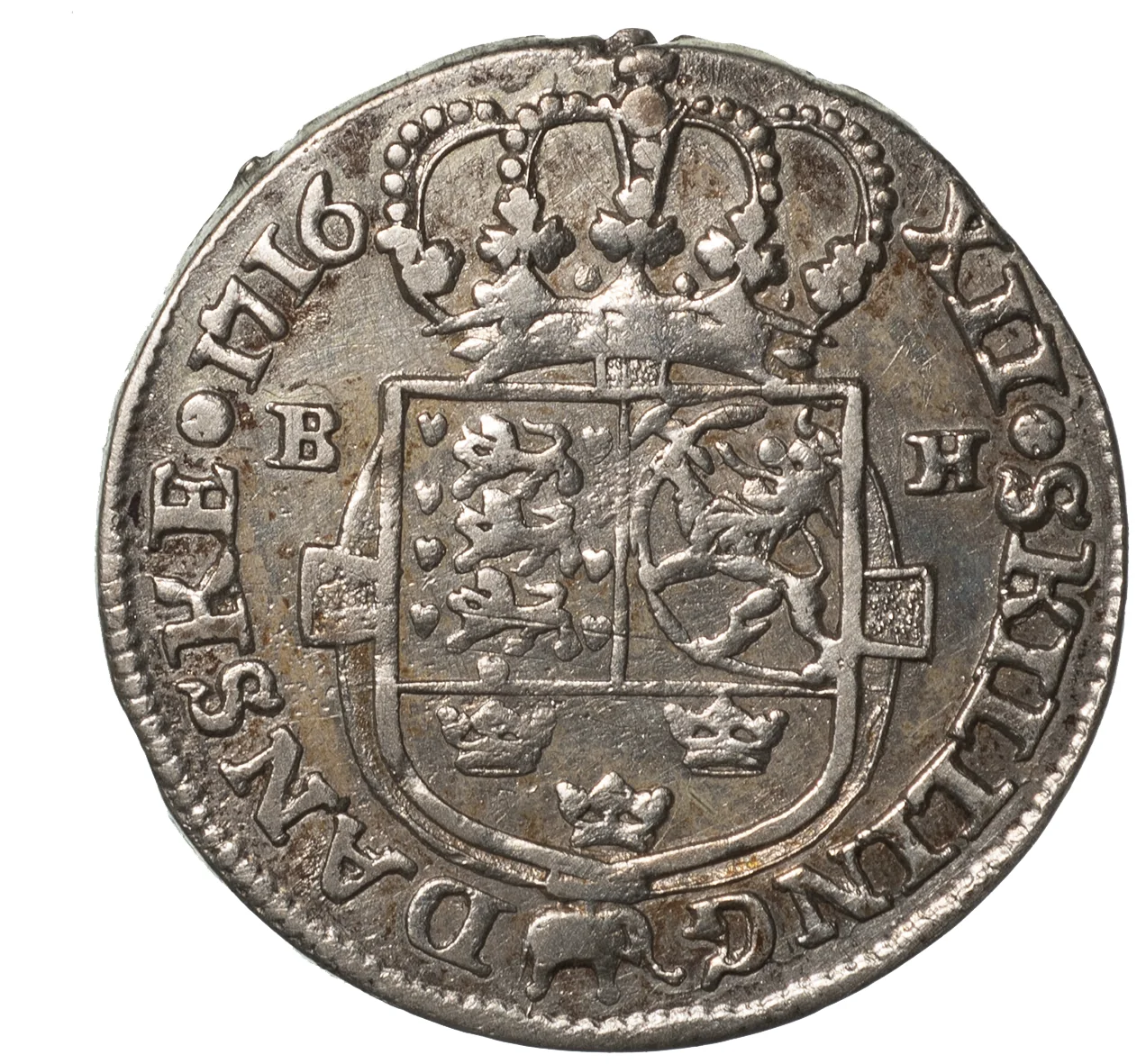
Shield with Danish, Norwegian, and Swedish arms, crowned and over a cross, with Elephant Order pendant. Mintmark divides the cross. Legend shows value and date.
Inscription:
Xll · SKILLING | DANSKE · 1716
B H
B H
Script: Latin
Edge
Mints
| Name | Mark |
|---|---|
| Rendsburg | BH |
Historical background
In 1716, Denmark found itself in a precarious monetary crisis, a direct consequence of its prolonged involvement in the Great Northern War (1700-1721). The state's finances were exhausted from decades of funding a large army and navy, leading to severe coinage debasement. The government, under King Frederick IV, had drastically reduced the silver content in coins to create more currency from the same amount of bullion, a practice that led to rampant inflation and a collapse in public trust. Older, high-value coins were hoarded or melted down, leaving circulation dominated by poor-quality, low-intrinsic-value money.
The situation was exacerbated by the issuance of kreditosedler (credit notes) in 1713, an early and disastrous experiment with paper currency intended to stabilize the economy. These notes were not properly backed by silver reserves and quickly depreciated, trading at a fraction of their face value. This created a chaotic dual-currency system where goods had one price in silver coin and a much higher price in paper notes, crippling trade and causing widespread economic distress, particularly among the peasantry and soldiers paid in the nearly worthless paper.
Facing economic paralysis, the Danish government took drastic action in late 1716. A monetary reform was decreed, demonetizing the debased coins and the discredited paper notes entirely. A new, stable silver-based currency was introduced, but the conversion rates were highly unfavorable to the public, effectively functioning as a forced loan to the crown. While this harsh measure restored a stable metallic currency and ended the hyperinflation, it came at a tremendous social cost, wiping out savings and deepening poverty, leaving a lasting scar on the Danish economy and populace.
The situation was exacerbated by the issuance of kreditosedler (credit notes) in 1713, an early and disastrous experiment with paper currency intended to stabilize the economy. These notes were not properly backed by silver reserves and quickly depreciated, trading at a fraction of their face value. This created a chaotic dual-currency system where goods had one price in silver coin and a much higher price in paper notes, crippling trade and causing widespread economic distress, particularly among the peasantry and soldiers paid in the nearly worthless paper.
Facing economic paralysis, the Danish government took drastic action in late 1716. A monetary reform was decreed, demonetizing the debased coins and the discredited paper notes entirely. A new, stable silver-based currency was introduced, but the conversion rates were highly unfavorable to the public, effectively functioning as a forced loan to the crown. While this harsh measure restored a stable metallic currency and ended the hyperinflation, it came at a tremendous social cost, wiping out savings and deepening poverty, leaving a lasting scar on the Danish economy and populace.
⭐ Rare