

½ Penny – Ireland
Ireland
Context
Material
References
KM: #Click to copy to clipboard138
Numista: #11360
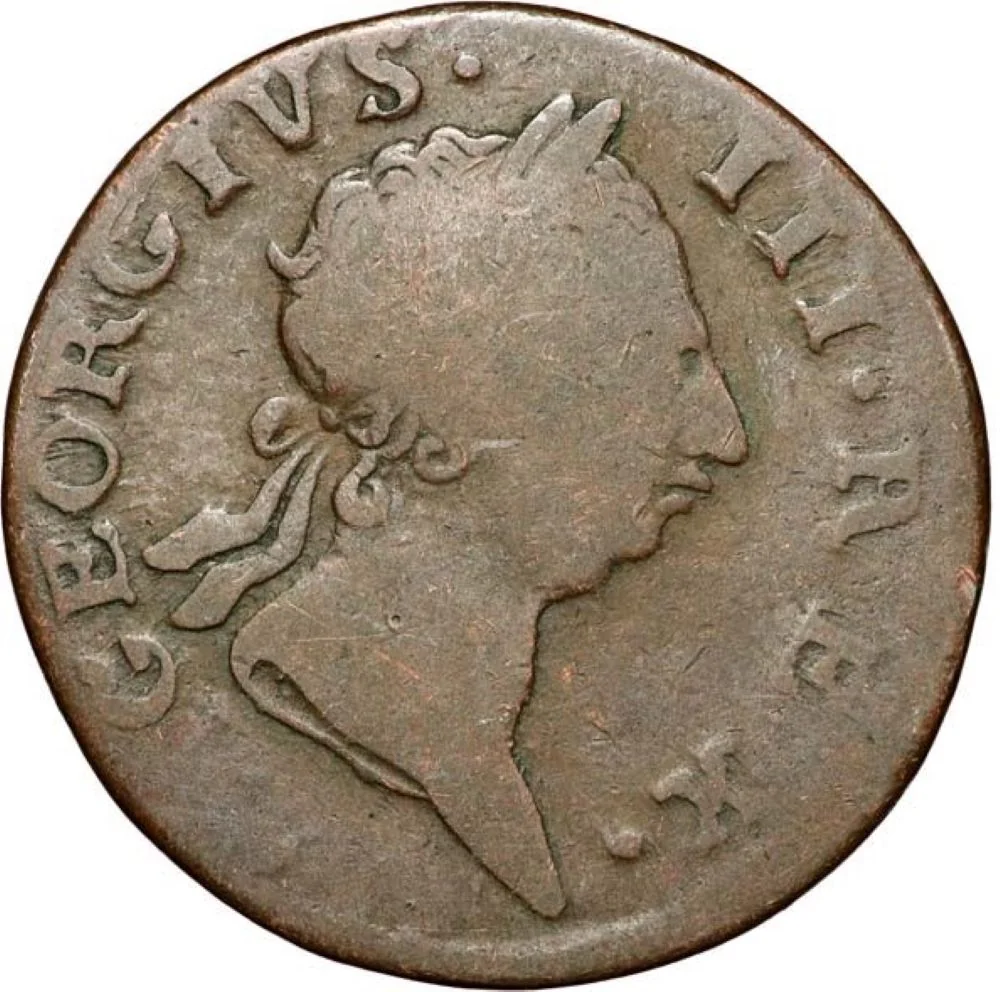
Obverse
Description:
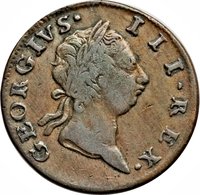
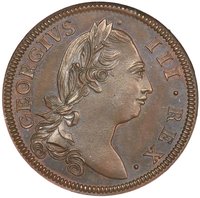
Right-facing bust
Script: Latin
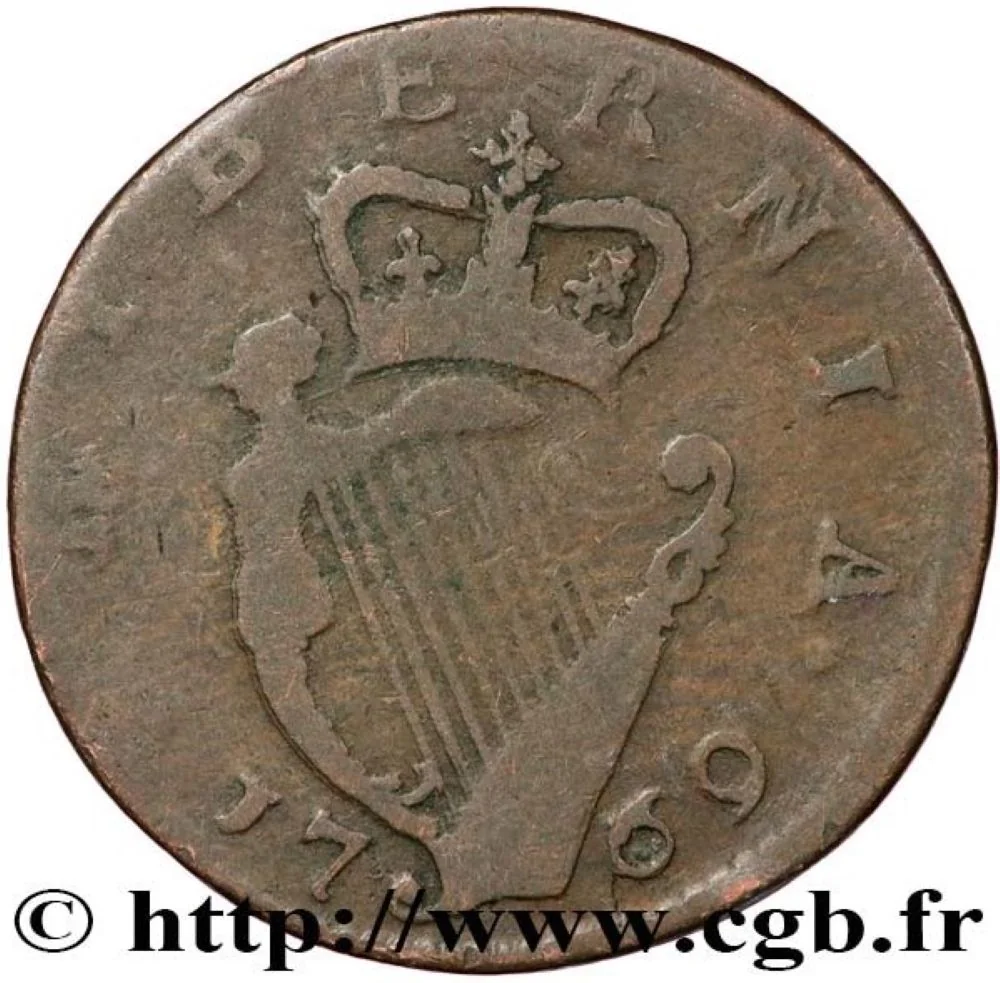
Reverse
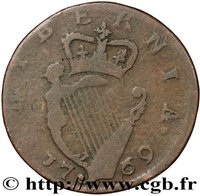
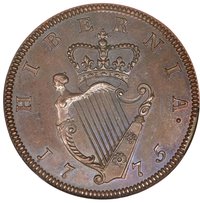
Description:
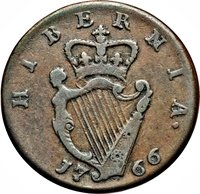
Gaelic harp
Script: Latin
Edge
Mintings
| Year | Mint Mark | Mintage | Quality | Collection |
|---|---|---|---|---|
| 1769 | — | — |
Historical background
In 1769, Ireland operated under a complex and strained currency system, a legacy of colonial subordination to Britain. The official circulating medium was predominantly silver and gold coin, but in practice, the economy suffered from a severe shortage of specie (minted coin). This scarcity was a direct result of mercantilist British policies that restricted Irish trade and caused a persistent drain of gold and silver to England to settle trade imbalances. Consequently, everyday commerce relied heavily on a confusing patchwork of alternatives, including foreign coins (like Spanish dollars and Portuguese johannes), private tokens, and, most critically, a vast quantity of paper money issued by private banks and city corporations.
The paper currency, while essential for economic activity, was a source of significant instability. These banknotes were not legal tender and were only promises to pay in specie upon demand. Given the underlying shortage of coin, many of these issuing banks were incapable of honouring large-scale redemptions, leading to frequent bank failures and losses for holders. The value and acceptability of notes varied wildly depending on public confidence in the issuer, creating a risky and inefficient environment for trade and investment. This fragile system left the Irish economy vulnerable to crises of confidence and liquidity.
This monetary confusion occurred within a broader context of political and economic grievance. The Irish Parliament in Dublin had limited autonomy, and key financial policies were dictated from London. The currency problem was widely seen by the emerging "Patriot" movement as symptomatic of Ireland's subordinate status, which stifled its prosperity. While calls for a regulated national bank to issue stable paper currency were growing, they faced opposition from London and vested interests. Thus, in 1769, the currency situation remained a volatile and unresolved issue, exacerbating public discontent and contributing to the simmering tensions that would define Anglo-Irish relations in the latter half of the 18th century.
The paper currency, while essential for economic activity, was a source of significant instability. These banknotes were not legal tender and were only promises to pay in specie upon demand. Given the underlying shortage of coin, many of these issuing banks were incapable of honouring large-scale redemptions, leading to frequent bank failures and losses for holders. The value and acceptability of notes varied wildly depending on public confidence in the issuer, creating a risky and inefficient environment for trade and investment. This fragile system left the Irish economy vulnerable to crises of confidence and liquidity.
This monetary confusion occurred within a broader context of political and economic grievance. The Irish Parliament in Dublin had limited autonomy, and key financial policies were dictated from London. The currency problem was widely seen by the emerging "Patriot" movement as symptomatic of Ireland's subordinate status, which stifled its prosperity. While calls for a regulated national bank to issue stable paper currency were growing, they faced opposition from London and vested interests. Thus, in 1769, the currency situation remained a volatile and unresolved issue, exacerbating public discontent and contributing to the simmering tensions that would define Anglo-Irish relations in the latter half of the 18th century.
🌟 Limited