

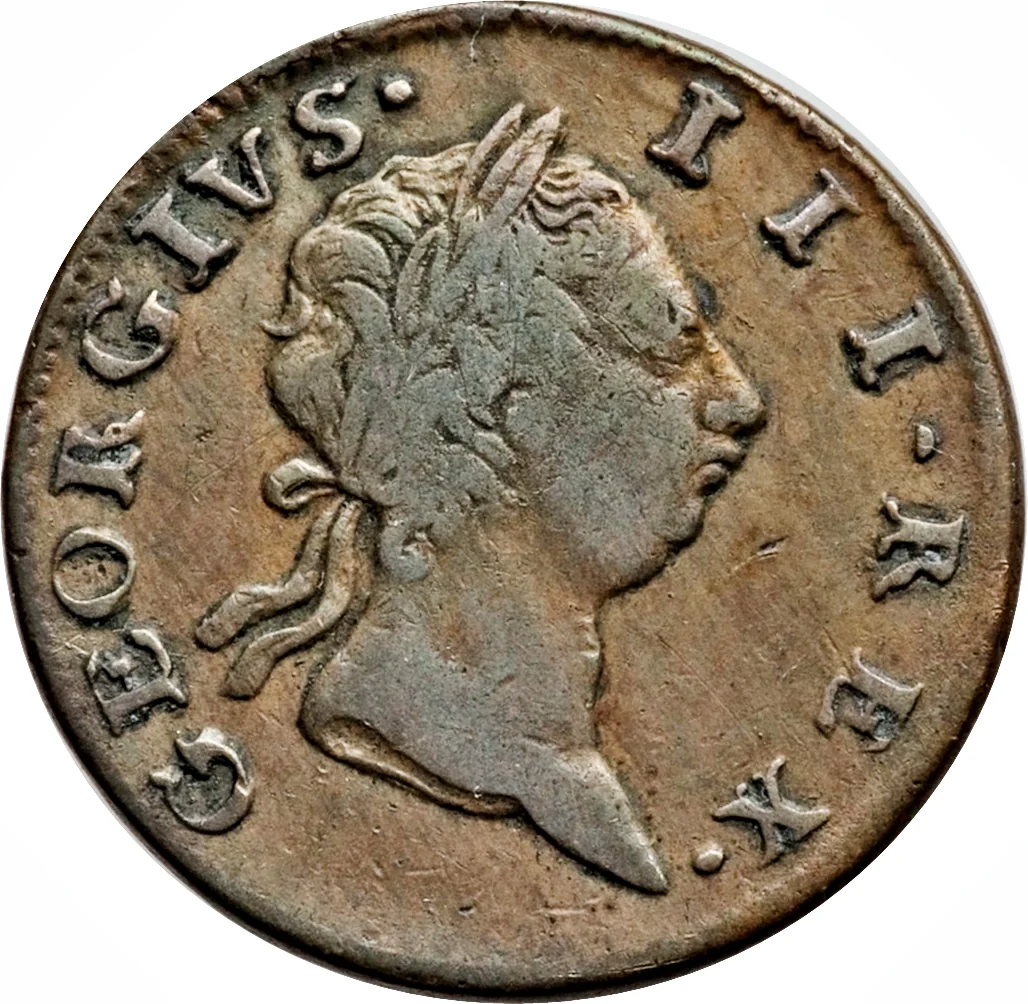
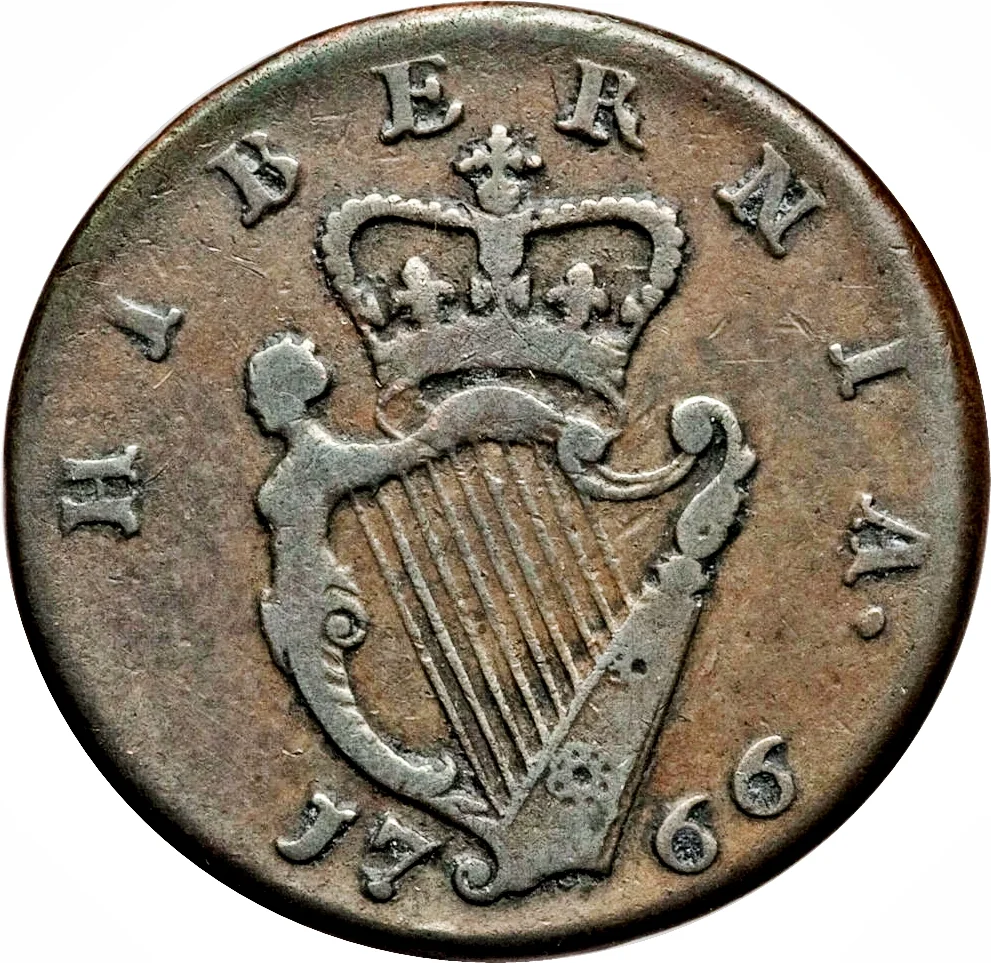
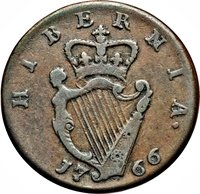
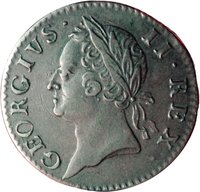
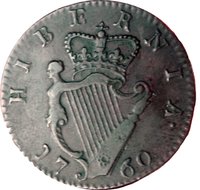
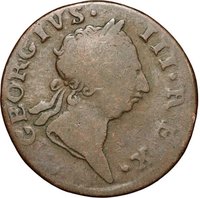
½ Penny – Ireland
Ireland
Context
Material
References
KM: #Click to copy to clipboard137
Numista: #21907
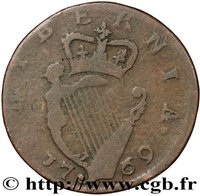
Obverse
Reverse
Edge
Plain
Mintings
| Year | Mint Mark | Mintage | Quality | Collection |
|---|---|---|---|---|
| 1766 | — | — | ||
| 1766 | — | — | Proof | |
| 1769 | — | — |
Historical background
In 1766, Ireland operated under a distinct and strained monetary system within the broader framework of the British Empire. The official currency was the Irish pound (£I), which was not equal to the British pound sterling (£Stg) but was instead fixed at a lower value, typically at a ratio of 13 Irish pounds to 12 British pounds. This created persistent complications in trade and finance with Britain, Ireland's dominant economic partner. Furthermore, the supply of official coinage was chronically insufficient for the needs of the growing economy, leading to widespread use of foreign coins, private tokens, and promissory notes.
The shortage of small change was particularly acute, hampering everyday transactions for the majority of the population. To fill this void, a proliferation of lightweight and often debased copper coins, known as "Raparee Halfpence," flooded the market. These were frequently imported by private interests, leading to confusion and loss of public confidence. The situation was exacerbated by the circulation of counterfeit coins and the practice of "crying up" or "crying down" the value of various coins from different origins, making commerce cumbersome and unreliable.
This monetary instability occurred within a context of restrictive British economic policies, notably the Navigation Acts, which limited Irish trade, and the control exercised by the Irish Parliament in Dublin, which was subordinate to the British Parliament in Westminster. The currency chaos of 1766 reflected broader tensions of Protestant Ascendancy governance and economic subordination. It underscored the need for reform, which would eventually lead to the significant step of the Irish pound's unification with sterling in 1826, following the Act of Union in 1801.
The shortage of small change was particularly acute, hampering everyday transactions for the majority of the population. To fill this void, a proliferation of lightweight and often debased copper coins, known as "Raparee Halfpence," flooded the market. These were frequently imported by private interests, leading to confusion and loss of public confidence. The situation was exacerbated by the circulation of counterfeit coins and the practice of "crying up" or "crying down" the value of various coins from different origins, making commerce cumbersome and unreliable.
This monetary instability occurred within a context of restrictive British economic policies, notably the Navigation Acts, which limited Irish trade, and the control exercised by the Irish Parliament in Dublin, which was subordinate to the British Parliament in Westminster. The currency chaos of 1766 reflected broader tensions of Protestant Ascendancy governance and economic subordination. It underscored the need for reform, which would eventually lead to the significant step of the Irish pound's unification with sterling in 1826, following the Act of Union in 1801.
🌱 Fairly Common