

1 rupee – Arcot
Add to wishlist
India
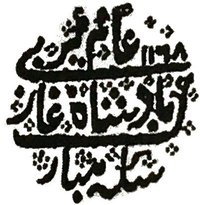
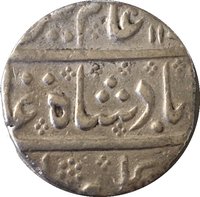
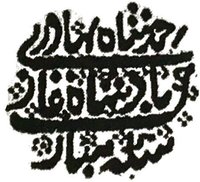
Obverse
Description:
Persian inscription: Alamgir II.
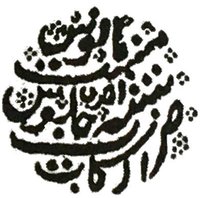
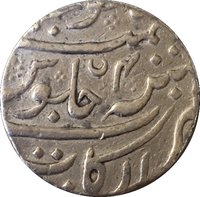
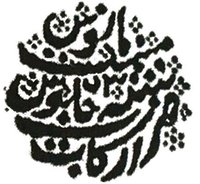
Reverse
Description:
Persian - Julus mint.
Edge
Mints
| Name | Mark |
|---|---|
| Arcot | — |
Mintings
| Year | Mint Mark | Mintage | Quality | Collection |
|---|---|---|---|---|
| — | — | — |
Historical background
In 1754, the Carnatic region of South India, with Arcot as its capital, was a nexus of complex political and economic pressures. The Nawab of Arcot, Muhammad Ali Khan Wallajah, was a key British ally, but his position was precarious, deeply indebted to the British East India Company and private English creditors. This debt, stemming from the Company's military support in the War of the Austrian Succession and the ongoing Carnatic Wars, meant that Arcot's treasury was effectively mortgaged to British interests, creating a financial stranglehold that undermined the Nawab's sovereignty.
The currency system reflected this fractured authority. The region operated on a bimetallic system of gold pagodas and silver rupees, but the circulation was chaotic. Mughal rupees, Arcot rupees (minted by the Nawab), and currencies from neighbouring powers like the Marathas and the French all circulated simultaneously. Furthermore, the British East India Company minted its own gold pagodas at Fort St. George (Madras), creating a competing currency that facilitated their trade and tax collection, further eroding the Nawab's fiscal control.
This monetary confusion was exacerbated by rampant currency debasement. To meet his crippling debt obligations and finance his administration, the Nawab was often compelled to reduce the silver content in his Arcot rupees. This led to severe inflation, loss of public confidence, and a complex web of exchange rates that British traders and creditors could manipulate to their advantage. Thus, the currency situation in 1754 Arcot was not merely an economic issue but a direct manifestation of its political subjugation, serving as a critical instrument in the gradual transfer of power from the Nawab to the British East India Company.
The currency system reflected this fractured authority. The region operated on a bimetallic system of gold pagodas and silver rupees, but the circulation was chaotic. Mughal rupees, Arcot rupees (minted by the Nawab), and currencies from neighbouring powers like the Marathas and the French all circulated simultaneously. Furthermore, the British East India Company minted its own gold pagodas at Fort St. George (Madras), creating a competing currency that facilitated their trade and tax collection, further eroding the Nawab's fiscal control.
This monetary confusion was exacerbated by rampant currency debasement. To meet his crippling debt obligations and finance his administration, the Nawab was often compelled to reduce the silver content in his Arcot rupees. This led to severe inflation, loss of public confidence, and a complex web of exchange rates that British traders and creditors could manipulate to their advantage. Thus, the currency situation in 1754 Arcot was not merely an economic issue but a direct manifestation of its political subjugation, serving as a critical instrument in the gradual transfer of power from the Nawab to the British East India Company.

✨ Legendary