

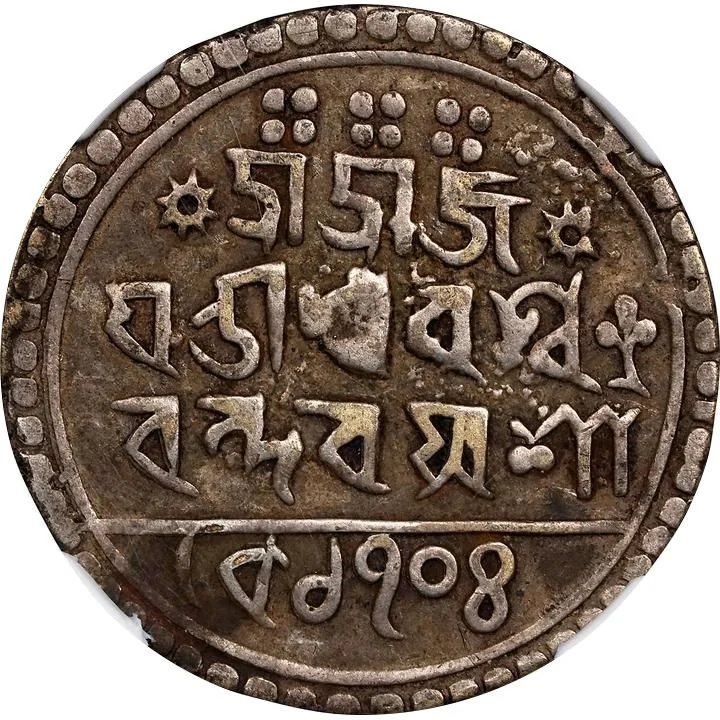
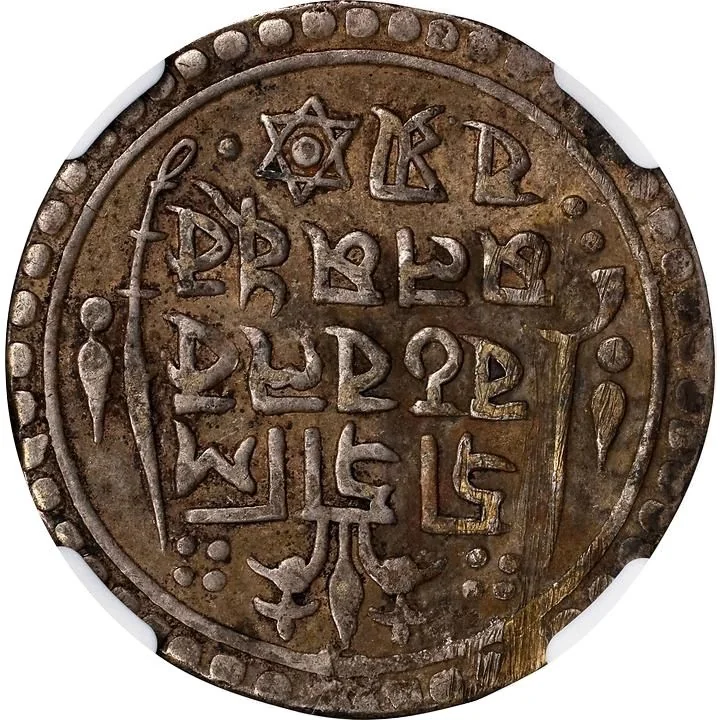
1 Rupee – Jaintia Kingdom
India
Context
Year: 1782
Nepal - Saka era Year: 1704
Country: India 
Issuer: Jaintia Kingdom
Ruler: Yatra Narayan Syiem Sutnga
Currency:
Demonetized: Yes
Material
References
KM: #Click to copy to clipboard192
Numista: #421599
Value
Bullion value: $25.67
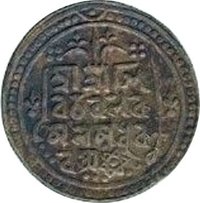
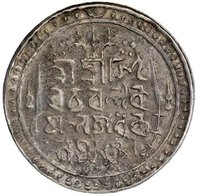
Obverse
Description:
King’s titles and blessing.
Script: Devanagari
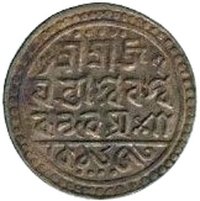
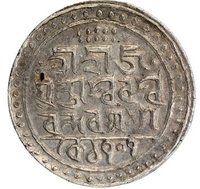
Reverse
Description:
Date and state lettering.
Script: Devanagari
Edge
Plain
Mintings
| Year | Mint Mark | Mintage | Quality | Collection |
|---|---|---|---|---|
| 1782 | — | — |
Historical background
In 1782, the Jaintia Kingdom, nestled in the rugged hills between the Brahmaputra Valley and the Sylhet plains, operated on a complex and multifaceted monetary system. The kingdom’s economy was not dominated by a single, state-issued currency but was instead characterized by a pragmatic blend of commodity money, regional coinage, and barter. The most significant and traditional form of wealth was measured in cowrie shells, particularly the kapardika variety, which were used for everyday small transactions and as a fundamental unit of account. Alongside cowries, valuable goods like salt, iron, and livestock served as important mediums of exchange, especially in remote areas and for larger community transactions.
However, the kingdom was also integrated into broader regional trade networks, which introduced external coinage into its economy. By the late 18th century, silver coins from the neighboring Ahom Kingdom, known as Narayani rupees, and Mughal sicca rupees from Bengal were circulating, particularly for state finance, long-distance trade, and dealings with external powers. The Jaintia rulers, or Syiem, likely collected revenue and paid tributes in these precious metal currencies, while the subsistence economy of the hills continued to rely on cowries and barter. This created a dual system where high-value transactions used coinage, and local markets used shells.
This monetary landscape existed in a period of growing political pressure. The year 1782 fell during the reign of King Chattra Singh, a time when the kingdom was maneuvering to maintain its autonomy amidst the expanding influence of the East India Company in Bengal and ongoing tensions with the Ahoms. The currency situation, therefore, reflected Jaintia’s strategic position: a traditionally self-sufficient hill kingdom with its own economic practices, yet increasingly forced to engage with the monetary systems of more powerful plains-based states, a delicate balance that would define its final decades before annexation.
However, the kingdom was also integrated into broader regional trade networks, which introduced external coinage into its economy. By the late 18th century, silver coins from the neighboring Ahom Kingdom, known as Narayani rupees, and Mughal sicca rupees from Bengal were circulating, particularly for state finance, long-distance trade, and dealings with external powers. The Jaintia rulers, or Syiem, likely collected revenue and paid tributes in these precious metal currencies, while the subsistence economy of the hills continued to rely on cowries and barter. This created a dual system where high-value transactions used coinage, and local markets used shells.
This monetary landscape existed in a period of growing political pressure. The year 1782 fell during the reign of King Chattra Singh, a time when the kingdom was maneuvering to maintain its autonomy amidst the expanding influence of the East India Company in Bengal and ongoing tensions with the Ahoms. The currency situation, therefore, reflected Jaintia’s strategic position: a traditionally self-sufficient hill kingdom with its own economic practices, yet increasingly forced to engage with the monetary systems of more powerful plains-based states, a delicate balance that would define its final decades before annexation.
✨ Legendary