

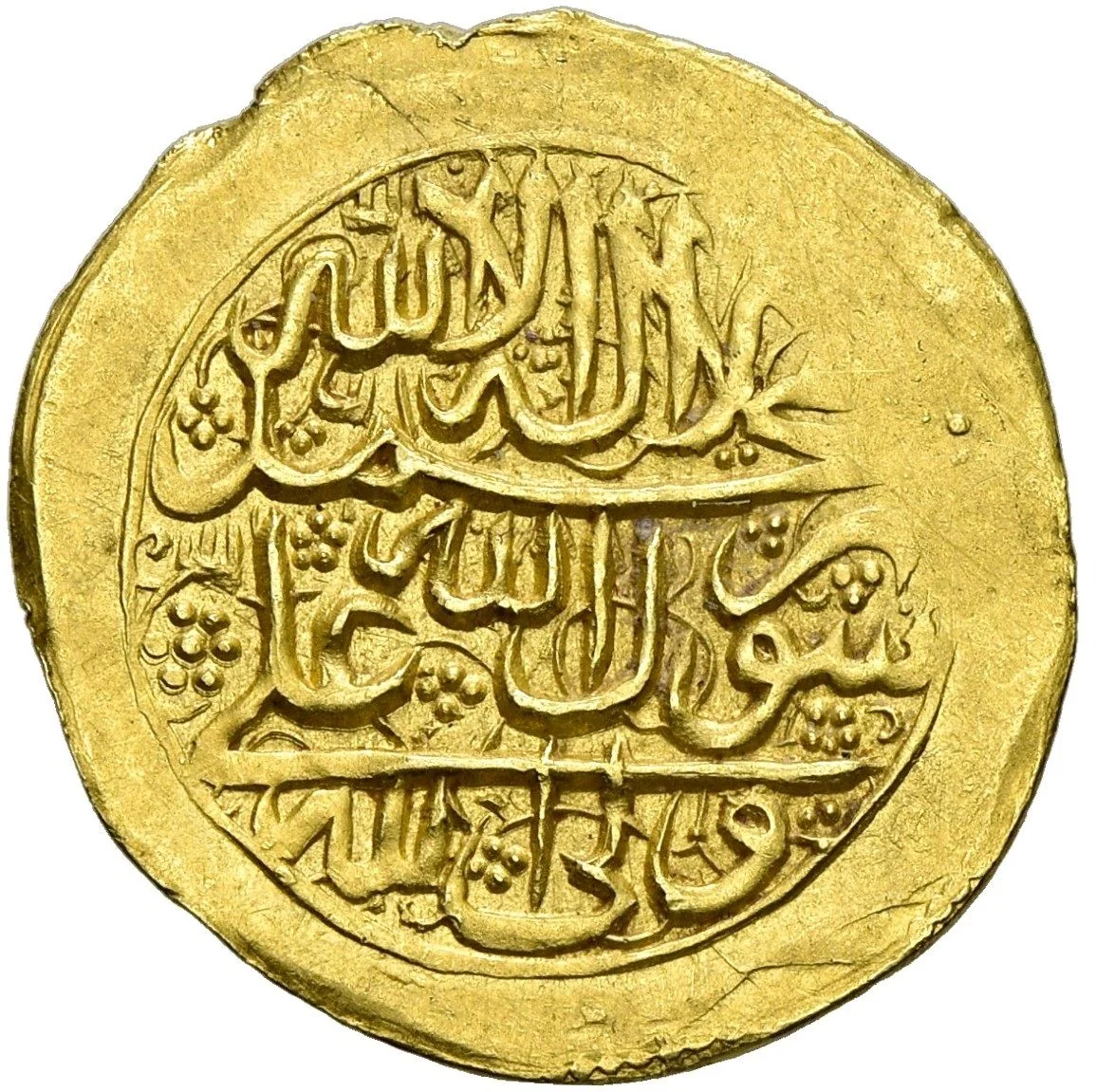
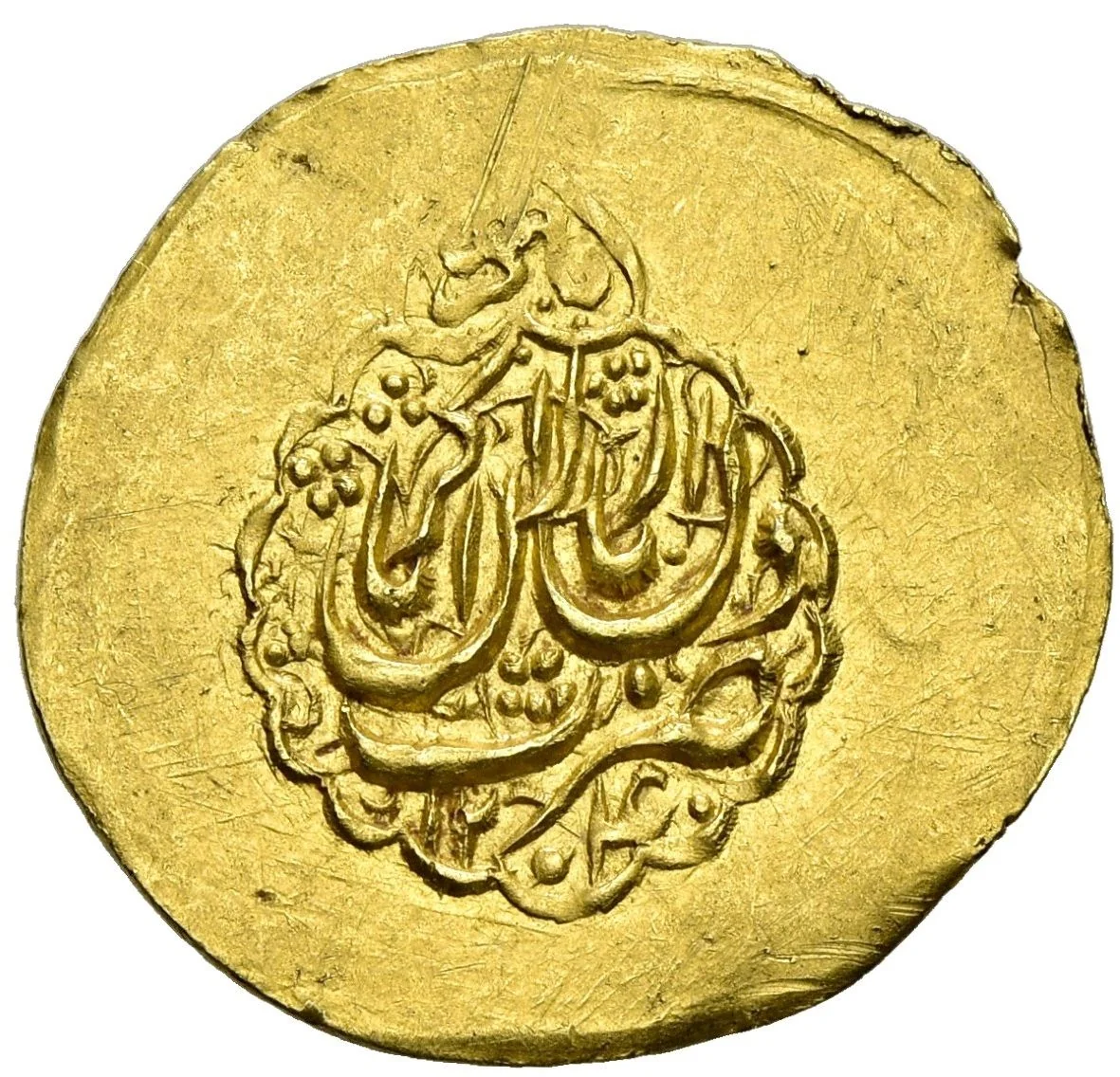
¼ Mohur – Iran
Iran
Context
Year: 1790
Islamic (Hijri) Year: 1204
Issuer: Iran 
Ruler: Lotf Ali Khan
Currency:
(1501—1798)
Demonetized: Yes
Material
Weight: 2.74 g
Gold weight: 2.74 g
Shape: Irregular round
Composition: Gold
Magnetic: No
Technique: Hammered
References
KM: #Click to copy to clipboard587
Numista: #412931
Value
Bullion value: $457.03
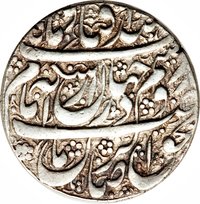
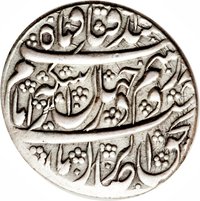
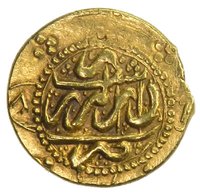
Obverse
Inscription:
لا اله الا الله
محمد رسول الله
علی ولی الله
محمد رسول الله
علی ولی الله
Script: Arabic (naskh)
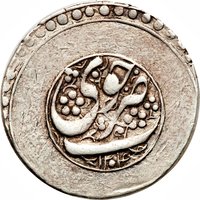
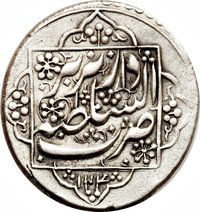
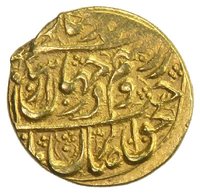
Reverse
Inscription:
یا کریم
ضرب دارالامان کرمان
۱۲۰۴
ضرب دارالامان کرمان
۱۲۰۴
Script: Persian (nastaliq)
Edge
Plain
Mints
| Name | Mark |
|---|---|
| Kerman | — |
Mintings
| Year | Mint Mark | Mintage | Quality | Collection |
|---|---|---|---|---|
| 1790 | — | — |
Historical background
In 1790, Iran was under the rule of the Qajar dynasty, which had recently seized power after a period of profound instability. The preceding decades had seen the collapse of the Safavid Empire, followed by civil war, tribal conflict, and the brutal campaigns of Nader Shah and his successors. This political and military turmoil had devastated the economy, disrupted trade routes, and critically undermined confidence in the monetary system. The state treasury was often empty, and the new Qajar ruler, Agha Mohammad Khan, was primarily focused on the military consolidation of the realm, leaving little administrative capacity for systematic economic or monetary reform.
The currency in circulation was a chaotic mix of domestic and foreign coins, lacking a uniform national standard. The primary silver coin was the abbasi, but its weight and purity were highly inconsistent due to frequent debasement by various provincial rulers and mint masters seeking to finance their expenditures. Foreign coins, particularly the Dutch levendaalder and the Indian rupee, circulated widely in port cities and along trade routes, often preferred for their more reliable silver content. Copper coins (fulus) were used for small, everyday transactions but were subject to severe inflation and local manipulation, further complicating commerce for the common population.
This fragmented and debased currency system reflected the weak central authority of the early Qajar state. With no effective control over the mints or a coherent monetary policy, the value of money was unstable and largely determined by local markets and the intrinsic bullion value of the coins themselves. The situation created significant obstacles to internal trade, tax collection, and economic recovery, laying a foundation of monetary instability that would challenge Iran throughout the 19th century.
The currency in circulation was a chaotic mix of domestic and foreign coins, lacking a uniform national standard. The primary silver coin was the abbasi, but its weight and purity were highly inconsistent due to frequent debasement by various provincial rulers and mint masters seeking to finance their expenditures. Foreign coins, particularly the Dutch levendaalder and the Indian rupee, circulated widely in port cities and along trade routes, often preferred for their more reliable silver content. Copper coins (fulus) were used for small, everyday transactions but were subject to severe inflation and local manipulation, further complicating commerce for the common population.
This fragmented and debased currency system reflected the weak central authority of the early Qajar state. With no effective control over the mints or a coherent monetary policy, the value of money was unstable and largely determined by local markets and the intrinsic bullion value of the coins themselves. The situation created significant obstacles to internal trade, tax collection, and economic recovery, laying a foundation of monetary instability that would challenge Iran throughout the 19th century.
Series: 1790 Iran circulation coins
✨ Legendary