

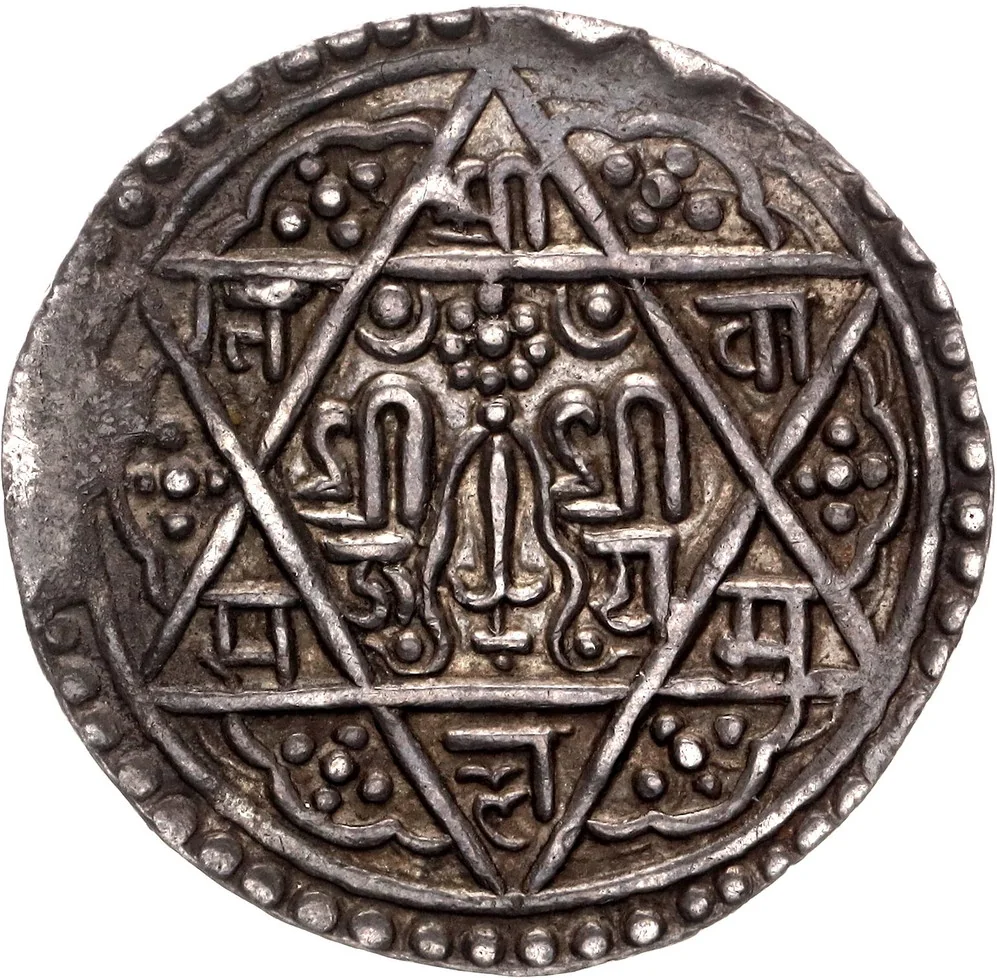
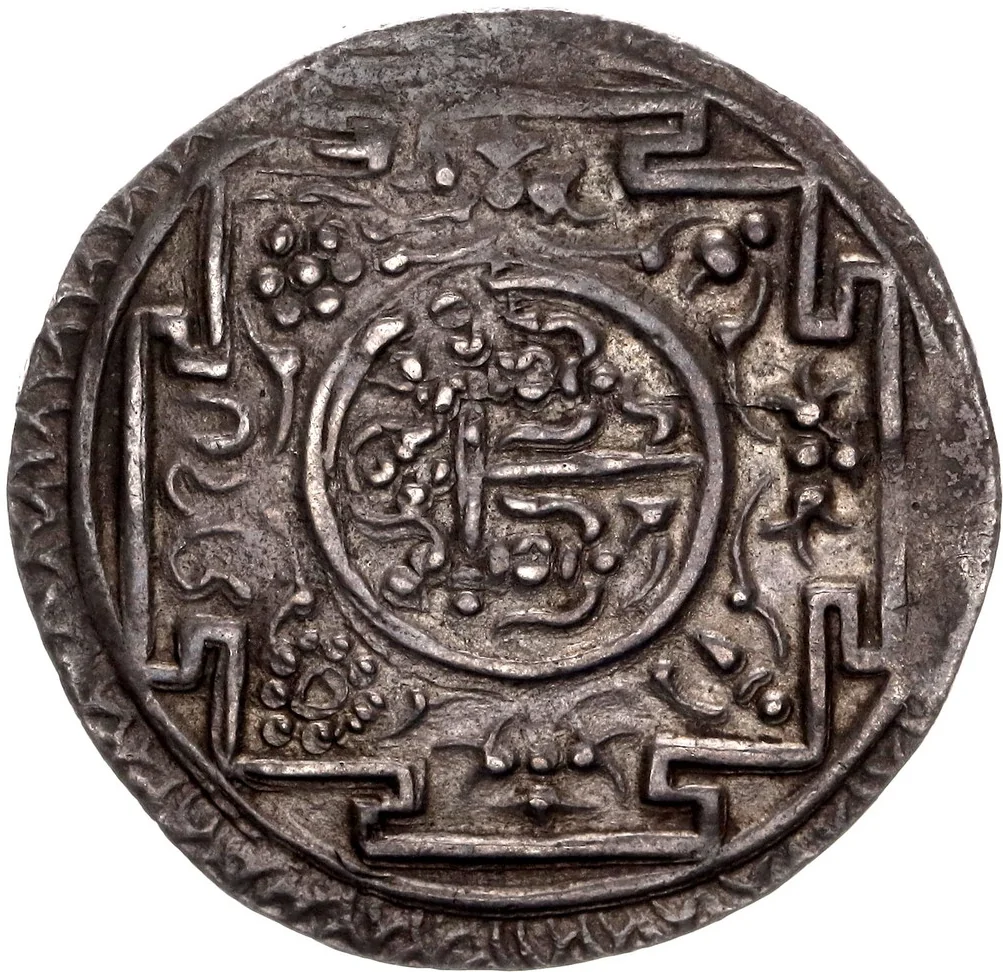
1 Mohar – Patan Kingdom
Nepal
Context
Year: 1666
Nepal Sambat Year: 786
Country: Nepal 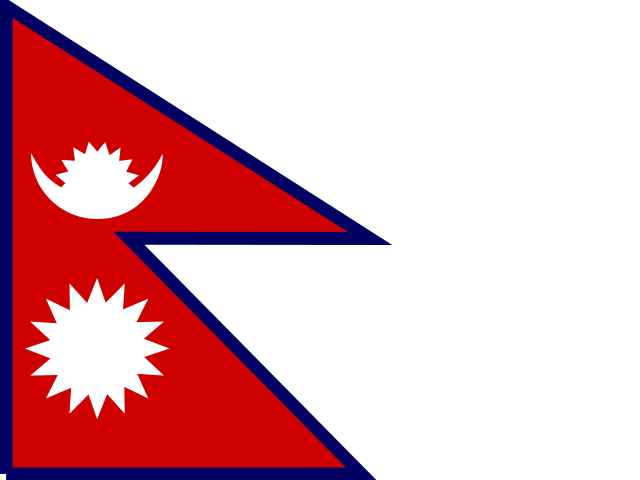
Issuer: Patan Kingdom
Currency:
(1546—1932)
Demonetized: Yes
References
KM: #Click to copy to clipboard307
Numista: #410708
Value
Bullion value: $15.39
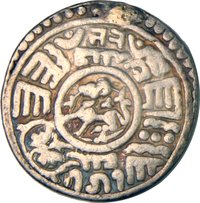
Obverse
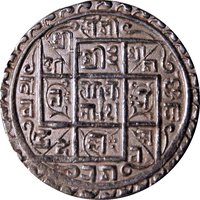
Reverse
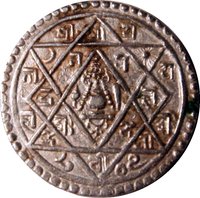
Edge
Mintings
| Year | Mint Mark | Mintage | Quality | Collection |
|---|---|---|---|---|
| 1666 | — | — |
Historical background
In 1666, the Patan Kingdom, a vital constituent of the Kathmandu Valley's trio of city-states (alongside Kathmandu and Bhaktapur), operated within a sophisticated but fragmented monetary system. The primary circulating currency was the Mohar, a silver coin that served as the standard unit of account and medium for significant trade and taxation. However, coinage was not the exclusive monopoly of the state; local rulers, wealthy merchants, and temples often issued their own copper and silver coins, leading to a complex mix of issues with varying weights and purities. This period also saw the continued use of older Malla dynasty coinage and even coins from neighboring kingdoms, creating a marketplace where money-changers (sarrafs) were essential figures.
The monetary landscape was heavily influenced by the kingdom's pivotal role in trans-Himalayan trade. Patan, a renowned center of Newari craftsmanship and metallurgy, lay on the lucrative route between Tibet and India. Consequently, alongside local Mohars, the kingdom saw significant circulation of Tibetan silver tangkas and Indian Mughal rupees. This influx of foreign specie, particularly silver from the south, was crucial for minting local coins. The economy, however, remained fundamentally agrarian, and for most daily transactions among the populace, barter and payments in kind (like grains) were still widespread, especially in rural areas surrounding the urban core.
Politically, the year 1666 fell during the reign of Srinivasa Malla (r. 1661–1685), a period of relative stability and artistic flourishing. While he maintained Patan's sovereignty, the broader monetary situation reflected both the kingdom's commercial prosperity and the persistent political fragmentation of the valley. Each of the three Malla kingdoms minted their own coins, often competitively, leading to a lack of standardization. This complex system, reliant on imported silver and decentralized minting, would remain in place until the unification of Nepal under the Gorkhas a century later, which imposed a single, centralized currency across the region.
The monetary landscape was heavily influenced by the kingdom's pivotal role in trans-Himalayan trade. Patan, a renowned center of Newari craftsmanship and metallurgy, lay on the lucrative route between Tibet and India. Consequently, alongside local Mohars, the kingdom saw significant circulation of Tibetan silver tangkas and Indian Mughal rupees. This influx of foreign specie, particularly silver from the south, was crucial for minting local coins. The economy, however, remained fundamentally agrarian, and for most daily transactions among the populace, barter and payments in kind (like grains) were still widespread, especially in rural areas surrounding the urban core.
Politically, the year 1666 fell during the reign of Srinivasa Malla (r. 1661–1685), a period of relative stability and artistic flourishing. While he maintained Patan's sovereignty, the broader monetary situation reflected both the kingdom's commercial prosperity and the persistent political fragmentation of the valley. Each of the three Malla kingdoms minted their own coins, often competitively, leading to a lack of standardization. This complex system, reliant on imported silver and decentralized minting, would remain in place until the unification of Nepal under the Gorkhas a century later, which imposed a single, centralized currency across the region.
✨ Legendary