

6 escudos – Portuguese India
Add to wishlist
India
Context
Year: 1959
Country: India
Issuer: Portuguese India
Period:
(1910—1961)
Currency:
(1958—1961)
Demonetization: 15 May 1962
Total mintage: 4,000,000
Material
References
KM: #
Numista: #11770
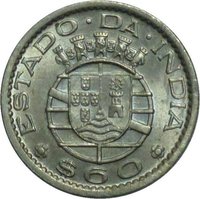
Obverse
Description:
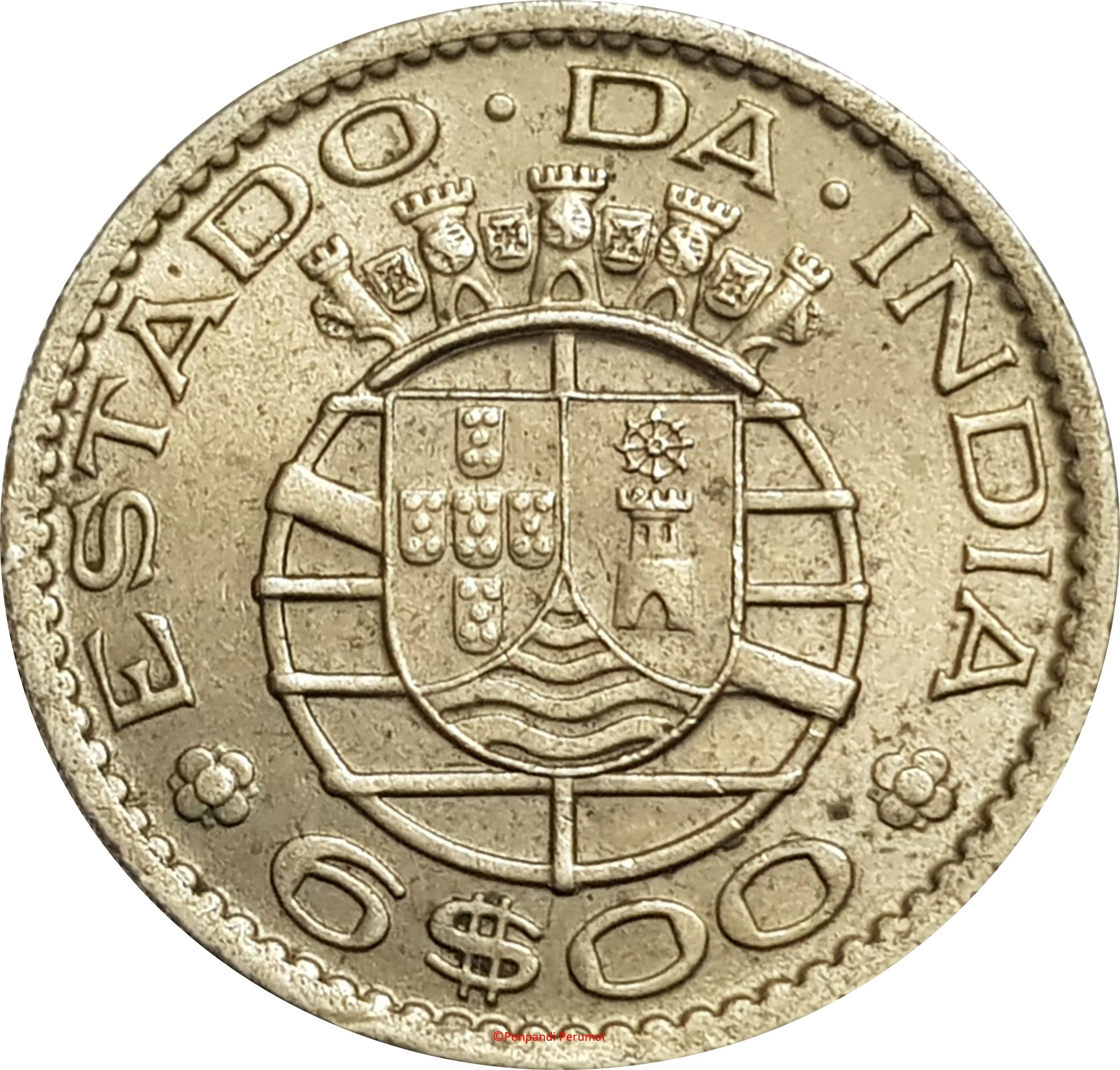
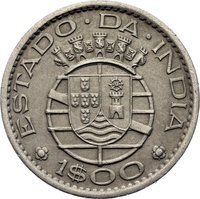
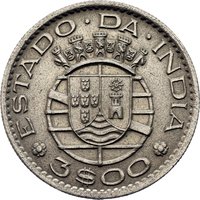
Tiny towers and a divided shield atop a striped circle.
Inscription:
ESTADO·DA·INDIA
6$00
6$00
Translation:
STATE OF INDIA
6$00
6$00
Script: Latin
Language: Portuguese
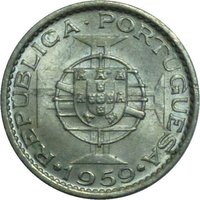
Reverse
Description:
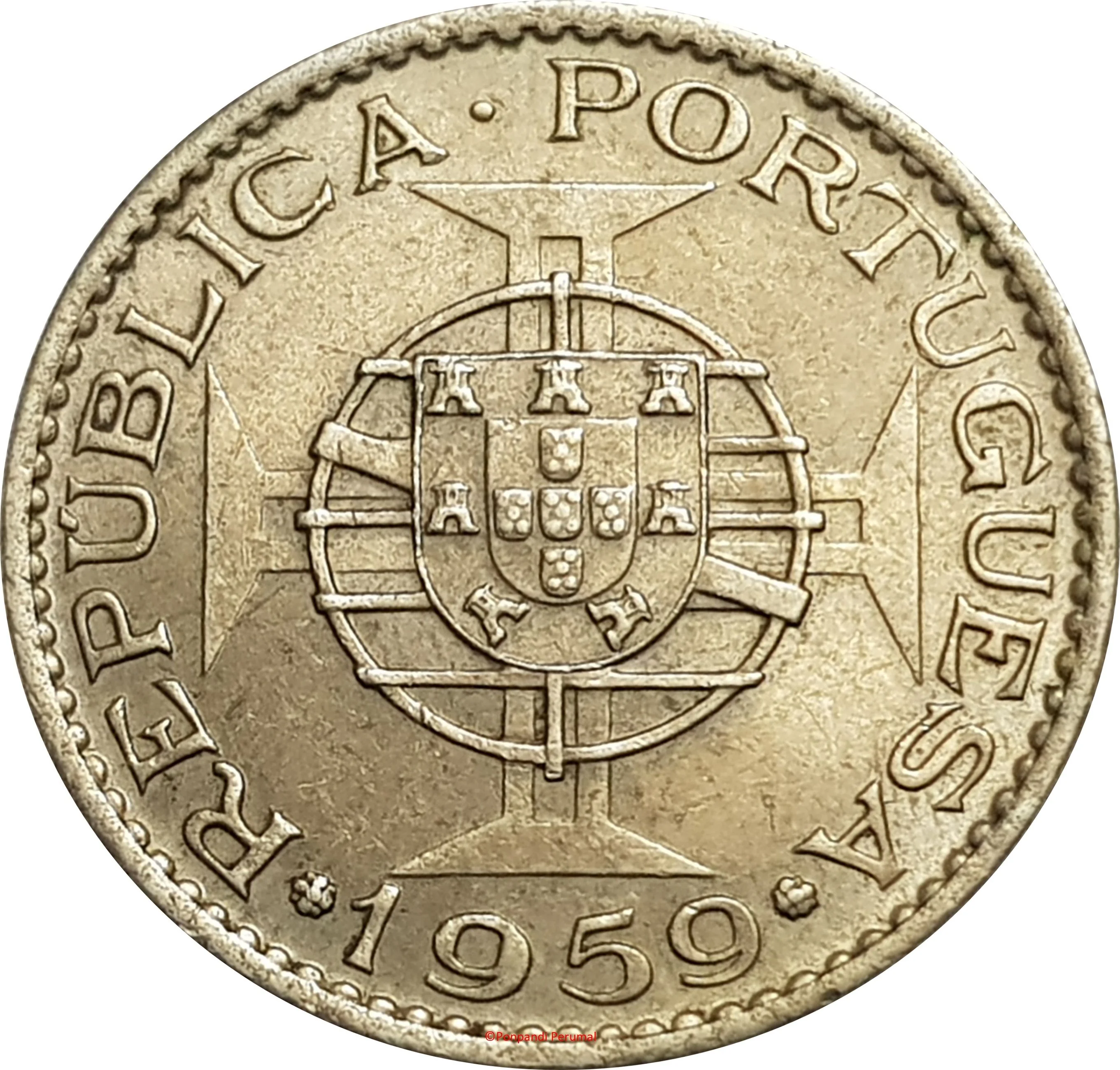
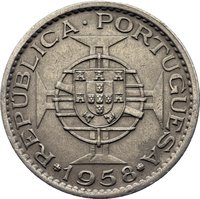
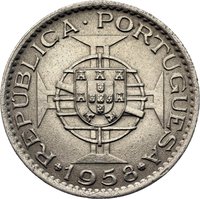
Shield on lined circle within a Christus Cross, date beneath.
Inscription:
REPUBLICA·PORTUGUESA
·1959·
·1959·
Translation:
PORTUGUESE REPUBLIC
·1959·
·1959·
Script: Latin
Language: Portuguese
Edge
Reeded
Mints
| Name | Mark |
|---|---|
| Imprensa Nacional - Casa da Moeda | — |
Mintings
| Year | Mint Mark | Mintage | Quality | Collection |
|---|---|---|---|---|
| 1959 | — | 4,000,000 |
Historical background
In 1959, the currency situation in Portuguese India (Goa, Daman, and Diu) was a complex and politically charged issue, emblematic of the territory's contested status. Officially, the currency in circulation was the Portuguese Indian rupia (INPR), which was pegged at par with the Indian rupee (INR). Both notes and coins were issued by the Banco Nacional Ultramarino (National Overseas Bank), bearing distinct designs that reflected Portuguese sovereignty. In daily practice, however, Indian rupee notes from the Reserve Bank of India circulated widely and were accepted interchangeably, creating a de facto dual-currency system driven by extensive cross-border trade and familial ties.
This monetary ambiguity was a source of persistent tension between Lisbon and New Delhi. The Indian government viewed the circulation of its currency in Goa not as convenience but as evidence of the territory's natural economic integration with India, arguing it undermined Portugal's colonial claims. Portugal, in turn, saw the maintenance of its separate rupia as a vital symbol of its political authority and resisted Indian attempts to economically isolate the enclaves. The situation was further complicated by Portuguese efforts to introduce metallic currency reforms to physically distinguish their coinage from India's, though with limited practical success on the ground.
Thus, by 1959, the currency scenario was a microcosm of the larger sovereignty dispute. It was an unstable equilibrium where economic reality and political aspiration were in direct conflict. The fluid movement of Indian rupees underscored the impracticality of maintaining a separate colonial economy, while Portugal's insistence on its own currency was a defiant political statement. This stalemate would continue until the Indian military annexation in December 1961, after which the Portuguese Indian rupia was immediately demonetized and replaced by the Indian rupee.
This monetary ambiguity was a source of persistent tension between Lisbon and New Delhi. The Indian government viewed the circulation of its currency in Goa not as convenience but as evidence of the territory's natural economic integration with India, arguing it undermined Portugal's colonial claims. Portugal, in turn, saw the maintenance of its separate rupia as a vital symbol of its political authority and resisted Indian attempts to economically isolate the enclaves. The situation was further complicated by Portuguese efforts to introduce metallic currency reforms to physically distinguish their coinage from India's, though with limited practical success on the ground.
Thus, by 1959, the currency scenario was a microcosm of the larger sovereignty dispute. It was an unstable equilibrium where economic reality and political aspiration were in direct conflict. The fluid movement of Indian rupees underscored the impracticality of maintaining a separate colonial economy, while Portugal's insistence on its own currency was a defiant political statement. This stalemate would continue until the Indian military annexation in December 1961, after which the Portuguese Indian rupia was immediately demonetized and replaced by the Indian rupee.
Series: Decimal System
🌱 Fairly Common