

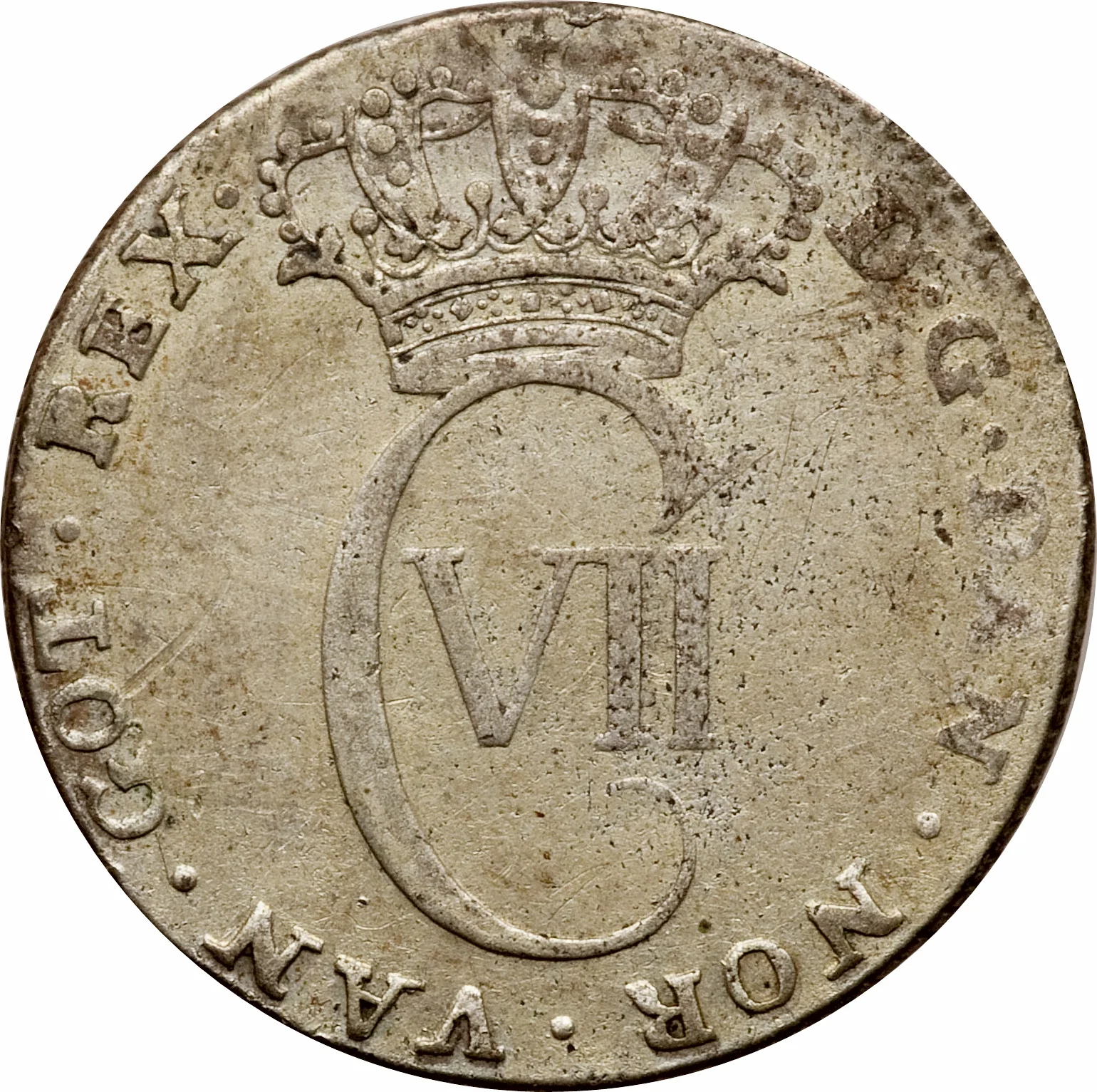
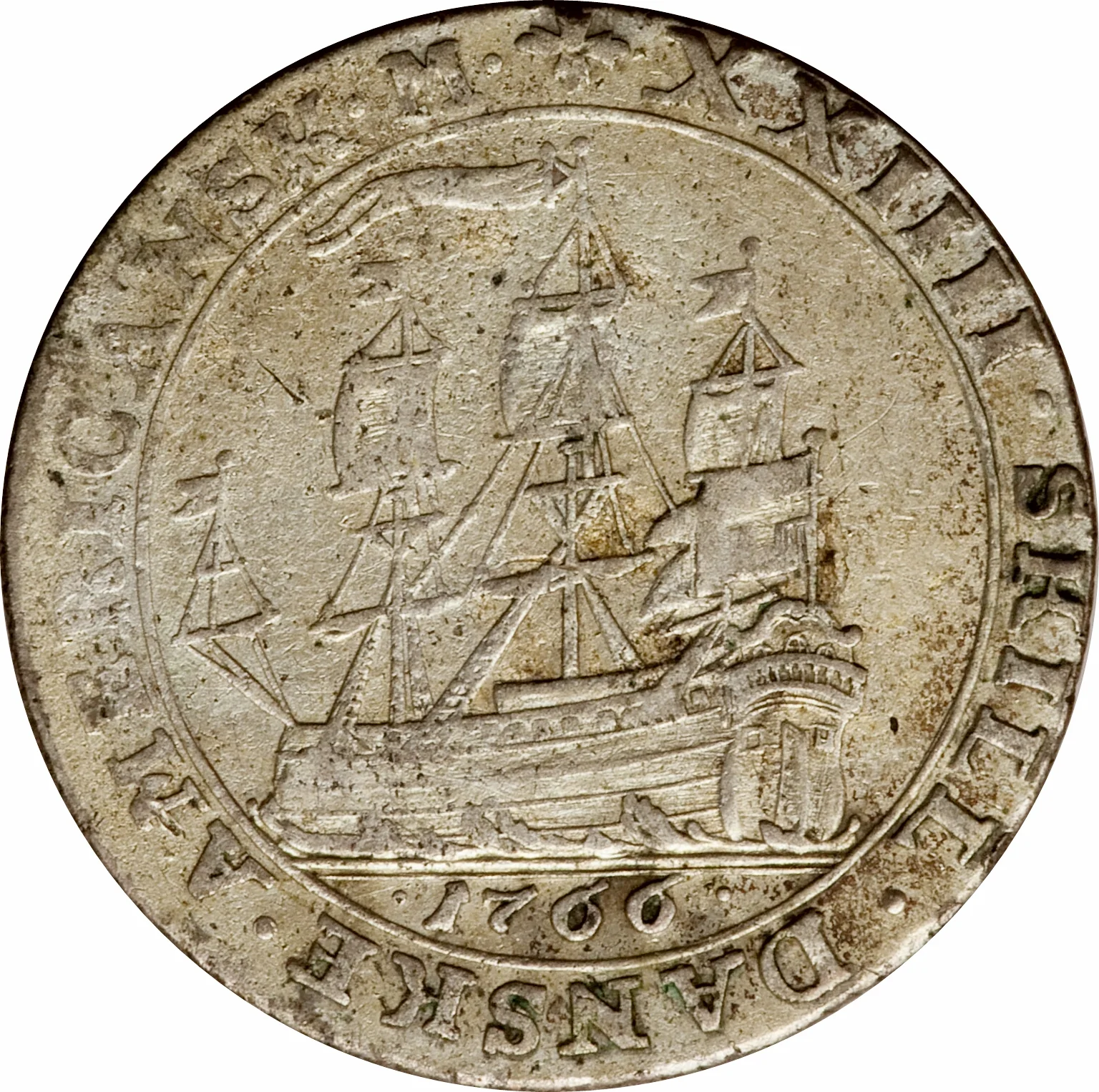
24 Skilling – Danish West Indies
Context
Years: 1766–1767
Issuer: Danish West Indies
Ruler: Christian VII
Currency:
(1740—1849)
Demonetized: Yes
Total mintage: 132,000
Material
References
KM: #Click to copy to clipboard10
Numista: #40362
Value
Bullion value: $9.15
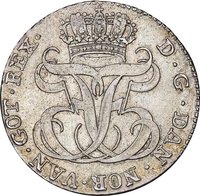
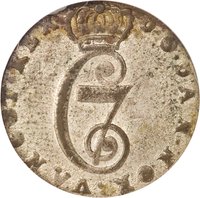
Obverse
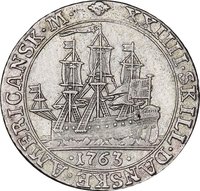
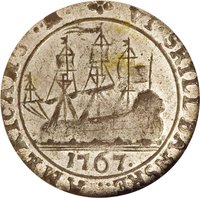
Reverse
Edge
Plain
Categories
| Symbol> Flag |
| Transportation> Watercraft |
| Symbol> Crown |
| Symbols> Monogram |
Mintings
| Year | Mint Mark | Mintage | Quality | Collection |
|---|---|---|---|---|
| 1766 | — | 57,000 | ||
| 1767 | — | 75,000 |
Historical background
In 1766, the currency situation in the Danish West Indies (present-day U.S. Virgin Islands) was a complex and often chaotic system defined by scarcity and a multiplicity of foreign coins. The official currency was the Danish rigsdaler, divided into 96 skilling, but these coins were rarely seen in everyday island commerce. The plantation-based sugar economy was deeply integrated into international trade, which meant that a wide array of Spanish, Dutch, French, and British coins circulated simultaneously. The most important of these was the Spanish silver dollar, or piece of eight, which served as the de facto benchmark for large transactions and trade settlements.
This proliferation of foreign coins created significant practical problems. Their values fluctuated not only based on metallic content but also according to local proclamation rates set by the Danish government, which frequently adjusted valuations to try to keep specie on the islands. Chronic shortage of coinage of any kind was a fundamental issue, leading to the widespread use of unreliable and easily counterfeited paper notes issued by local merchants and planters. This unstable environment fostered confusion, encouraged fraud, and complicated both local business and the critical trade with neighboring non-Danish islands.
Ultimately, the currency chaos of 1766 reflected the islands' position as a small colonial entity within a vast Atlantic economic network. The Danish administration struggled to impose monetary order, but the sheer force of regional trade dynamics and the lack of sufficient official coinage made their efforts largely ineffective. This unstable system would persist for decades, acting as a drag on economic efficiency and a point of contention between the colonial government, planters, and merchants until more formal reforms were attempted in the late 18th century.
This proliferation of foreign coins created significant practical problems. Their values fluctuated not only based on metallic content but also according to local proclamation rates set by the Danish government, which frequently adjusted valuations to try to keep specie on the islands. Chronic shortage of coinage of any kind was a fundamental issue, leading to the widespread use of unreliable and easily counterfeited paper notes issued by local merchants and planters. This unstable environment fostered confusion, encouraged fraud, and complicated both local business and the critical trade with neighboring non-Danish islands.
Ultimately, the currency chaos of 1766 reflected the islands' position as a small colonial entity within a vast Atlantic economic network. The Danish administration struggled to impose monetary order, but the sheer force of regional trade dynamics and the lack of sufficient official coinage made their efforts largely ineffective. This unstable system would persist for decades, acting as a drag on economic efficiency and a point of contention between the colonial government, planters, and merchants until more formal reforms were attempted in the late 18th century.
💎 Extremely Rare