

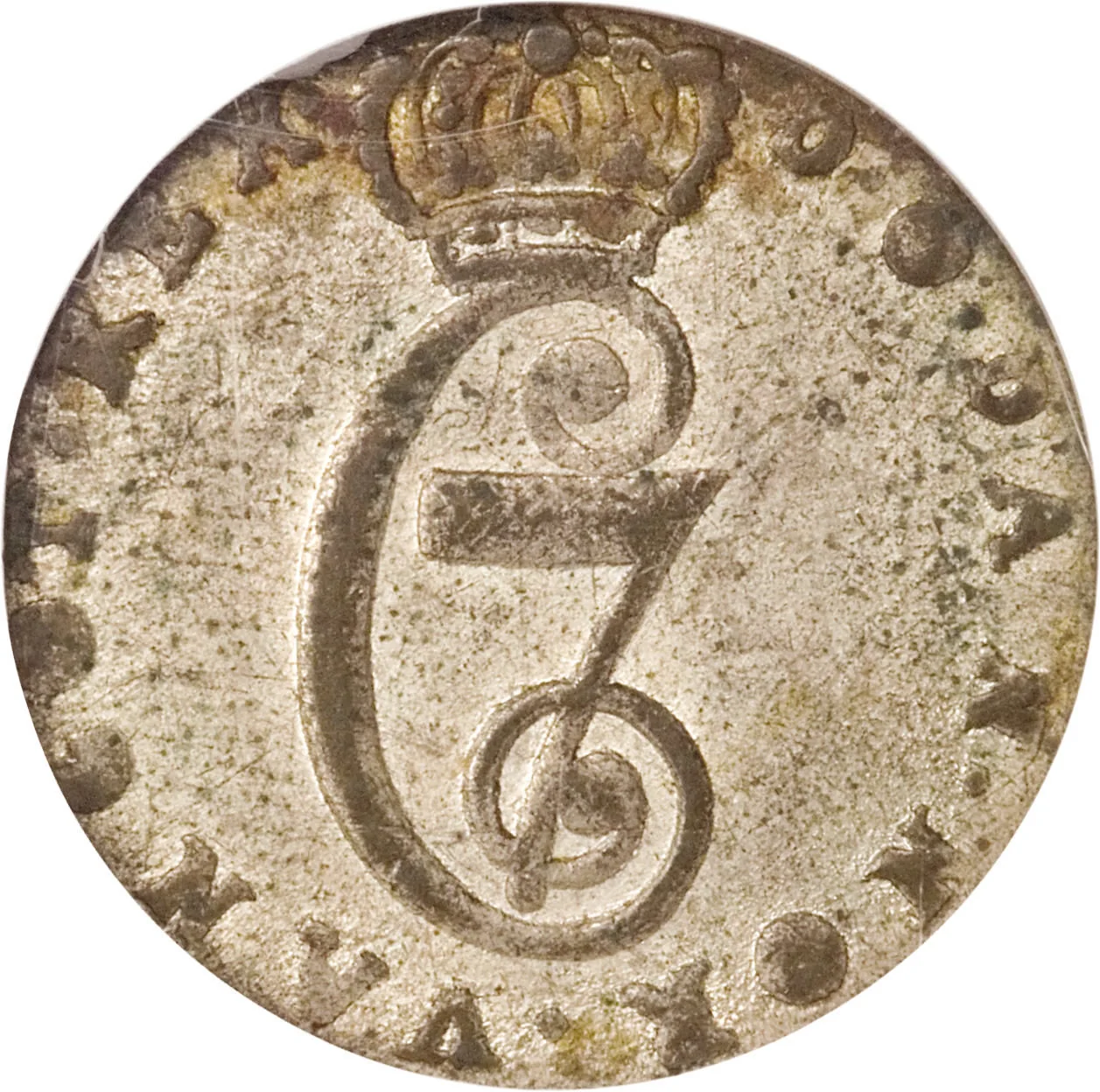
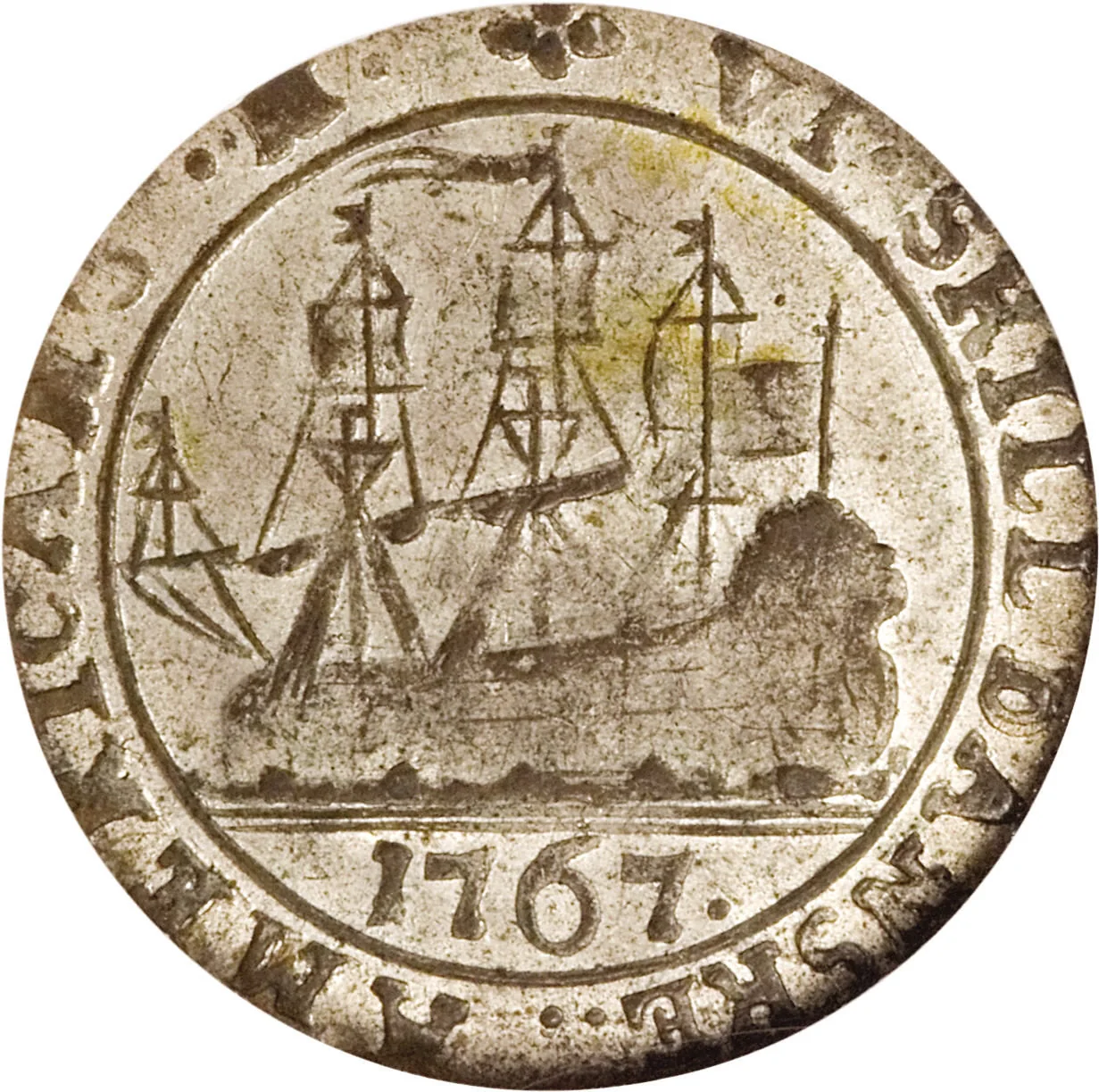
6 Skilling – Danish West Indies
Context
Material
References
KM: #Click to copy to clipboard11
Numista: #17056
Value
Bullion value: $2.28
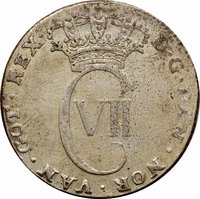
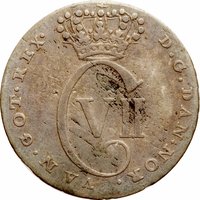
Obverse
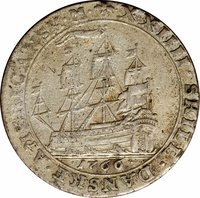
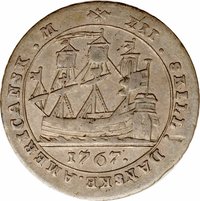
Reverse
Edge
Plain
Categories
| Symbol> Flag |
| Transportation> Watercraft |
| Symbol> Crown |
| Symbols> Monogram |
Mintings
| Year | Mint Mark | Mintage | Quality | Collection |
|---|---|---|---|---|
| 1767 | — | — |
Historical background
In 1767, the currency situation in the Danish West Indies (present-day U.S. Virgin Islands) was a complex and problematic system defined by scarcity and multiple competing currencies. The official currency was the Danish rigsdaler, but it was rarely seen in physical circulation on the islands of St. Thomas, St. John, and St. Croix. Instead, the economy operated primarily on a system of credit and foreign coinage, with Spanish pieces of eight (and their fractional parts, bits) serving as the de facto medium of exchange for everyday transactions. This reliance on foreign coin reflected the islands' central role in intra-Caribbean trade and commerce with non-Danish merchants.
The scarcity of standardized coinage led to significant challenges. Planters and merchants conducted much of their business through book credit, while the fluctuating values of the various Spanish, French, and Dutch coins in circulation created confusion and facilitated fraud. To address this, the Danish government periodically issued official plakater (proclamations) that set exchange rates for these foreign coins in relation to the rigsdaler. However, these fixed rates often failed to reflect the true market value or weight of the worn and clipped coins, leading to disputes, economic instability, and the frequent outflow of the best-quality coins.
Ultimately, the currency chaos of 1767 underscored a fundamental tension: the islands were a Danish colonial possession, but their economic lifeblood was international trade. The Danish state struggled to impose monetary order from Copenhagen, while the local plantation economy, dependent on the export of sugar and rum, was inextricably woven into a broader Caribbean and Atlantic world that operated on silver reales. This dysfunctional system would persist, with periodic attempts at reform, until the introduction of the Dansk Vestindisk rigsdaler on a decimal system in 1849.
The scarcity of standardized coinage led to significant challenges. Planters and merchants conducted much of their business through book credit, while the fluctuating values of the various Spanish, French, and Dutch coins in circulation created confusion and facilitated fraud. To address this, the Danish government periodically issued official plakater (proclamations) that set exchange rates for these foreign coins in relation to the rigsdaler. However, these fixed rates often failed to reflect the true market value or weight of the worn and clipped coins, leading to disputes, economic instability, and the frequent outflow of the best-quality coins.
Ultimately, the currency chaos of 1767 underscored a fundamental tension: the islands were a Danish colonial possession, but their economic lifeblood was international trade. The Danish state struggled to impose monetary order from Copenhagen, while the local plantation economy, dependent on the export of sugar and rum, was inextricably woven into a broader Caribbean and Atlantic world that operated on silver reales. This dysfunctional system would persist, with periodic attempts at reform, until the introduction of the Dansk Vestindisk rigsdaler on a decimal system in 1849.
💎 Extremely Rare