

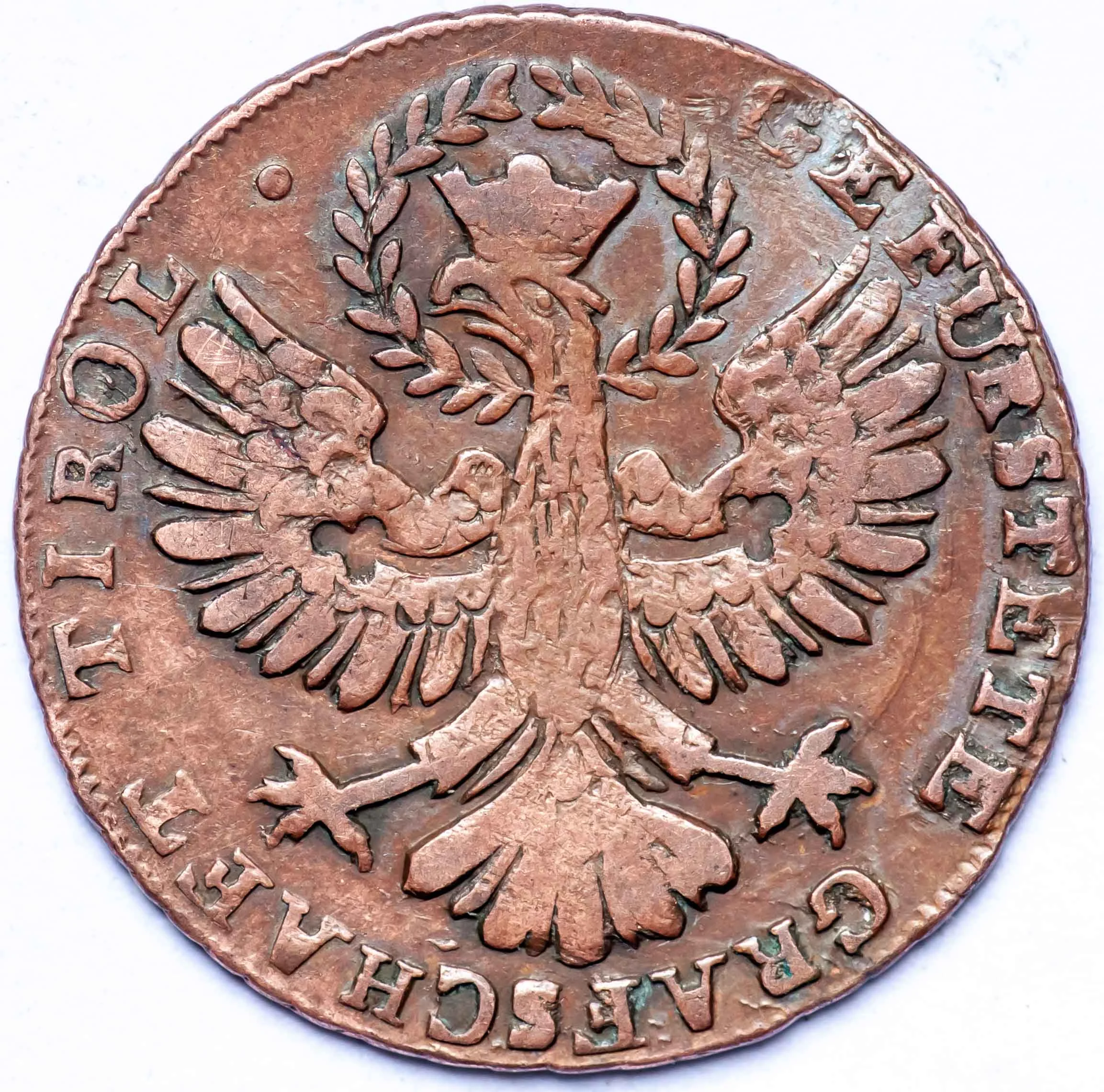
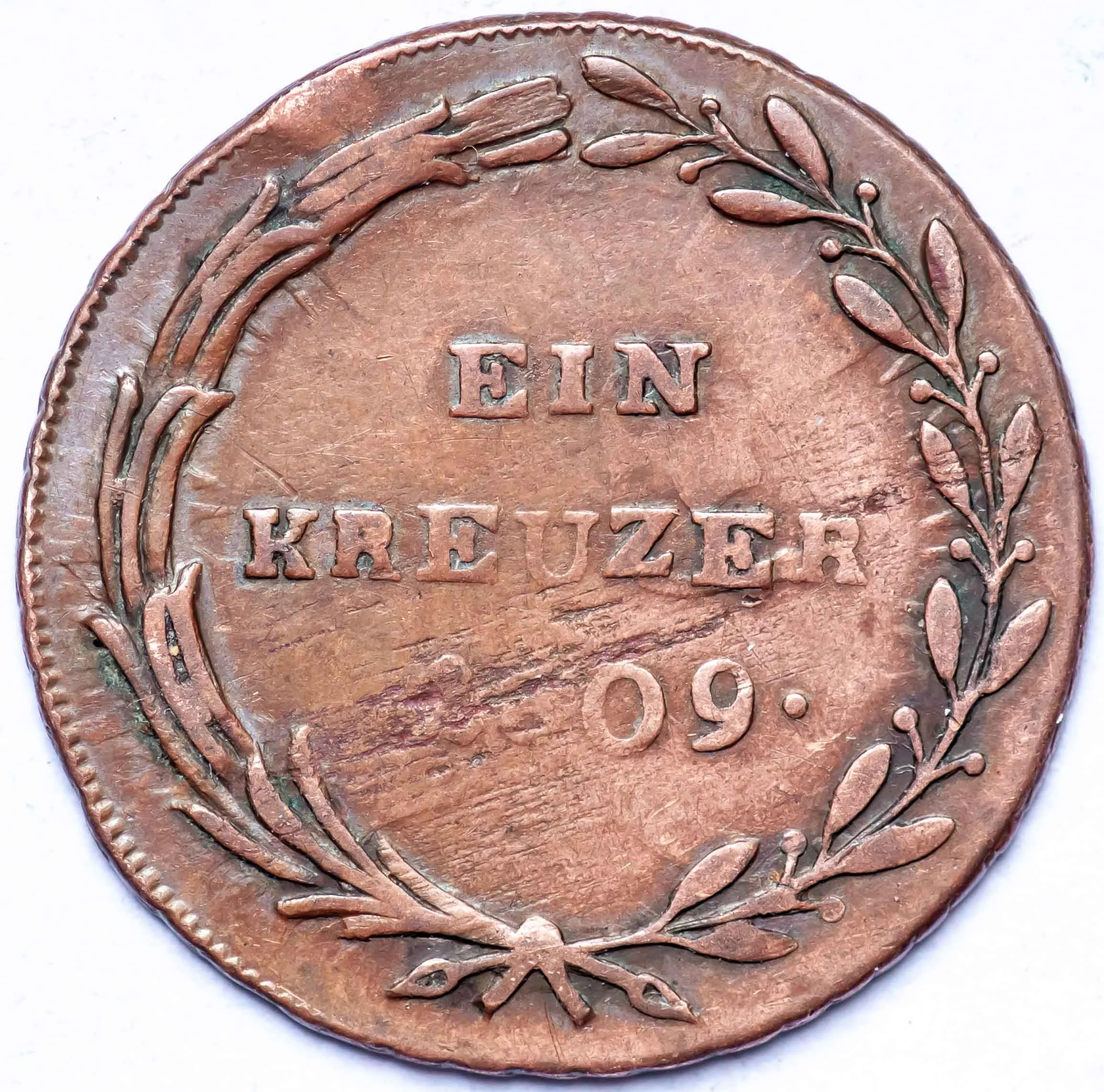
1 Kreuzer Landmunze – County of Tyrol
Austria

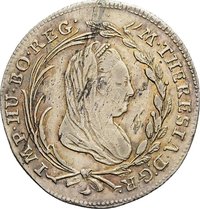
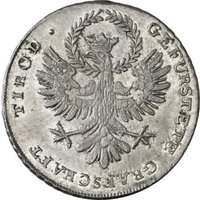
Obverse
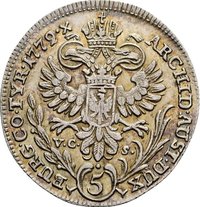
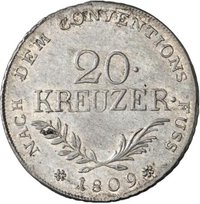
Reverse
Edge
Floral pattern
Mints
| Name | Mark |
|---|---|
| Hall | — |
Mintings
| Year | Mint Mark | Mintage | Quality | Collection |
|---|---|---|---|---|
| 1809 | — | — |
Historical background
In 1809, the County of Tyrol found itself in a state of insurrection against Bavarian and French rule, a conflict deeply intertwined with complex currency pressures. Since Bavaria's annexation of Tyrol in 1805, the new administration had imposed its monetary system, replacing the familiar Tyrolean Kreutzer with the Bavarian Gulden. This was not merely a symbolic change; the Bavarian currency was introduced at an unfavourable exchange rate, effectively devaluing the people's savings and causing widespread economic resentment. Furthermore, Bavarian authorities demanded taxes be paid in the new currency, which was often scarce in rural areas, creating severe hardship and becoming a direct catalyst for discontent alongside religious and political grievances.
During the active rebellion led by Andreas Hofer, the financial situation grew increasingly chaotic. The rebel government, operating from Innsbruck, faced the urgent need to fund the uprising and pay its militia. To this end, it authorized the issuance of its own paper money, known as Tiroler Landespatente. These emergency notes were promises to pay the bearer in silver coin after a victorious conclusion to the war. However, with the region blockaded and its economy in disarray, these notes rapidly depreciated in value. The populace, already wary of paper money, held little confidence in them, leading to a de facto multi-currency environment where Bavarian coins, Austrian coins from previous rule, and nearly worthless rebel paper all circulated uncertainly.
The collapse of the rebellion in late 1809 rendered the Landespatente completely worthless, leaving those holding them with significant losses. Following the re-establishment of Bavarian control, and later the return of Tyrol to Austria in 1814, monetary stability was gradually restored under the Austrian monetary standard. Thus, the currency situation of 1809 serves as a stark microcosm of the rebellion itself: born from imposed foreign financial policy, sustained by fragile and desperate emergency measures, and ultimately ending in a decisive restoration of the former monetary order, with the common Tyrolean bearing the economic cost of the failed revolution.
During the active rebellion led by Andreas Hofer, the financial situation grew increasingly chaotic. The rebel government, operating from Innsbruck, faced the urgent need to fund the uprising and pay its militia. To this end, it authorized the issuance of its own paper money, known as Tiroler Landespatente. These emergency notes were promises to pay the bearer in silver coin after a victorious conclusion to the war. However, with the region blockaded and its economy in disarray, these notes rapidly depreciated in value. The populace, already wary of paper money, held little confidence in them, leading to a de facto multi-currency environment where Bavarian coins, Austrian coins from previous rule, and nearly worthless rebel paper all circulated uncertainly.
The collapse of the rebellion in late 1809 rendered the Landespatente completely worthless, leaving those holding them with significant losses. Following the re-establishment of Bavarian control, and later the return of Tyrol to Austria in 1814, monetary stability was gradually restored under the Austrian monetary standard. Thus, the currency situation of 1809 serves as a stark microcosm of the rebellion itself: born from imposed foreign financial policy, sustained by fragile and desperate emergency measures, and ultimately ending in a decisive restoration of the former monetary order, with the common Tyrolean bearing the economic cost of the failed revolution.
⭐ Somewhat Rare