

1 Thaler – Brunswick-Lüneburg-Calenberg
Germany
Context
Years: 1639–1642
Country: Germany 
Issuer: Brunswick-Lüneburg-Calenberg
Ruler: George
Currency:
Demonetized: Yes
Material
References
KM: #Click to copy to clipboard30
Numista: #112819
Value
Bullion value: $83.60
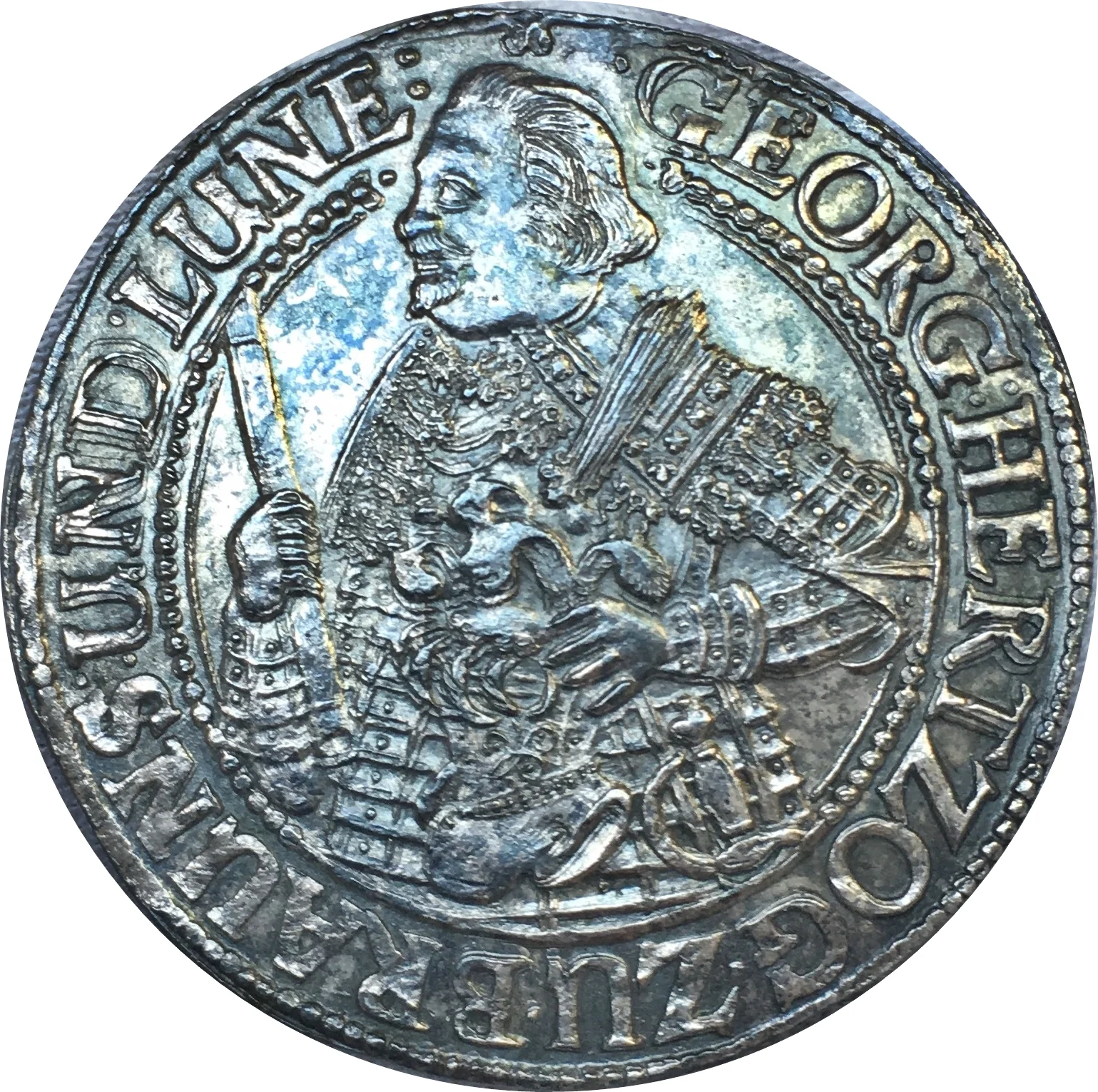
Obverse
Description:
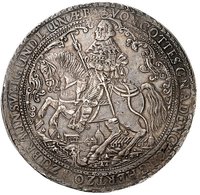
Armored bust with scepter and helmet.
Inscription:
GEorG:HERZOG.ZU.BRAUNS:UND.LUNE:
Script: Latin
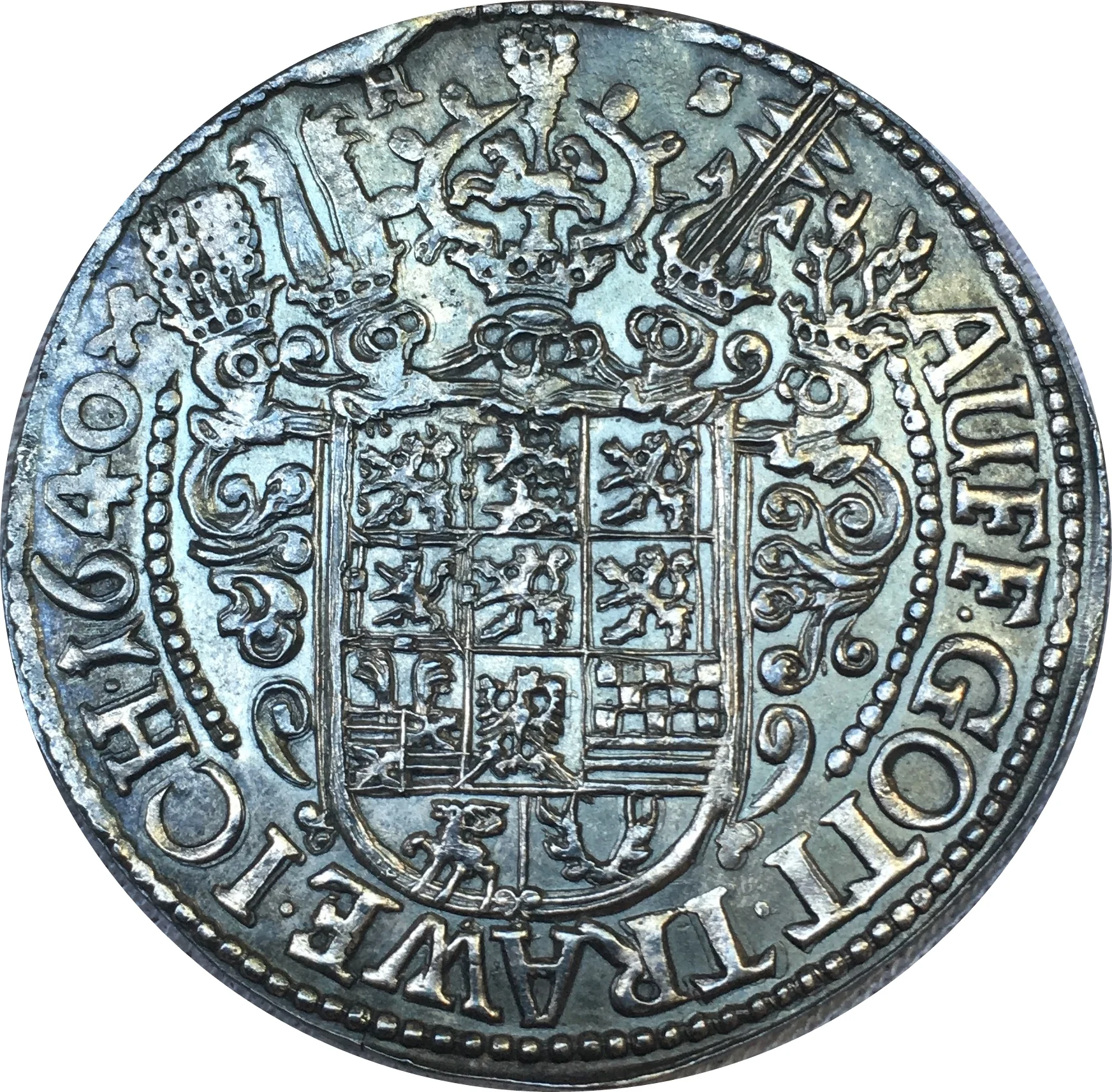
Reverse
Edge
Plain
Mintings
| Year | Mint Mark | Mintage | Quality | Collection |
|---|---|---|---|---|
| 1639 | — | — | ||
| 1640 | — | — | ||
| 1641 | — | — | ||
| 1642 | — | — |
Historical background
In 1639, the currency situation in the Duchy of Brunswick-Lüneburg, specifically the Principality of Calenberg, was dire and emblematic of the wider economic catastrophe of the Thirty Years' War (1618-1648). The region was a battleground and transit zone for marauding armies, which levied massive "contributions" (forced payments) and caused widespread devastation to agriculture and trade. This physical destruction, combined with the fiscal desperation of the ruling Duke George of Brunswick-Lüneburg (who resided in Calenberg), led to severe currency debasement. The state minted heavily adulterated coinage, notably the Klippe (emergency square coins), with dramatically reduced silver content to generate instant revenue to pay troops and meet war obligations.
This debasement triggered a classic vicious cycle of inflation and monetary disorder. The new, poor-quality coins flooded the market, driving out the older, full-value coins (Gresham's Law), which were hoarded or melted down. Prices for essential goods skyrocketed, as merchants and peasants lost trust in the circulating medium. The situation was exacerbated by the simultaneous circulation of hundreds of different coins from across the Holy Roman Empire, many also debased, creating a chaotic and unreliable monetary environment where daily transactions became fraught with uncertainty and dispute.
The consequences were socially devastating, particularly for ordinary people and those on fixed incomes. Wages failed to keep pace with rampant inflation, leading to immiseration and famine. While war profiteers and some merchants navigated the chaos, the general economic fabric eroded. This crisis was not unique to Calenberg but was acutely felt there, contributing to a broader collapse of the imperial monetary system that would later necessitate major reforms, such as the Reichsmünzordnung (Imperial Coinage Ordinance) of 1659, in a postwar attempt to restore stability and trust.
This debasement triggered a classic vicious cycle of inflation and monetary disorder. The new, poor-quality coins flooded the market, driving out the older, full-value coins (Gresham's Law), which were hoarded or melted down. Prices for essential goods skyrocketed, as merchants and peasants lost trust in the circulating medium. The situation was exacerbated by the simultaneous circulation of hundreds of different coins from across the Holy Roman Empire, many also debased, creating a chaotic and unreliable monetary environment where daily transactions became fraught with uncertainty and dispute.
The consequences were socially devastating, particularly for ordinary people and those on fixed incomes. Wages failed to keep pace with rampant inflation, leading to immiseration and famine. While war profiteers and some merchants navigated the chaos, the general economic fabric eroded. This crisis was not unique to Calenberg but was acutely felt there, contributing to a broader collapse of the imperial monetary system that would later necessitate major reforms, such as the Reichsmünzordnung (Imperial Coinage Ordinance) of 1659, in a postwar attempt to restore stability and trust.
✨ Legendary