

Iran
Context
Year: 1634
Islamic (Hijri) Year: 1044
Issuer: Iran 
Ruler: Safi I
Currency:
(1501—1798)
Demonetized: Yes
Material
Diameter: 21 mm
Weight: 7.58 g
Thickness: 2.3 mm
Shape: Irregular round
Technique: Hammered
Alignment: Medal alignment
flip
References
KM: #Click to copy to clipboard134.3
Numista: #397934
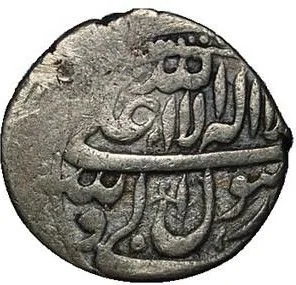
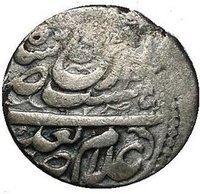
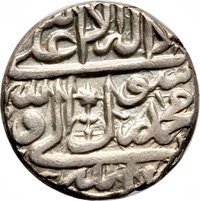
Obverse
Description:
Ruler, mint, year.
Inscription:
هست از جان غلام شاه صفی
ضرب بغداد
ضرب بغداد
Script: Persian (nastaliq)
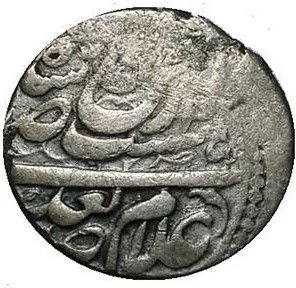
Reverse
Description:
One word.
Inscription:
لا اله الا الله
محمد رسول الله
علی ولی الله𐤂
محمد رسول الله
علی ولی الله𐤂
Script: Persian (nastaliq)
Edge
Plain
Mints
| Name | Mark |
|---|---|
| Baghdad | — |
Mintings
| Year | Mint Mark | Mintage | Quality | Collection |
|---|---|---|---|---|
| 1634 | — | — |
Historical background
In 1634, Iran under the Safavid dynasty (1501–1736) operated within a complex and fragmented monetary system. The primary currency was the silver ʿabbāsī (or abbasi), a coin introduced by Shah Abbas I (r. 1588–1629) as part of his sweeping reforms. Named after the Shah, the ʿabbāsī was a substantial silver coin, theoretically containing roughly 9 grams of fine silver, and it served as the central unit of account for larger transactions. However, the system was not unified; a variety of other silver and copper coins, such as the mahmūdī and shāhī, circulated simultaneously, often with values that fluctuated based on their metal content and regional acceptance.
The health of this currency was directly tied to the state's access to precious metals, particularly silver. Iran, while a hub of overland trade, lacked major silver mines, making it dependent on imports. Silver flowed into the country primarily via trade with the Ottoman Empire, Mughal India, and through European merchants like the English and Dutch East India Companies, who paid for Persian silk and other goods in bullion. Any disruption to these trade routes or a decline in the silk trade could therefore lead to a scarcity of silver, causing monetary contraction and economic difficulty.
Furthermore, the currency situation was plagued by chronic problems of debasement and counterfeiting. Provincial governors and mint masters, seeking profit, sometimes reduced the silver content in coins, leading to inflation and a loss of public trust. While the central authority of Shah Safi (r. 1629–1642) in 1634 sought to maintain the standards set by his grandfather, Abbas I, controlling mints across a vast empire was a constant challenge. Thus, the currency situation in 1634 was one of a fragile stability, reliant on continuous foreign silver and effective central control to maintain the value and integrity of the coinage.
The health of this currency was directly tied to the state's access to precious metals, particularly silver. Iran, while a hub of overland trade, lacked major silver mines, making it dependent on imports. Silver flowed into the country primarily via trade with the Ottoman Empire, Mughal India, and through European merchants like the English and Dutch East India Companies, who paid for Persian silk and other goods in bullion. Any disruption to these trade routes or a decline in the silk trade could therefore lead to a scarcity of silver, causing monetary contraction and economic difficulty.
Furthermore, the currency situation was plagued by chronic problems of debasement and counterfeiting. Provincial governors and mint masters, seeking profit, sometimes reduced the silver content in coins, leading to inflation and a loss of public trust. While the central authority of Shah Safi (r. 1629–1642) in 1634 sought to maintain the standards set by his grandfather, Abbas I, controlling mints across a vast empire was a constant challenge. Thus, the currency situation in 1634 was one of a fragile stability, reliant on continuous foreign silver and effective central control to maintain the value and integrity of the coinage.
✨ Legendary