

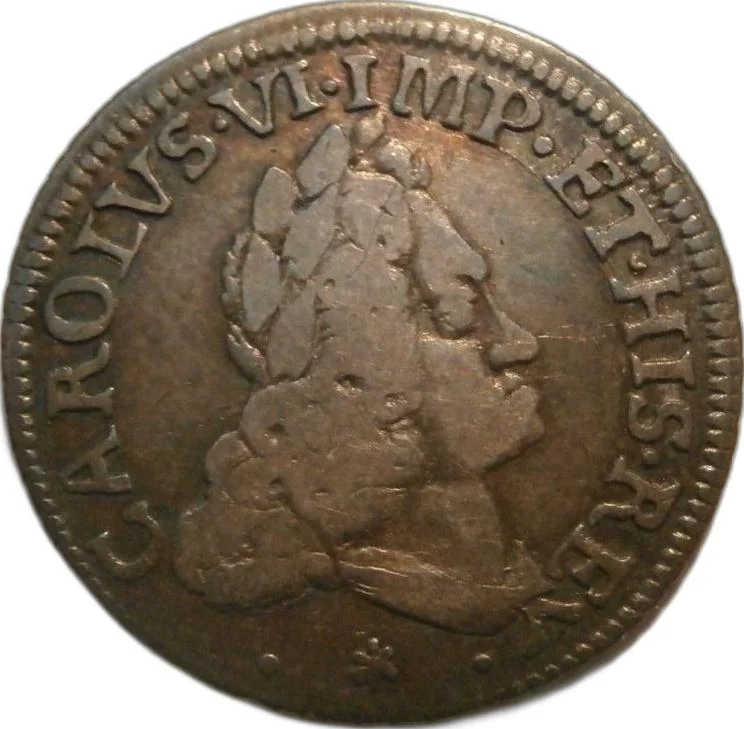
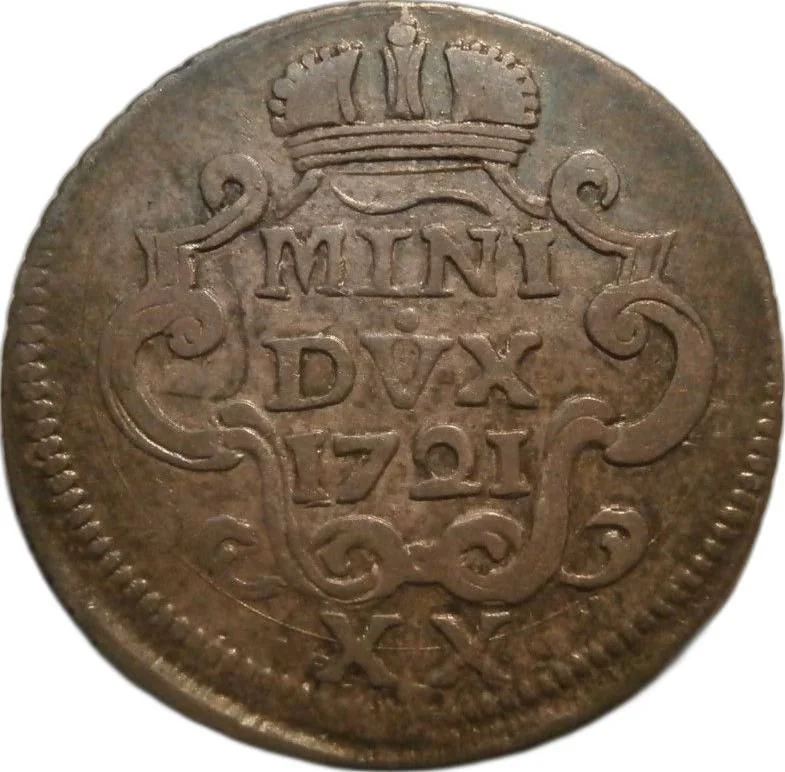
20 Soldi – Milan
Italy
Context
Years: 1721–1722
Country: Italy 
Issuer: Milan
Ruler: Charles III
Currency:
(1515—1796)
Subdivision: 20 Soldi = 1 Lira
Demonetized: Yes
Material
References
KM: #Click to copy to clipboard139
Numista: #397509
Obverse
Description:
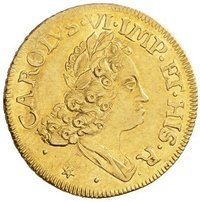
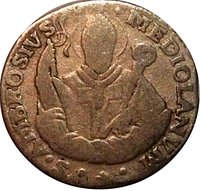
Laureate bust right, date below.
Inscription:
CAROLVS. VI. IMP. ET. HIS. REX
Script: Latin
Reverse
Edge
Mints
| Name | Mark |
|---|---|
| Milan | — |
Mintings
| Year | Mint Mark | Mintage | Quality | Collection |
|---|---|---|---|---|
| 1721 | — | — | ||
| 1722 | — | — |
Historical background
In 1721, Milan found itself at a complex monetary crossroads, governed as the Duchy of Milan under Habsburg Austria following the War of Spanish Succession. The currency situation was characterized by a chaotic bimetallic system of both silver and gold coins, but one that was severely debased and unstable. A plethora of coins circulated simultaneously: older Spanish issues, local Milanese scudi, lire, and soldi, alongside various foreign currencies from neighbouring states like Venice and Genoa. The critical problem was the wide and fluctuating gap between the official face value of coins and their much lower intrinsic metal content, leading to chronic inflation, market confusion, and widespread public mistrust.
This disorder was a direct legacy of decades of war, where successive rulers—Spanish and then Austrian—had resorted to currency manipulation to finance military campaigns. By repeatedly reducing the silver content in coins like the lira, authorities created a short-term fiscal stopgap at the cost of long-term monetary health. By 1721, the Vienna government recognized that this instability hampered economic recovery, tax collection, and administrative control. Consequently, efforts were underway to standardize and reform the system, aiming to align Milan's currency more closely with the stable Austrian gulden and the broader Holy Roman Empire monetary framework.
Thus, the background of 1721 is one of transition and attempted reform. While the daily reality for Milanese merchants and citizens remained one of navigating a messy and unreliable currency market, the Habsburg administration was actively working to impose order. The goal was to replace a fragmented system with a unified, imperial coinage that would facilitate trade, stabilize prices, and solidify Austrian authority, marking the beginning of the end for Milan's distinct and debased pre-war monetary identity.
This disorder was a direct legacy of decades of war, where successive rulers—Spanish and then Austrian—had resorted to currency manipulation to finance military campaigns. By repeatedly reducing the silver content in coins like the lira, authorities created a short-term fiscal stopgap at the cost of long-term monetary health. By 1721, the Vienna government recognized that this instability hampered economic recovery, tax collection, and administrative control. Consequently, efforts were underway to standardize and reform the system, aiming to align Milan's currency more closely with the stable Austrian gulden and the broader Holy Roman Empire monetary framework.
Thus, the background of 1721 is one of transition and attempted reform. While the daily reality for Milanese merchants and citizens remained one of navigating a messy and unreliable currency market, the Habsburg administration was actively working to impose order. The goal was to replace a fragmented system with a unified, imperial coinage that would facilitate trade, stabilize prices, and solidify Austrian authority, marking the beginning of the end for Milan's distinct and debased pre-war monetary identity.
✨ Legendary