

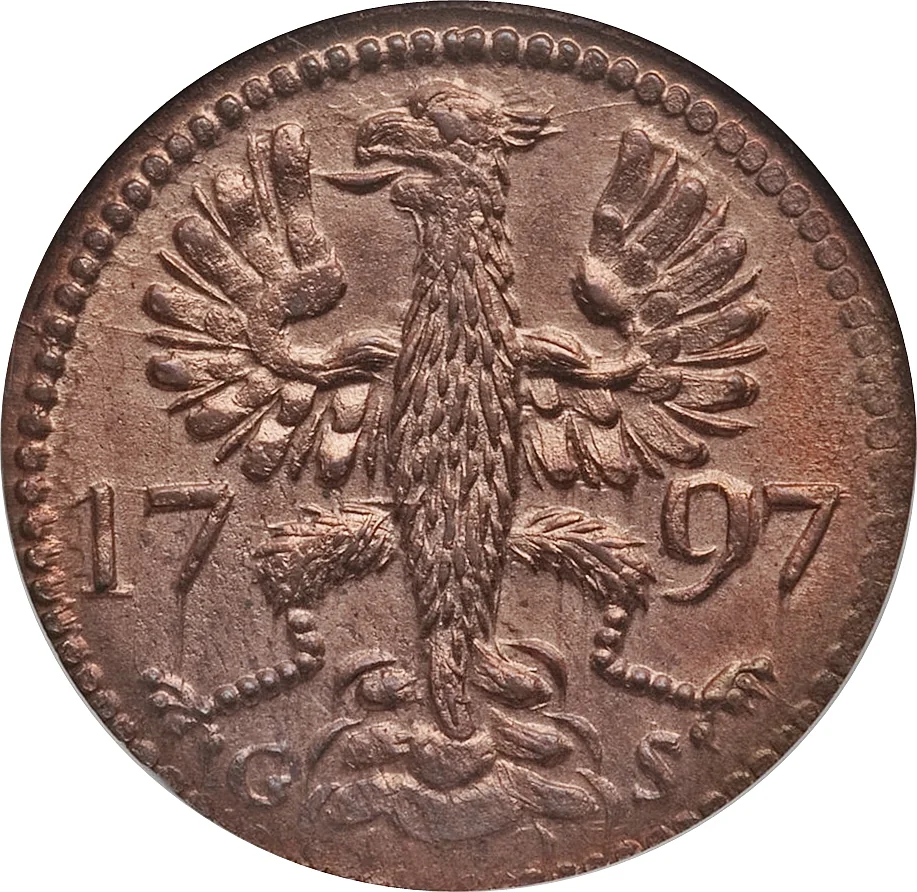
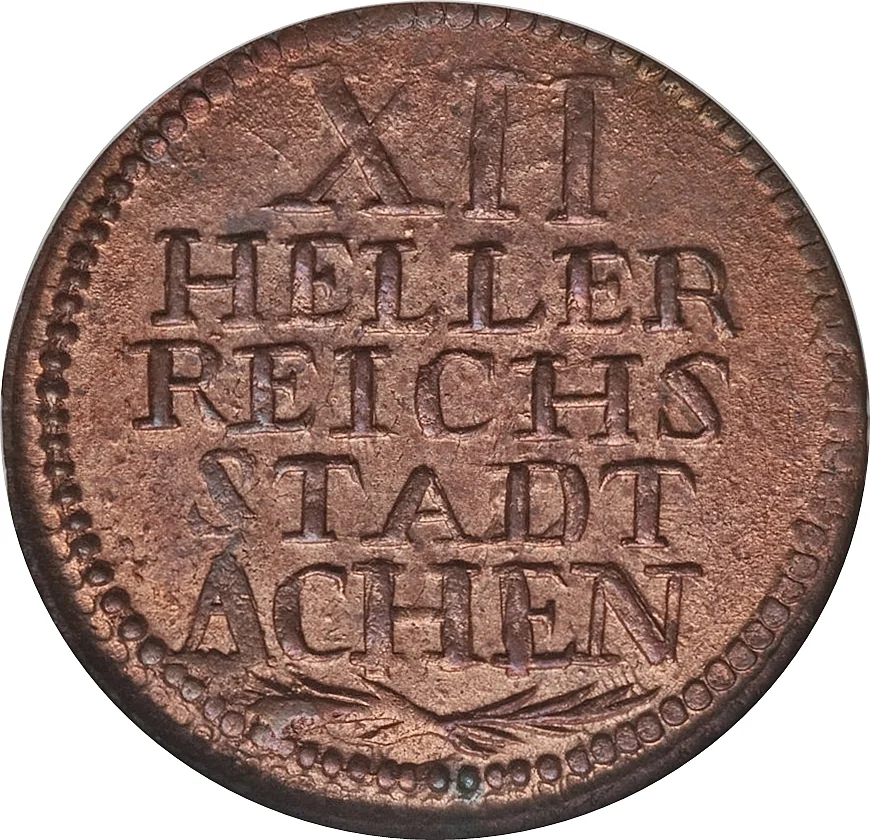
12 Hellers – Aachen
Germany

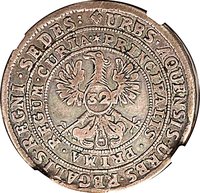
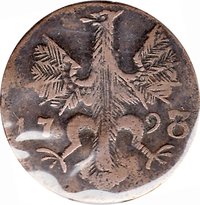
Obverse
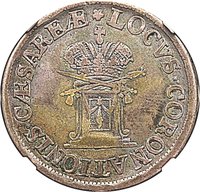
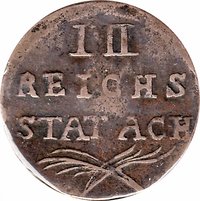
Reverse
Edge
Plain
Mints
| Name | Mark |
|---|---|
| Aachen | — |
Mintings
| Year | Mint Mark | Mintage | Quality | Collection |
|---|---|---|---|---|
| 1757 | — | — | ||
| 1758 | — | 1,874,000 | ||
| 1759 | — | 1,713,000 | ||
| 1760 | — | 1,900,000 | ||
| 1761 | — | — | ||
| 1764 | — | 150,000 | ||
| 1765 | — | 1,200,000 | ||
| 1767 | — | 1,248,000 | ||
| 1790 | — | 1,400,000 | ||
| 1791 | — | — | ||
| 1792 | — | 1,750,000 | ||
| 1793 | — | 350,000 | ||
| 1794 | — | 1,260,000 | ||
| 1797 | — | 408,000 | ||
| 1798 | — | — |
Historical background
In 1757, the Free Imperial City of Aachen, while nominally autonomous within the Holy Roman Empire, operated within a complex and fragmented monetary landscape typical of the era. The city did not possess the sovereign right to mint its own coinage; instead, it relied on the circulation of a multitude of foreign currencies. The most important of these was the Reichsthaler, the theoretical standard silver coin of the Empire, along with regional thalers from neighboring states like the Electorate of Cologne and the Duchy of Jülich. However, daily small-scale commerce was dominated by a plethora of smaller coins, including local Albuses and Groschen, as well as Dutch guilders and Spanish pistoles, their values constantly fluctuating against one another.
This monetary heterogeneity was severely strained by the geopolitical context of 1757, as the city found itself on the periphery of the Seven Years' War (1756-1763). While Aachen itself was not a battlefield, its economy was impacted by the movement of troops, wartime trade disruptions, and the financial policies of warring parties. The war placed immense pressure on the currency system, as belligerent powers often debased their coinage to fund military campaigns, causing inflation and a loss of confidence. Aachen's merchants and civic authorities had to constantly adjust exchange rates and contend with the influx of potentially inferior or counterfeit coins from armies and war-torn regions.
Consequently, the city's government exercised its authority through rigorous Kurantzettel (exchange rate bulletins), periodically publishing official valuation tables to fix the worth of the dozens of circulating coins in relation to the Reichsthaler. This was a critical tool to maintain commercial stability and prevent fraud in the marketplace. The situation demanded constant vigilance from the city council, as the stability of Aachen's thriving textile and metalware trades depended on a predictable, though inherently complicated, monetary environment amidst the wider economic turbulence of the continental war.
This monetary heterogeneity was severely strained by the geopolitical context of 1757, as the city found itself on the periphery of the Seven Years' War (1756-1763). While Aachen itself was not a battlefield, its economy was impacted by the movement of troops, wartime trade disruptions, and the financial policies of warring parties. The war placed immense pressure on the currency system, as belligerent powers often debased their coinage to fund military campaigns, causing inflation and a loss of confidence. Aachen's merchants and civic authorities had to constantly adjust exchange rates and contend with the influx of potentially inferior or counterfeit coins from armies and war-torn regions.
Consequently, the city's government exercised its authority through rigorous Kurantzettel (exchange rate bulletins), periodically publishing official valuation tables to fix the worth of the dozens of circulating coins in relation to the Reichsthaler. This was a critical tool to maintain commercial stability and prevent fraud in the marketplace. The situation demanded constant vigilance from the city council, as the stability of Aachen's thriving textile and metalware trades depended on a predictable, though inherently complicated, monetary environment amidst the wider economic turbulence of the continental war.
🌱 Common