


Mints
| Name | Mark |
|---|---|
| Imprensa Nacional - Casa da Moeda | — |
Mintings
| Year | Mint Mark | Mintage | Quality | Collection |
|---|---|---|---|---|
| 1682 | — | — | ||
| 1683 | — | — |
Historical background
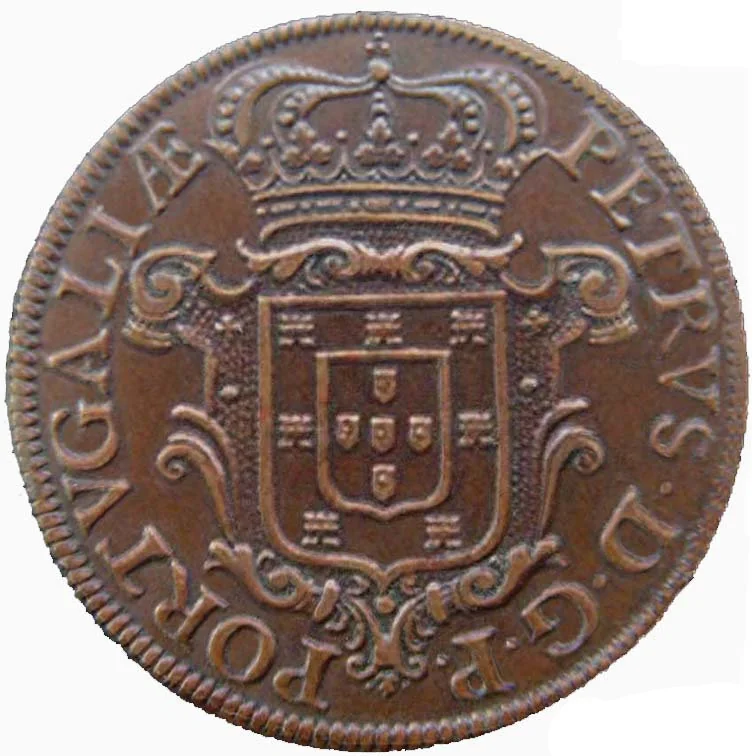
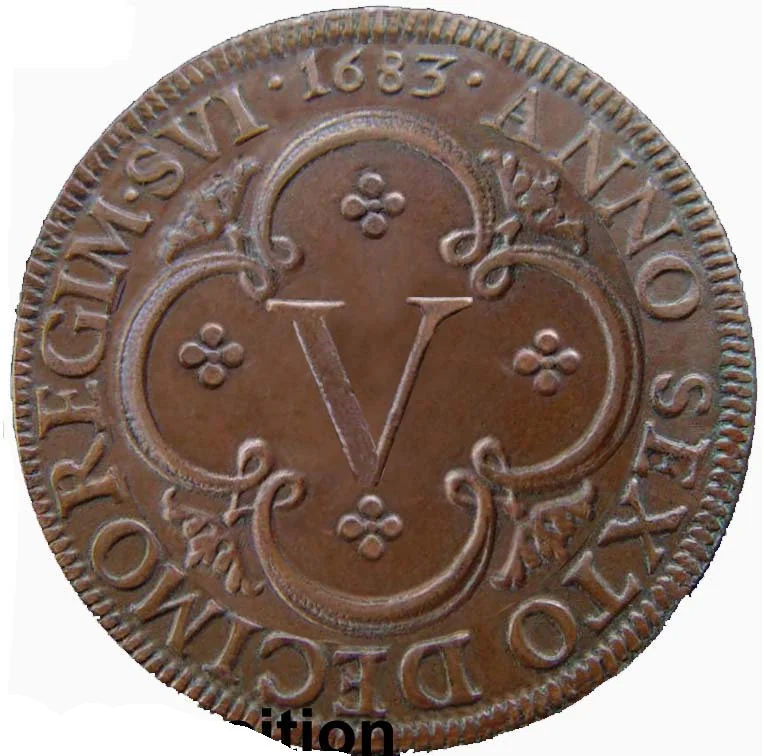
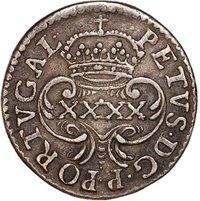
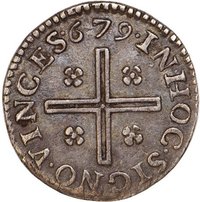
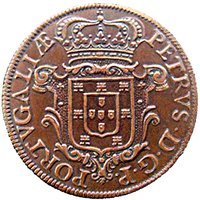
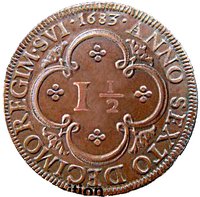
In 1682, Portugal’s currency situation was characterized by significant instability and debasement, a lingering crisis stemming from the Restoration War (1640-1668) and the preceding period of Spanish Habsburg rule. To finance the prolonged conflict for independence from Spain, the Portuguese crown, under Kings John IV and Afonso VI, had heavily resorted to minting vast quantities of low-value copper real coins (real de moeda preta or "black money") while the high-value gold cruzado and silver coins became scarce. This created a severe bimetalic imbalance and rampant inflation, as the public lost confidence in the heavily circulated copper currency, which was often accepted only at a steep discount against silver and gold.
The primary response to this crisis was the ambitious monetary reform enacted by King Peter II (Regent since 1667, King from 1683) in 1680, which was still being implemented in 1682. This reform aimed to restore confidence by recalling the devalued copper currency and re-minting it at a higher intrinsic value, while also standardizing the coinage system. A key feature was the introduction of the pataca, a large silver coin valued at 320 réis, intended to facilitate larger transactions and trade. The success of this reform, however, was still precarious in 1682, as it depended on the difficult and slow process of withdrawing the old, discredited coins from circulation and establishing trust in the new issues.
Consequently, the monetary landscape in 1682 was one of transition and uncertainty. While the government was actively trying to stabilize the currency, the economy still grappled with the practical effects of decades of debasement. The scarcity of precious metal coinage continued to hamper both domestic commerce and Portugal’s vital overseas trade, particularly with its burgeoning Brazilian colony, which was becoming an increasingly important source of gold. Thus, the situation was poised between the deep-seated problems of the past and a hopeful, yet still unproven, royal effort to secure a sound and stable currency for the kingdom.
The primary response to this crisis was the ambitious monetary reform enacted by King Peter II (Regent since 1667, King from 1683) in 1680, which was still being implemented in 1682. This reform aimed to restore confidence by recalling the devalued copper currency and re-minting it at a higher intrinsic value, while also standardizing the coinage system. A key feature was the introduction of the pataca, a large silver coin valued at 320 réis, intended to facilitate larger transactions and trade. The success of this reform, however, was still precarious in 1682, as it depended on the difficult and slow process of withdrawing the old, discredited coins from circulation and establishing trust in the new issues.
Consequently, the monetary landscape in 1682 was one of transition and uncertainty. While the government was actively trying to stabilize the currency, the economy still grappled with the practical effects of decades of debasement. The scarcity of precious metal coinage continued to hamper both domestic commerce and Portugal’s vital overseas trade, particularly with its burgeoning Brazilian colony, which was becoming an increasingly important source of gold. Thus, the situation was poised between the deep-seated problems of the past and a hopeful, yet still unproven, royal effort to secure a sound and stable currency for the kingdom.
✨ Legendary