

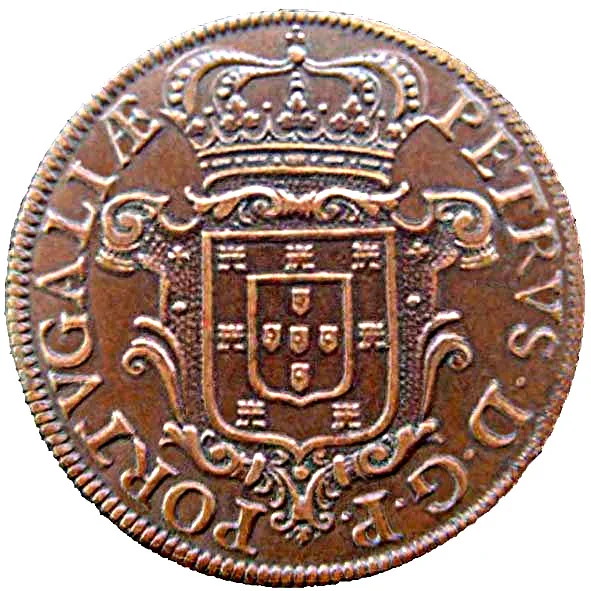
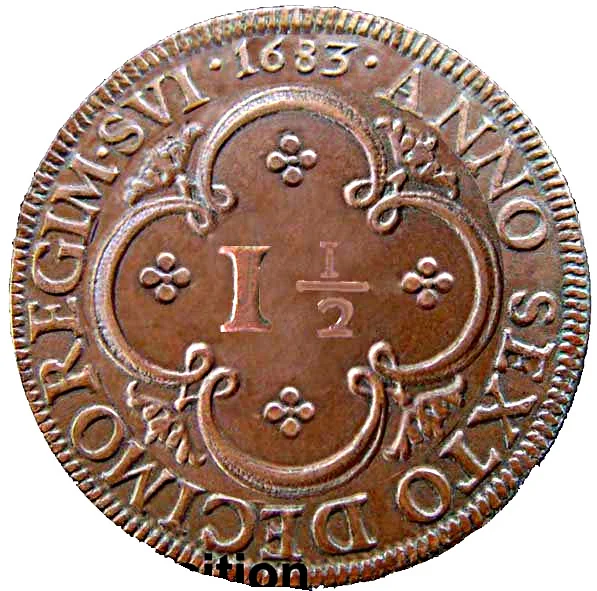
1½ real – Portugal
Add to wishlist
Portugal
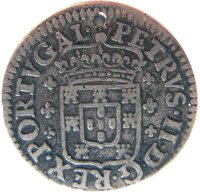
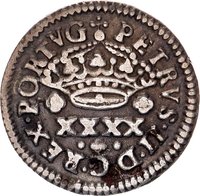
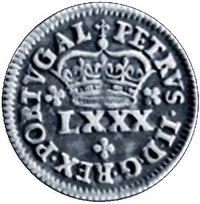
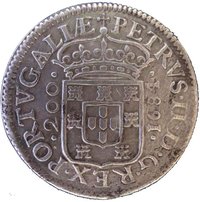
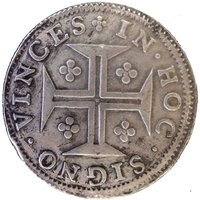
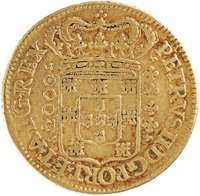
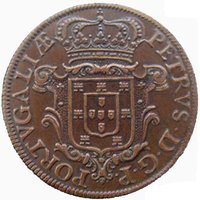
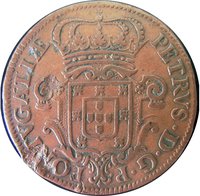
Obverse
Inscription:
PETRVS·D·G·PORTVGALIÆ
Script: Latin
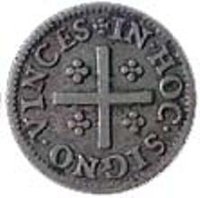
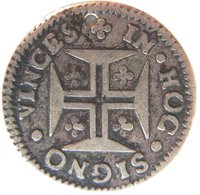
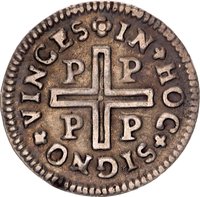
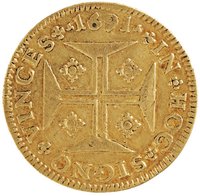
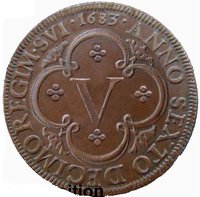
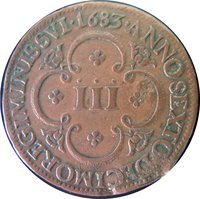
Reverse
Inscription:
·1683·ANNO SEXTO DECIMO REGIM·SVI
I ½
I ½
Script: Latin
Edge
Mints
| Name | Mark |
|---|---|
| Imprensa Nacional - Casa da Moeda | — |
Mintings
| Year | Mint Mark | Mintage | Quality | Collection |
|---|---|---|---|---|
| 1683 | — | — |
Historical background
In 1683, Portugal’s currency situation was defined by a severe and prolonged monetary crisis rooted in the overexploitation of colonial resources. For decades, the Crown had financed its wars of restoration against Spain and its lavish court expenditures primarily by flooding the kingdom with copper currency, known as real preto (black money), while simultaneously draining gold and silver to pay foreign creditors. This created a disastrous bimetallic imbalance: valuable gold and silver coins were hoarded or exported, leaving the domestic economy choked with depreciating copper. The result was rampant inflation, price instability, and a profound loss of public confidence in the currency, which crippled both commerce and the Crown's own ability to raise revenue.
The crisis was exacerbated by Portugal’s deep economic dependence on Brazil. While Brazilian sugar provided wealth, it was the discovery of alluvial gold in Minas Gerais in the late 1690s that would ultimately rescue the monarchy. However, in 1683, this discovery still lay in the future, and the treasury was desperate. The government of Prince Regent Pedro II (who became king that same year) had already implemented failed measures like the 1680 "Law of the Moeda," which attempted to fix artificially high exchange rates between metal types, a policy that was widely ignored and only fueled the black market.
Consequently, the monetary landscape in 1683 was one of confusion and de facto devaluation. Multiple coinages circulated at values detached from their official rates, and foreign merchants demanded payment in gold or silver, further draining precious metal from the realm. This unstable environment underscored the absolute necessity for the future inflow of Brazilian gold, which, when it began in earnest, would allow for a sweeping currency reform in 1688 and ultimately restore Portugal to a gold standard, ending the age of "black money."
The crisis was exacerbated by Portugal’s deep economic dependence on Brazil. While Brazilian sugar provided wealth, it was the discovery of alluvial gold in Minas Gerais in the late 1690s that would ultimately rescue the monarchy. However, in 1683, this discovery still lay in the future, and the treasury was desperate. The government of Prince Regent Pedro II (who became king that same year) had already implemented failed measures like the 1680 "Law of the Moeda," which attempted to fix artificially high exchange rates between metal types, a policy that was widely ignored and only fueled the black market.
Consequently, the monetary landscape in 1683 was one of confusion and de facto devaluation. Multiple coinages circulated at values detached from their official rates, and foreign merchants demanded payment in gold or silver, further draining precious metal from the realm. This unstable environment underscored the absolute necessity for the future inflow of Brazilian gold, which, when it began in earnest, would allow for a sweeping currency reform in 1688 and ultimately restore Portugal to a gold standard, ending the age of "black money."
Series: 1683 Portugal circulation coins

✨ Legendary