

1 Rupee – Bombay Presidency
India
Context

Material
References
KM: #Click to copy to clipboard140
Numista: #394468
Value
Bullion value: $35.37
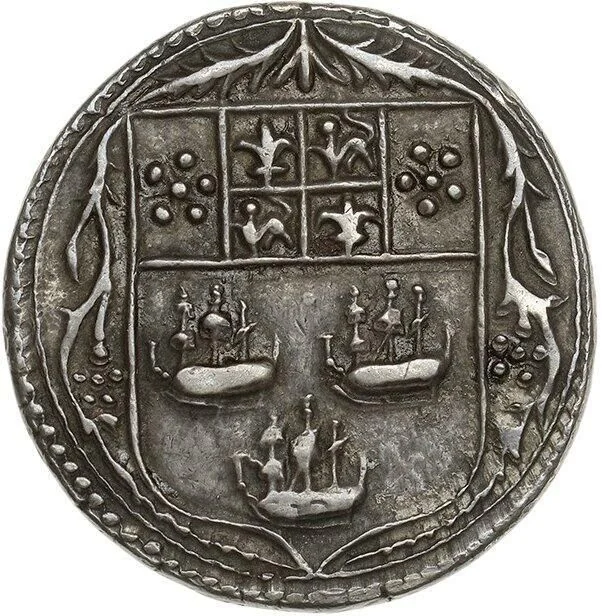
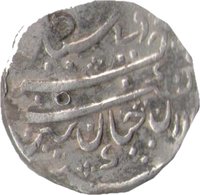
Obverse
Description:
Arms of the Honorable East India Company.
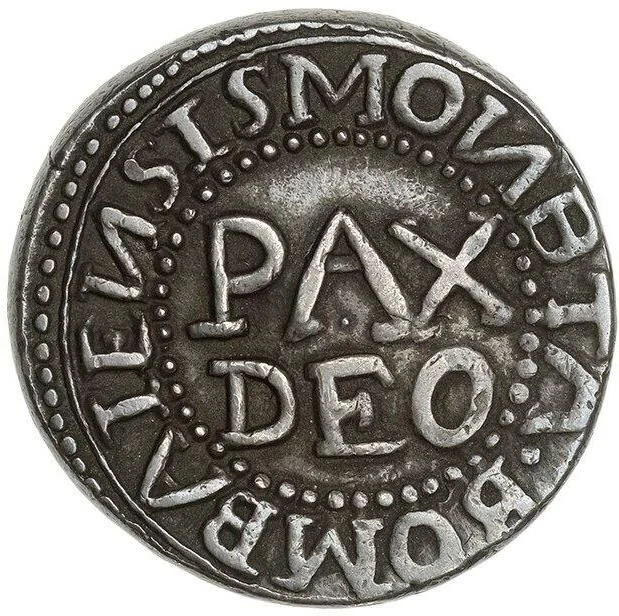
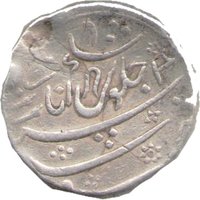
Reverse
Description:
Two-line inscription within surrounding legend.
Inscription:
PAX
DEO
MOИBTA · BOMBAIEИSIS
DEO
MOИBTA · BOMBAIEИSIS
Script: Latin
Edge
Categories
| Symbols> Coat of Arms |
Mints
| Name | Mark |
|---|---|
| Mumbai / Bombay | — |
Mintings
| Year | Mint Mark | Mintage | Quality | Collection |
|---|---|---|---|---|
| — | — | — |
Historical background
In 1676, the currency situation within the Bombay Presidency was a complex and transitional one, marked by the coexistence of multiple monetary systems. The English East India Company, which had received Bombay as part of Catherine of Braganza’s dowry to Charles II in 1661 and taken full administrative control by 1665, was still consolidating its authority. The local economy continued to operate heavily on the established Mughal silver rupee and its smaller copper denominations (dams and pice), which were essential for daily trade. Concurrently, a variety of foreign coins, including Portuguese xerafins and tangas, Spanish pieces of eight, and other European and Asian currencies, circulated in the port city due to its international commerce.
The Company faced significant challenges in imposing a unified currency. Early attempts to introduce English coinage, such as tin "Bombay" pennies and copper "Bombay" coins minted at the Tower of London, largely failed to gain public trust and saw limited circulation. The monetary landscape was further complicated by the variable purity and weight of coins, leading to constant issues of valuation, counterfeiting, and clipping. This uncertainty hampered both local trade and the Company's own revenue collection, as it struggled to establish a stable medium for paying its troops and financing its operations.
Therefore, the year 1676 represents a period of monetary fragmentation and experimentation. The Company's administration, under Governor Gerald Aungier, recognized the necessity of adapting to the dominant Mughal system to facilitate wider economic integration. While the official shift to a rupee-based accounting system was still being formalized, the practical reality was one of a bazaar economy where merchants and money-changers (shroffs) played a critical role in assessing and exchanging the bewildering variety of coins, laying the groundwork for the more standardized rupee currency that would later be established in the region.
The Company faced significant challenges in imposing a unified currency. Early attempts to introduce English coinage, such as tin "Bombay" pennies and copper "Bombay" coins minted at the Tower of London, largely failed to gain public trust and saw limited circulation. The monetary landscape was further complicated by the variable purity and weight of coins, leading to constant issues of valuation, counterfeiting, and clipping. This uncertainty hampered both local trade and the Company's own revenue collection, as it struggled to establish a stable medium for paying its troops and financing its operations.
Therefore, the year 1676 represents a period of monetary fragmentation and experimentation. The Company's administration, under Governor Gerald Aungier, recognized the necessity of adapting to the dominant Mughal system to facilitate wider economic integration. While the official shift to a rupee-based accounting system was still being formalized, the practical reality was one of a bazaar economy where merchants and money-changers (shroffs) played a critical role in assessing and exchanging the bewildering variety of coins, laying the groundwork for the more standardized rupee currency that would later be established in the region.
✨ Legendary