

½ Thaler – Hungary
Hungary
Context
Years: 1719–1732
Issuer: Hungary 
Ruler: Charles III
Currency:
(1526—1754)
Demonetized: Yes
Total mintage: 1,204,000
References
KM: #Click to copy to clipboard303
Numista: #39148
Value
Bullion value: $40.35
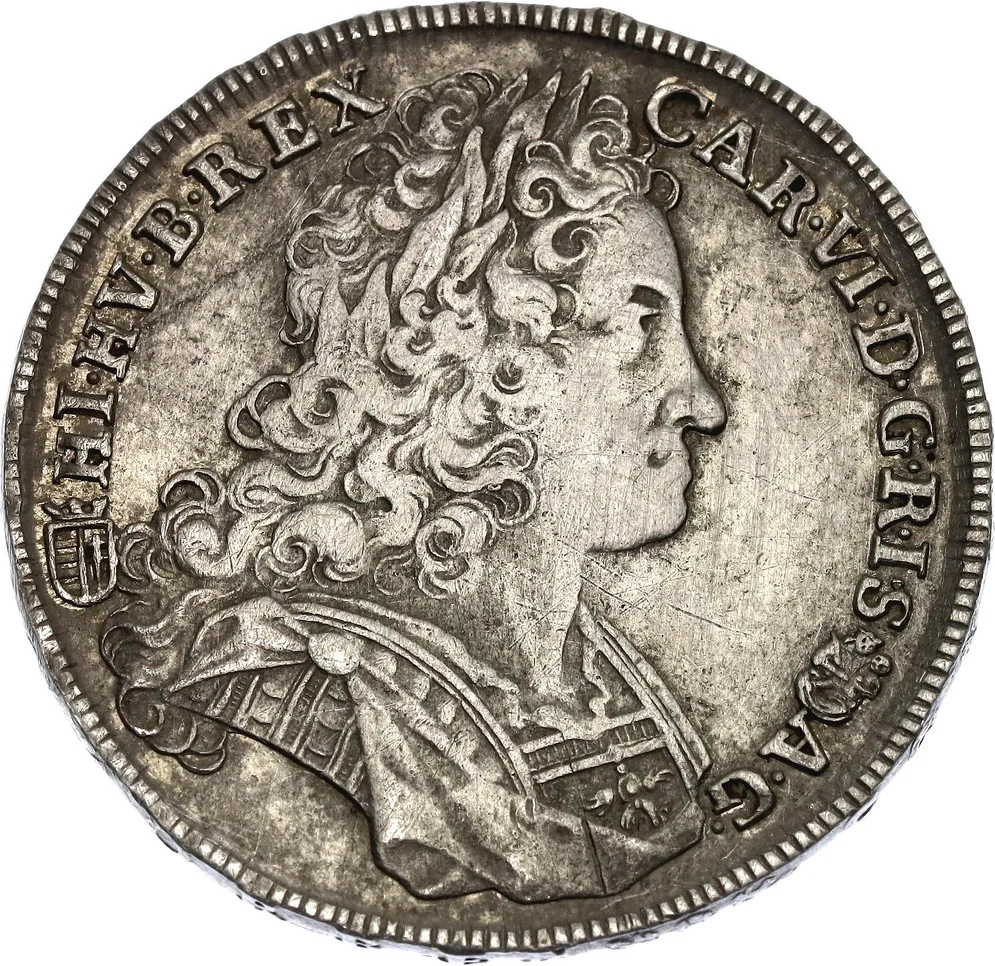
Obverse
Description:
Curly-wigged bust in a simplified dress, with added necklace, breaks the top and bottom inscriptions. The surrounding inscription, lacking an inner pearl circle, is interrupted by a crowned Hungarian shield and a Madonna-and-child stamp.
Inscription:
CAR · VI · D · G · R · I · S · A · G · HI · HV · BO · REX ·
Script: Latin
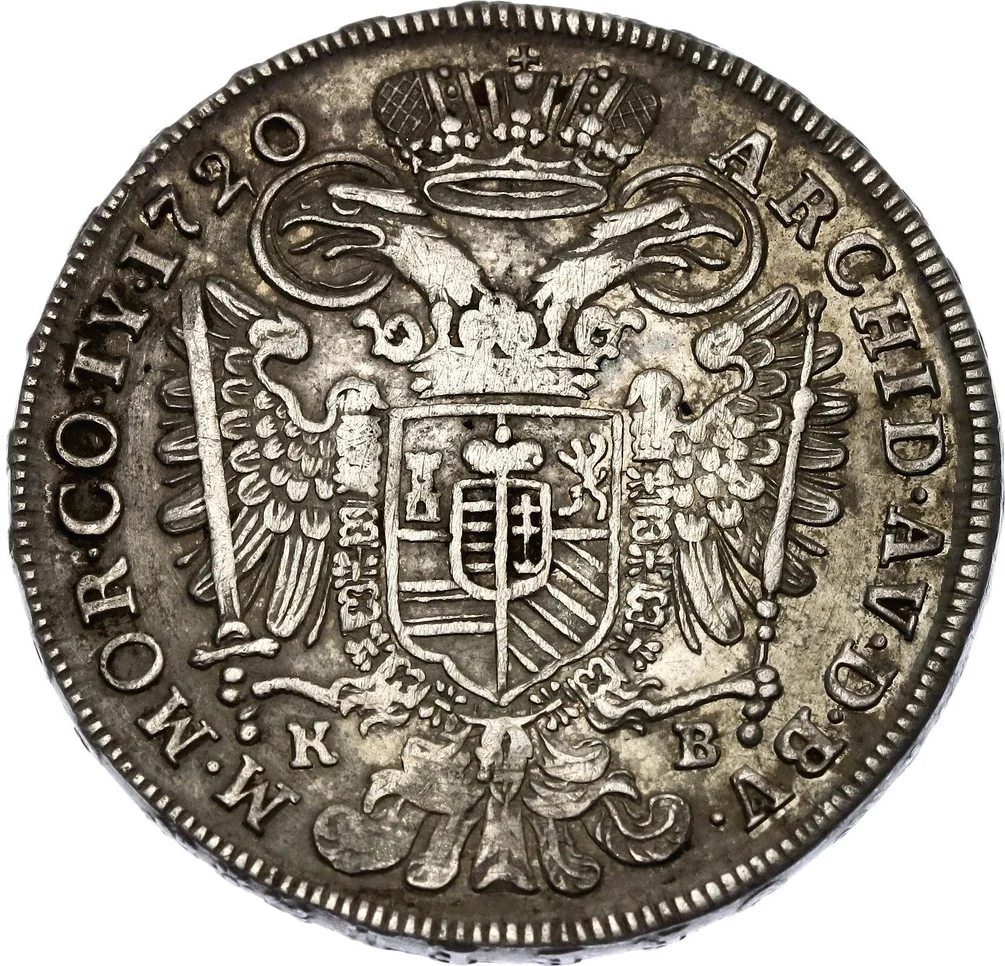
Reverse
Description:
Imperial eagle with KB mintmark split by tail, no orb between heads. On chest, U-shaped cartouche with crowned fourfold imperial arms. Central crowned Hungarian shield. Inscription without pearls, date at end.
Inscription:
ARCHID · AVS · D · BV · M · MOR · CO · TY · 1712 ·
K B
K B
Script: Latin
Edge
Inscribed
Legend:
CONSTATER CONTINET ORBEM
Mints
| Name | Mark |
|---|---|
| Kremnica | KB |
Mintings
| Year | Mint Mark | Mintage | Quality | Collection |
|---|---|---|---|---|
| 1719 | K | — | ||
| 1720 | K | — | ||
| 1721 | K | — | ||
| 1722 | K | 1,204,000 | ||
| 1723 | K | — | ||
| 1724 | B | — | ||
| 1724 | K | — | ||
| 1725 | K | — | ||
| 1726 | K | — | ||
| 1727 | K | — | ||
| 1728 | K | — | ||
| 1729 | K | — | ||
| 1730 | K | — | ||
| 1731 | K | — | ||
| 1732 | K | — |
Historical background
In 1719, Hungary’s currency situation was complex and unstable, deeply shaped by its position within the Habsburg Monarchy following the expulsion of the Ottomans. The primary circulating coins were silver thalers (known as Tallér) and copper coins (poltura and denár), but their value and acceptance were problematic. The Vienna court, treating Hungary as a conquered territory, often used its minting rights to extract wealth, deliberately overvaluing copper coins struck in Nagybánya (today Baia Mare, Romania) and forcing their use for tax payments at inflated rates. This created a de facto bimetallic system heavily manipulated for fiscal gain.
This policy led to severe economic distortion and widespread grievance. The forced circulation of debased copper currency caused rapid inflation, particularly harming the peasantry and soldiers who were paid in these coins, while taxes and feudal dues were demanded in silver. The resulting "coinage confusion" (érmezavar) eroded trust in the monetary system, stifled commerce, and became a major source of political tension between the Hungarian estates and the Habsburg crown. It was a form of economic exploitation that fueled national discontent.
Furthermore, the monetary chaos was exacerbated by a scarcity of high-quality silver coinage for larger transactions and the continued circulation of older, worn Turkish and European coins. The lack of a uniform, trusted currency hindered economic recovery and integration. The situation in 1719 was thus not merely a financial issue but a central point of conflict in the ongoing struggle between Hungarian autonomy and Habsburg centralization, setting the stage for the monetary reforms that would be gradually, and often reluctantly, implemented in the following decades.
This policy led to severe economic distortion and widespread grievance. The forced circulation of debased copper currency caused rapid inflation, particularly harming the peasantry and soldiers who were paid in these coins, while taxes and feudal dues were demanded in silver. The resulting "coinage confusion" (érmezavar) eroded trust in the monetary system, stifled commerce, and became a major source of political tension between the Hungarian estates and the Habsburg crown. It was a form of economic exploitation that fueled national discontent.
Furthermore, the monetary chaos was exacerbated by a scarcity of high-quality silver coinage for larger transactions and the continued circulation of older, worn Turkish and European coins. The lack of a uniform, trusted currency hindered economic recovery and integration. The situation in 1719 was thus not merely a financial issue but a central point of conflict in the ongoing struggle between Hungarian autonomy and Habsburg centralization, setting the stage for the monetary reforms that would be gradually, and often reluctantly, implemented in the following decades.

✨ Legendary