

1 tanga – Portuguese India
Add to wishlist
India
Context
Year: 1947
Country: India
Issuer: Portuguese India
Period:
(1910—1961)
Currency:
(1880—1958)
Demonetization: 1953
Total mintage: 1,000,000
Material
References
KM: #
Numista: #11761
Obverse
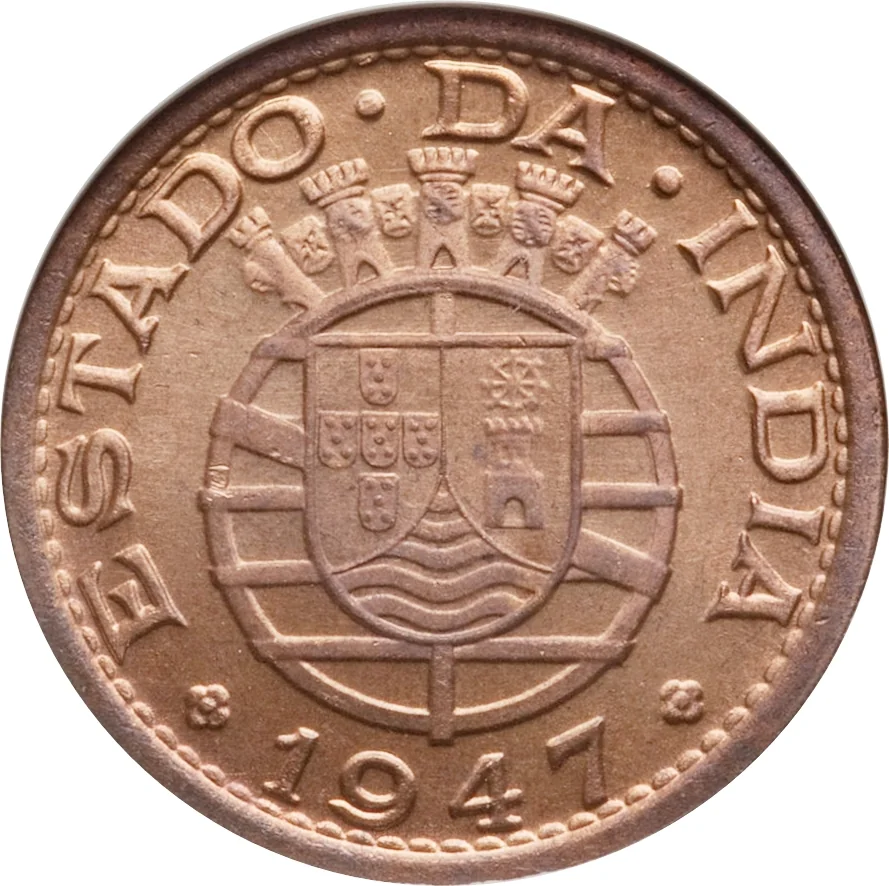
Description:
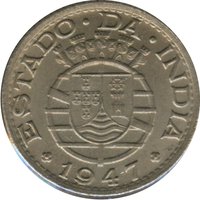
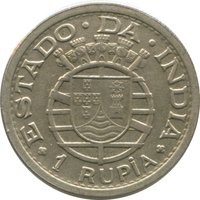
Tiny towers and a divided shield atop a striped circle.
Inscription:
ESTADO DA INDIA
1947
1947
Translation:
STATE OF INDIA
1947
1947
Script: Latin
Language: Portuguese
Reverse
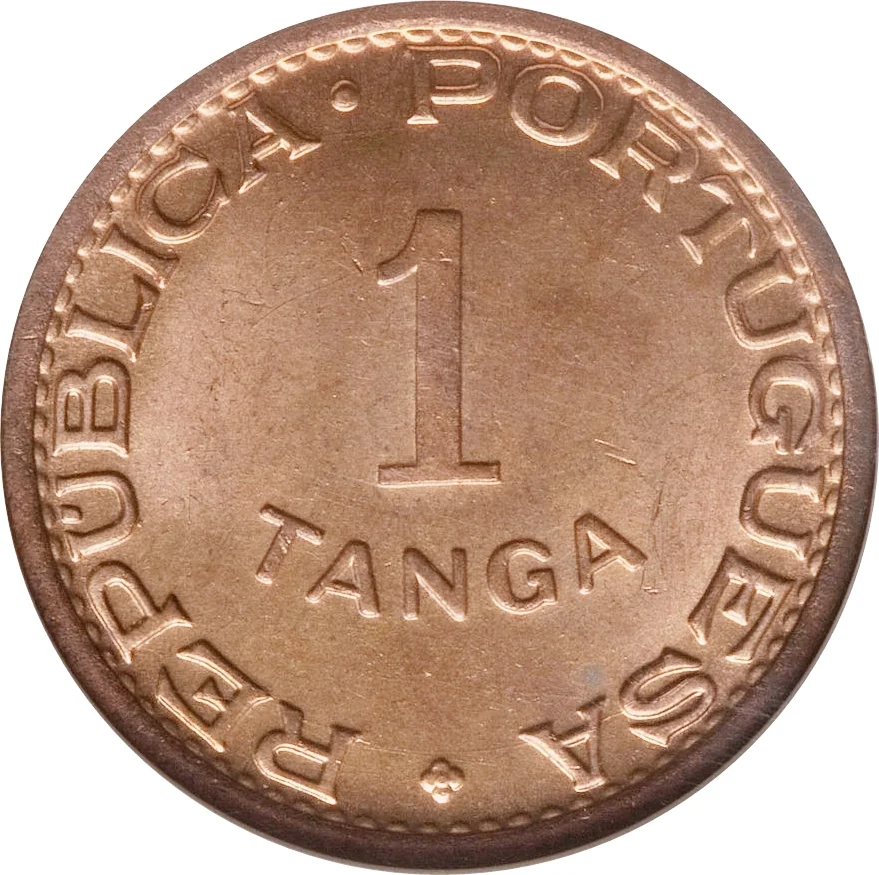
Description:
Denomination
Inscription:
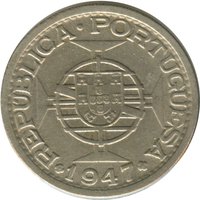
REPUBLICA PORTUGUESA
1 TANGA
1 TANGA
Translation:
Portuguese Republic
1 Tanga
1 Tanga
Script: Latin
Language: Portuguese
Edge
Plain
Mints
| Name | Mark |
|---|---|
| Imprensa Nacional - Casa da Moeda | — |
Mintings
| Year | Mint Mark | Mintage | Quality | Collection |
|---|---|---|---|---|
| 1947 | — | 1,000,000 |
Historical background
In 1947, the currency situation in Portuguese India (comprising Goa, Daman, and Diu) was complex, defined by its political separation from the newly independent Republic of India. While British India had introduced the Indian rupee as its sole currency, Portuguese India continued to use its own distinct monetary system. The official currency was the Portuguese Indian rupia (or rupia), which was pegged at par with the Indian rupee but issued separately by the Banco Nacional Ultramarino (National Overseas Bank). Both currencies circulated side-by-side in the territories, creating a de facto dual-currency economy, though the Portuguese rupia held legal tender status for official transactions.
This arrangement faced immediate strain following India's independence in August 1947. The new Indian government, viewing Portuguese enclaves as colonial remnants on its soil, initiated economic and political pressure to force their integration. One key measure was the economic blockade of 1950, which, while coming a few years later, was a direct escalation of the post-1947 tensions. Crucially, India demonetized the high-value notes of the Portuguese Indian rupia circulating within its borders and restricted the movement of goods and people, aiming to cripple the enclave's economy and undermine the local currency's stability and utility.
Consequently, by the end of 1947, the currency situation was in a state of precarious transition. The Portuguese administration struggled to maintain the viability of its rupia amidst growing isolation from the surrounding Indian economic sphere. The dual-circulation system became increasingly unstable, foreshadowing the deeper monetary crisis that would unfold during the full blockade in the 1950s, ultimately culminating in the Indian military annexation of the territories in 1961 and the final replacement of the Portuguese rupia with the Indian rupee.
This arrangement faced immediate strain following India's independence in August 1947. The new Indian government, viewing Portuguese enclaves as colonial remnants on its soil, initiated economic and political pressure to force their integration. One key measure was the economic blockade of 1950, which, while coming a few years later, was a direct escalation of the post-1947 tensions. Crucially, India demonetized the high-value notes of the Portuguese Indian rupia circulating within its borders and restricted the movement of goods and people, aiming to cripple the enclave's economy and undermine the local currency's stability and utility.
Consequently, by the end of 1947, the currency situation was in a state of precarious transition. The Portuguese administration struggled to maintain the viability of its rupia amidst growing isolation from the surrounding Indian economic sphere. The dual-circulation system became increasingly unstable, foreshadowing the deeper monetary crisis that would unfold during the full blockade in the 1950s, ultimately culminating in the Indian military annexation of the territories in 1961 and the final replacement of the Portuguese rupia with the Indian rupee.
🌱 Fairly Common