

1 krone – Denmark
Add to wishlist
Denmark
Context
Material
References
KM: #
Numista: #319756
Value
Bullion value: $36.66
Obverse
Description:
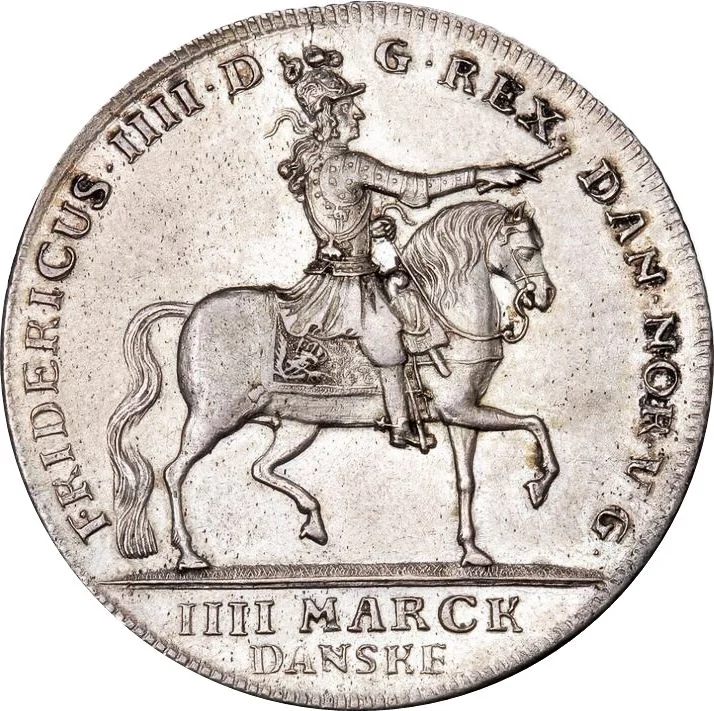
King on horseback in parade. Frederik IV in armor with the Order of the Elephant. He holds a raised scepter. Value and exergue below.
Inscription:
FRIDERICUS • IIII • D | G • REX • DAN • NOR • V • G •
______________________
IIII MARCK
DANSKE
______________________
IIII MARCK
DANSKE
Script: Latin
Reverse
Description:
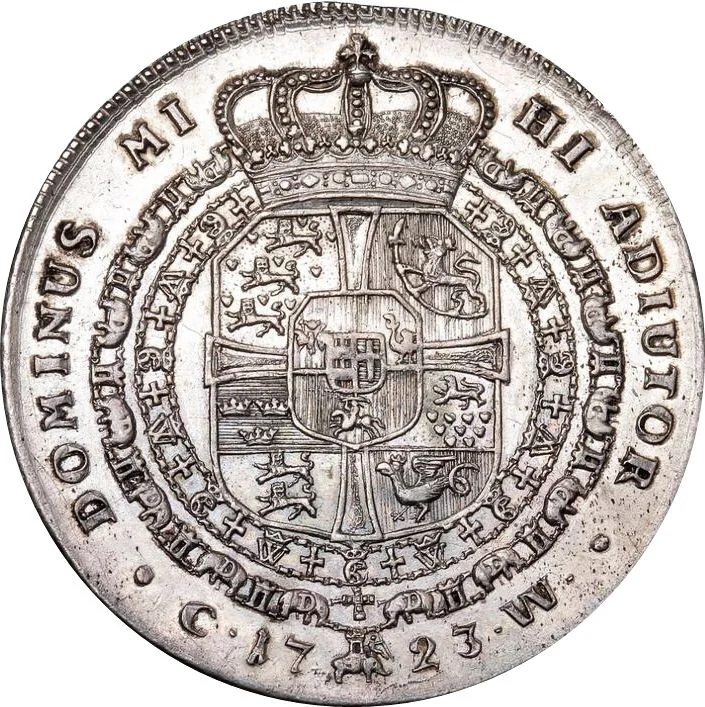
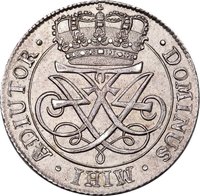
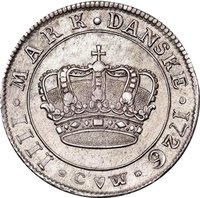
Danish royal arms within dual order chains. Date and mintmaster initials flank. King’s motto on rim.
Inscription:
• DOMINUS MI | HI ADIUTOR •
C • 17 | 23 • W
C • 17 | 23 • W
Script: Latin
Edge
Categories
| Animal> Horse |
| Symbols> Coat of Arms |
Mints
| Name | Mark |
|---|---|
| Copenhagen | CW |
Mintings
| Year | Mint Mark | Mintage | Quality | Collection |
|---|---|---|---|---|
| 1723 | CW | — |
Historical background
In 1723, Denmark operated under a silver-based monetary system, yet it was a period of significant monetary instability and complexity. The primary unit was the rigsdaler, subdivided into marks and skilling. However, the state treasury, deeply indebted from the Great Northern War (1700-1721), faced a severe shortage of precious metal. To finance its obligations, the government had repeatedly debased the coinage by reducing the silver content in minted coins, leading to a proliferation of different coin types with varying intrinsic values. This created a confusing dual system where older, purer coins were hoarded or traded at a premium, while newer, weaker coins circulated at a discount, undermining public trust and hampering commerce.
The situation was further complicated by the widespread use of credit money. Since physical silver was scarce, the government issued paper instruments like "credit-sedler" and treasury bonds to pay soldiers and suppliers. These often traded below their face value and circulated as a de facto, though unreliable, currency. Furthermore, the kingdom encompassed diverse territories like Norway and the duchies of Schleswig and Holstein, each with their own local monetary practices and occasional emissions, adding layers of regional complication to an already fractured national system.
Consequently, the year 1723 fell within a protracted era of monetary experimentation and distress. The government's attempts to manage its debt through currency manipulation resulted in inflation, market confusion, and a loss of confidence. This turbulent background set the stage for more structured, though not always successful, monetary reforms in the subsequent decades, as the state grappled with the challenge of establishing a uniform and stable currency to support economic recovery after the long and costly war.
The situation was further complicated by the widespread use of credit money. Since physical silver was scarce, the government issued paper instruments like "credit-sedler" and treasury bonds to pay soldiers and suppliers. These often traded below their face value and circulated as a de facto, though unreliable, currency. Furthermore, the kingdom encompassed diverse territories like Norway and the duchies of Schleswig and Holstein, each with their own local monetary practices and occasional emissions, adding layers of regional complication to an already fractured national system.
Consequently, the year 1723 fell within a protracted era of monetary experimentation and distress. The government's attempts to manage its debt through currency manipulation resulted in inflation, market confusion, and a loss of confidence. This turbulent background set the stage for more structured, though not always successful, monetary reforms in the subsequent decades, as the state grappled with the challenge of establishing a uniform and stable currency to support economic recovery after the long and costly war.
✨ Legendary