

1 Sultani – Eyalet of Tunis
Tunisia
Context
Years: 1604–1607
Country: Tunisia 
Issuer: Eyalet of Tunis
Ruler: Ahmed I
Currency:
(1567—1891)
Demonetized: Yes
Material
Diameter: 19 mm
Weight: 3.5 g
Gold weight: 3.50 g
Shape: Irregular round
Composition: Gold
Magnetic: No
References
KM: #Click to copy to clipboard7
Numista: #113048
Value
Bullion value: $583.57
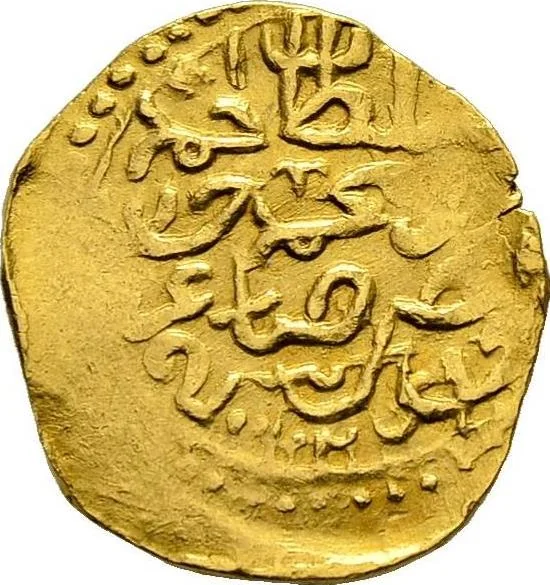
Obverse
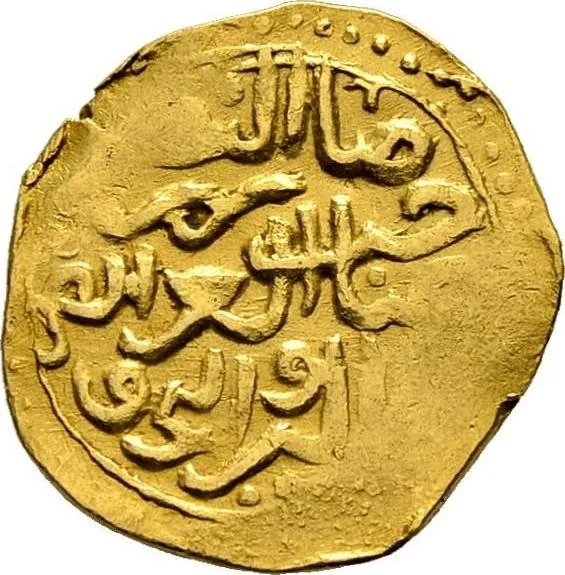
Reverse
Description:
Sultan: a Muslim ruler's title.
Inscription:
ضارب النضر
صاحب
العز والنصر في
البر والبحر
صاحب
العز والنصر في
البر والبحر
Script: Arabic
Edge
Mintings
| Year | Mint Mark | Mintage | Quality | Collection |
|---|---|---|---|---|
| 1604 | — | — | ||
| 1605 | — | — | ||
| 1607 | — | — |
Historical background
In 1604, the currency situation in the Eyalet of Tunis was characterized by instability and complex monetary plurality, a direct legacy of its position within the Ottoman Empire and its vibrant Mediterranean trade. The province operated on a bimetallic system, officially using Ottoman gold sultani coins and silver akçe. However, the local economy was flooded with a multitude of foreign currencies, most notably Spanish pieces of eight (reales), Venetian ducats, and various North African and European coins. This created a constant challenge of exchange rates and valuation, as the intrinsic metal value of these coins often differed from their official nominal value.
The primary source of monetary turmoil was chronic debasement. The central Ottoman mint in Istanbul frequently reduced the silver content of the akçe to finance imperial expenditures, causing inflation and a loss of confidence. While Tunis had its own mints (in Tunis and Bizerte), they were often compelled to follow the imperial standard, producing debased coinage that fueled local price increases. Furthermore, the autonomous Deys and Beys who governed Tunis in the Sultan's name sometimes engaged in their own debasement to fund the military and the corsair fleet, which was a key pillar of the local economy.
Consequently, daily transactions were fraught with difficulty. Merchants, tax collectors, and the public had to constantly assess and haggle over the worth of mixed coinage, relying on money-changers (sarrafs) who played a crucial role in the marketplace. The situation stifled long-term economic planning and created tension between the provincial government, Ottoman authorities, and the merchant class. This monetary instability reflected the broader political reality of Tunis in the early 17th century: nominally Ottoman but increasingly autonomous, and deeply entangled in the competitive and fluid economic networks of the Mediterranean.
The primary source of monetary turmoil was chronic debasement. The central Ottoman mint in Istanbul frequently reduced the silver content of the akçe to finance imperial expenditures, causing inflation and a loss of confidence. While Tunis had its own mints (in Tunis and Bizerte), they were often compelled to follow the imperial standard, producing debased coinage that fueled local price increases. Furthermore, the autonomous Deys and Beys who governed Tunis in the Sultan's name sometimes engaged in their own debasement to fund the military and the corsair fleet, which was a key pillar of the local economy.
Consequently, daily transactions were fraught with difficulty. Merchants, tax collectors, and the public had to constantly assess and haggle over the worth of mixed coinage, relying on money-changers (sarrafs) who played a crucial role in the marketplace. The situation stifled long-term economic planning and created tension between the provincial government, Ottoman authorities, and the merchant class. This monetary instability reflected the broader political reality of Tunis in the early 17th century: nominally Ottoman but increasingly autonomous, and deeply entangled in the competitive and fluid economic networks of the Mediterranean.

✨ Legendary