

1 Fals – Eyalet of Tunis
Tunisia
Context
Year: 1622
Islamic (Hijri) Year: 1031
Country: Tunisia 
Issuer: Eyalet of Tunis
Ruler: Mustafa I
Currency:
(1567—1891)
Demonetized: Yes
Material
References
KM: #Click to copy to clipboard10
Numista: #113046
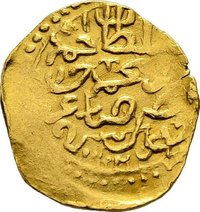
Obverse
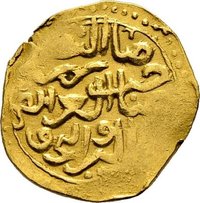
Reverse
Edge
Mintings
| Year | Mint Mark | Mintage | Quality | Collection |
|---|---|---|---|---|
| 1622 | — | — |
Historical background
In 1622, the currency situation in the Eyalet of Tunis was characterized by instability and complexity, a direct legacy of its recent integration into the Ottoman Empire. Following the Ottoman conquest in 1574, the province transitioned from Hafsid and Spanish monetary systems to an imperial framework. Officially, the Ottoman akçe and later the para were the standard units of account, and the state mint in Tunis (Dar al-Darb) was mandated to produce coins aligned with imperial standards. However, in practice, the local economy remained deeply influenced by a multitude of foreign coins, particularly Spanish pieces of eight and other European silver currencies that flowed into the region through trade and piracy.
This circulation of diverse coins created a chronic problem of debasement and fluctuation. The local authorities, often financially strained by the demands of the Ottoman central treasury and the costs of maintaining a military presence, frequently resorted to reducing the silver content in locally minted coins. This practice, known as ta‘dīl al-sikkah (adjustment of the coinage), led to a disconnect between the official and market value of currency. Merchants and money-changers (ṣarrāf) had to constantly negotiate exchange rates between Ottoman, local, and European coins, leading to uncertainty in both local markets and long-distance trade.
Consequently, the monetary landscape was one of competing systems. While Ottoman copper mangır coins were used for small daily transactions, large-scale commerce and state finances were dominated by heavy silver coins, both local and foreign. The de facto power of the Dey and the Janissary corps, who often controlled the treasury, meant monetary policy was driven more by immediate fiscal needs than economic stability. Thus, in 1622, the currency situation was less a unified system and more a contested field reflecting Tunis’s hybrid position: an Ottoman province deeply enmeshed in Mediterranean networks and struggling to balance imperial mandates with local economic realities.
This circulation of diverse coins created a chronic problem of debasement and fluctuation. The local authorities, often financially strained by the demands of the Ottoman central treasury and the costs of maintaining a military presence, frequently resorted to reducing the silver content in locally minted coins. This practice, known as ta‘dīl al-sikkah (adjustment of the coinage), led to a disconnect between the official and market value of currency. Merchants and money-changers (ṣarrāf) had to constantly negotiate exchange rates between Ottoman, local, and European coins, leading to uncertainty in both local markets and long-distance trade.
Consequently, the monetary landscape was one of competing systems. While Ottoman copper mangır coins were used for small daily transactions, large-scale commerce and state finances were dominated by heavy silver coins, both local and foreign. The de facto power of the Dey and the Janissary corps, who often controlled the treasury, meant monetary policy was driven more by immediate fiscal needs than economic stability. Thus, in 1622, the currency situation was less a unified system and more a contested field reflecting Tunis’s hybrid position: an Ottoman province deeply enmeshed in Mediterranean networks and struggling to balance imperial mandates with local economic realities.

✨ Legendary