

1 Dirham – Eyalet of Tunis
Tunisia
Context
Years: 1603–1617
Country: Tunisia 
Issuer: Eyalet of Tunis
Ruler: Ahmed I
Currency:
(1567—1891)
Demonetized: Yes
Material
References
KM: #Click to copy to clipboard5
Numista: #113047
Value
Bullion value: $1.47
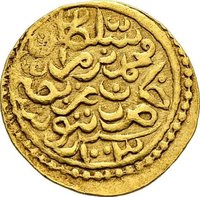
Obverse
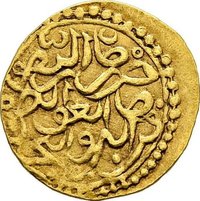
Reverse
Edge
Mintings
| Year | Mint Mark | Mintage | Quality | Collection |
|---|---|---|---|---|
| — | — | — |
Historical background
In 1603, the currency situation in the Eyalet of Tunis was characterized by instability and debasement, a direct consequence of its integration into the Ottoman monetary system and local fiscal pressures. The province, while nominally under Ottoman control since 1574, operated with considerable autonomy under its Deys and Beys. Its economy relied heavily on Mediterranean trade, piracy revenues, and agricultural production, all of which required a reliable medium of exchange. However, the currency in circulation was primarily the Ottoman akçe, a small silver coin that was suffering from severe inflation and repeated devaluations across the Empire. This "Great Debasement" period saw the silver content of the akçe plummet, causing price volatility and a loss of public confidence in the official coinage.
Locally, this imperial crisis was compounded by Tunis's own fiscal strategies. The ruling Muradid dynasty, consolidating power at this time, often resorted to currency manipulation to finance military expenditures and administration, leading to the circulation of underweight or adulterated coins. Furthermore, a multitude of foreign currencies—Spanish reales, Venetian ducats, and other European silver coins—circulated freely due to robust trade and corsair activity. This created a complex bimetallic environment where foreign coins, often of more reliable purity, were preferred for large transactions, while the debased Ottoman coinage was used for everyday purposes, leading to a disruptive dual-system in the marketplace.
The resulting monetary chaos hindered commerce and state revenue collection. Merchants and tax farmers faced difficulties in assessing real values, which encouraged hoarding of good silver and further drove inflation. While the central Ottoman government issued decrees (fermans) attempting to standardize coinage, their effective enforcement in a distant province like Tunis was limited. Consequently, the currency situation of 1603 reflects a period of transition and strain, where global silver flows, imperial decline, and local autonomy intersected to create a fragmented and unreliable monetary landscape, posing a significant challenge to the economic stability of the Eyalet.
Locally, this imperial crisis was compounded by Tunis's own fiscal strategies. The ruling Muradid dynasty, consolidating power at this time, often resorted to currency manipulation to finance military expenditures and administration, leading to the circulation of underweight or adulterated coins. Furthermore, a multitude of foreign currencies—Spanish reales, Venetian ducats, and other European silver coins—circulated freely due to robust trade and corsair activity. This created a complex bimetallic environment where foreign coins, often of more reliable purity, were preferred for large transactions, while the debased Ottoman coinage was used for everyday purposes, leading to a disruptive dual-system in the marketplace.
The resulting monetary chaos hindered commerce and state revenue collection. Merchants and tax farmers faced difficulties in assessing real values, which encouraged hoarding of good silver and further drove inflation. While the central Ottoman government issued decrees (fermans) attempting to standardize coinage, their effective enforcement in a distant province like Tunis was limited. Consequently, the currency situation of 1603 reflects a period of transition and strain, where global silver flows, imperial decline, and local autonomy intersected to create a fragmented and unreliable monetary landscape, posing a significant challenge to the economic stability of the Eyalet.
✨ Legendary