

1 Scudo – Papal States
Vatican City
Context
Years: 1627–1629
Country: Vatican City 
Issuer: Papal States
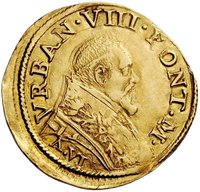
Ruler: Urban VIII
Currency:
(1534—1835)
Demonetized: Yes
Material
References
KM: #Click to copy to clipboard154
Numista: #378353
Value
Bullion value: $505.47
Obverse
Reverse
Description:
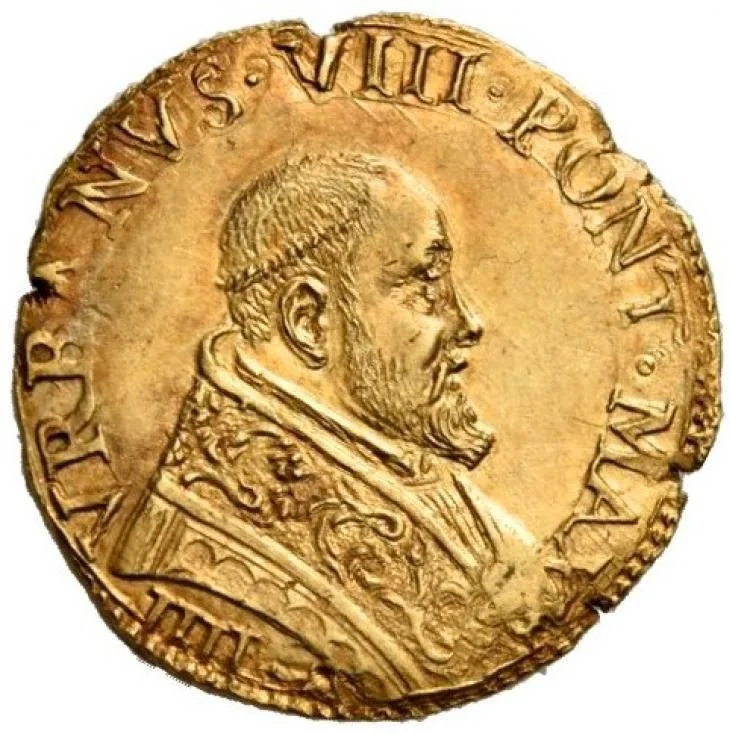
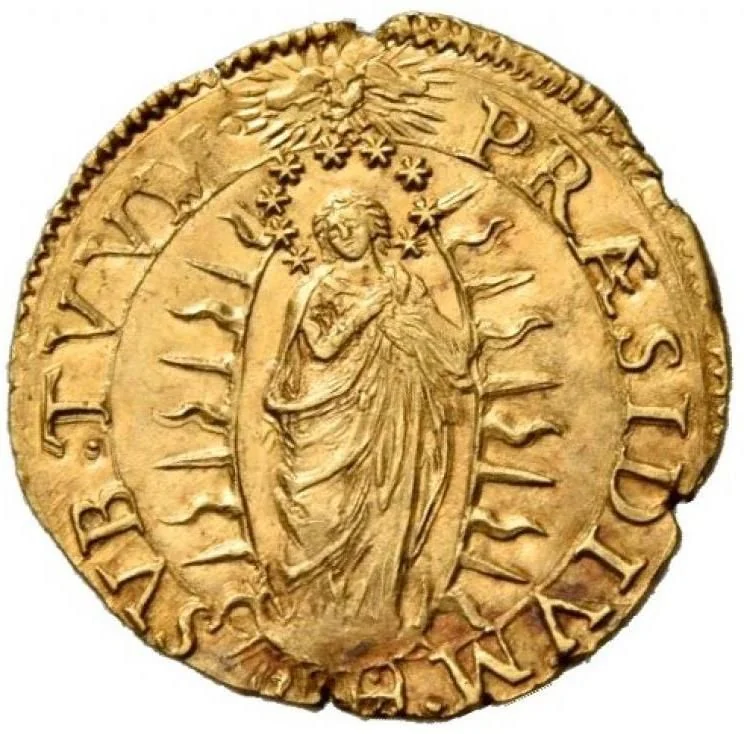
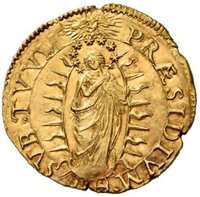
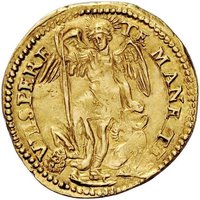
Madonna stands, a dove above, mintmark below.
Inscription:
SVB TVVM PRÆSIDIVM
Script: Latin
Edge
Mints
| Name | Mark |
|---|---|
| Rome | — |
Mintings
| Year | Mint Mark | Mintage | Quality | Collection |
|---|---|---|---|---|
| 1627 | — | — | ||
| 1629 | — | — |
Historical background
In 1627, the Papal States, under Pope Urban VIII, faced a significant and multifaceted monetary crisis rooted in the broader European "Price Revolution." The state's finances were strained by immense expenditures: the ongoing Thirty Years' War required subsidies to Catholic allies, the ambitious fortification of Castel Sant'Angelo and other Roman defenses demanded vast sums, and the lavish patronage of the Baroque arts continued unabated. To meet these costs, the Apostolic Chamber had long relied on a dangerous practice: the systematic debasement of the silver coinage, particularly the giulio and the grosso, by reducing their precious metal content while maintaining their face value.
This debasement created a chaotic and inflationary environment. As the intrinsic value of papal coins fell, older, purer coins from earlier pontificates were hoarded or exported, leaving the economy flooded with inferior currency. This triggered Gresham's Law in action, where "bad money drives out good." Furthermore, the Papal States were not a closed system; they engaged in extensive trade and received pilgrimage revenues, meaning they were acutely vulnerable to the influx of even more debased foreign coins from neighboring Italian states, which further eroded trust in the monetary system. Prices for grain and basic goods soared, causing hardship for the populace and complicating treasury planning.
The situation compelled Pope Urban VIII to attempt a major monetary reform in 1627-1628. He introduced new silver coins, such as the testone and the scudo, with improved, stabilized weights and fineness, aiming to restore public confidence. However, the reform was only partially successful. The underlying fiscal pressure—war spending and artistic patronage—remained unchecked, creating a temptation for future debasement. Thus, 1627 stands as a pivotal year highlighting the tension between the Papacy's spiritual authority and its temporal fiscal mismanagement, caught between Renaissance splendor and the harsh economic realities of the seventeenth century.
This debasement created a chaotic and inflationary environment. As the intrinsic value of papal coins fell, older, purer coins from earlier pontificates were hoarded or exported, leaving the economy flooded with inferior currency. This triggered Gresham's Law in action, where "bad money drives out good." Furthermore, the Papal States were not a closed system; they engaged in extensive trade and received pilgrimage revenues, meaning they were acutely vulnerable to the influx of even more debased foreign coins from neighboring Italian states, which further eroded trust in the monetary system. Prices for grain and basic goods soared, causing hardship for the populace and complicating treasury planning.
The situation compelled Pope Urban VIII to attempt a major monetary reform in 1627-1628. He introduced new silver coins, such as the testone and the scudo, with improved, stabilized weights and fineness, aiming to restore public confidence. However, the reform was only partially successful. The underlying fiscal pressure—war spending and artistic patronage—remained unchecked, creating a temptation for future debasement. Thus, 1627 stands as a pivotal year highlighting the tension between the Papacy's spiritual authority and its temporal fiscal mismanagement, caught between Renaissance splendor and the harsh economic realities of the seventeenth century.
✨ Legendary