

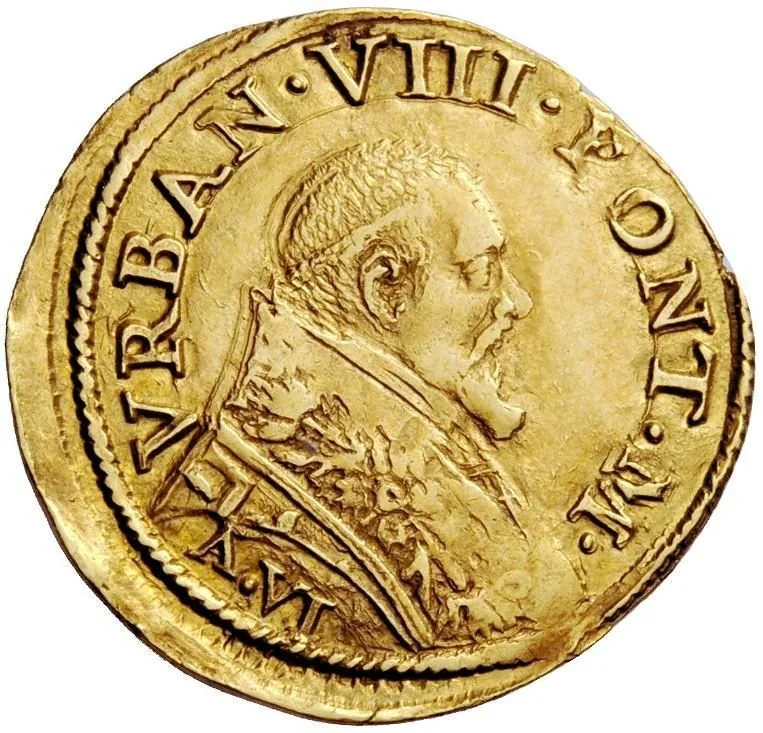
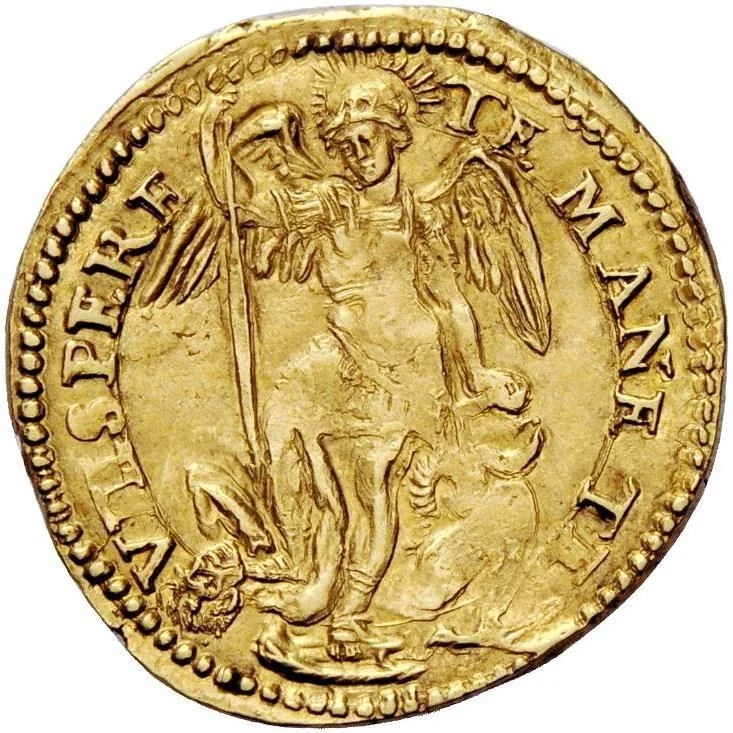
1 Scudo – Papal States
Vatican City
Context
Year: 1629
Country: Vatican City 
Issuer: Papal States
Ruler: Urban VIII
Currency:
(1534—1835)
Demonetized: Yes
Material
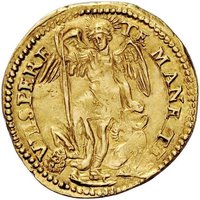
References
KM: #Click to copy to clipboard159
Numista: #378726
Value
Bullion value: $518.51
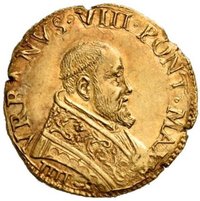
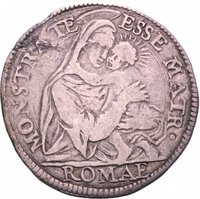
Obverse
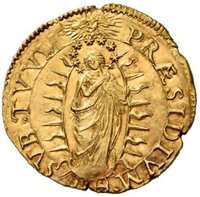
Reverse
Edge
Mints
| Name | Mark |
|---|---|
| Rome | — |
Mintings
| Year | Mint Mark | Mintage | Quality | Collection |
|---|---|---|---|---|
| 1629 | — | — |
Historical background
In 1629, the Papal States were grappling with a severe and protracted monetary crisis rooted in the widespread debasement of its coinage. For decades, the papal treasury, under successive popes, had engaged in the practice of reducing the precious metal content in coins like the grosso and the giulio while maintaining their face value. This was done to generate immediate revenue for the state, funding lavish building projects, administrative costs, and the military demands of the Thirty Years' War. However, the long-term consequence was a classic "bad money drives out good" scenario (Gresham's Law), where older, purer coins were hoarded or melted down, leaving only the debased currency in circulation, which the public deeply distrusted.
The situation came to a head under Pope Urban VIII Barberini (1623-1644), whose expensive fortification of Castel Sant'Angelo and patronage of the arts further strained finances. The value of papal coinage had become unstable and inconsistent, severely disrupting both daily commerce and larger banking operations within Rome, a major European financial center. Merchants and international bankers responded by pricing goods in stable foreign currencies like the Spanish silver reale or by weight in precious metal, effectively bypassing the official currency. This erosion of monetary sovereignty caused price inflation, social grievance, and a loss of confidence in the papal government's fiscal management.
Attempts at reform were piecemeal and largely ineffective. While the Camera Apostolica (the papal treasury) occasionally issued edicts to fix exchange rates or introduce new coin types, these measures failed to address the core issue of systemic debasement and a lack of bullion reserves. The monetary chaos of 1629 was therefore symptomatic of a deeper fiscal weakness, where the Papal States' limited economic base and expensive political ambitions forced it into short-term expedients that undermined its own financial foundation, a problem that would persist for much of the 17th century.
The situation came to a head under Pope Urban VIII Barberini (1623-1644), whose expensive fortification of Castel Sant'Angelo and patronage of the arts further strained finances. The value of papal coinage had become unstable and inconsistent, severely disrupting both daily commerce and larger banking operations within Rome, a major European financial center. Merchants and international bankers responded by pricing goods in stable foreign currencies like the Spanish silver reale or by weight in precious metal, effectively bypassing the official currency. This erosion of monetary sovereignty caused price inflation, social grievance, and a loss of confidence in the papal government's fiscal management.
Attempts at reform were piecemeal and largely ineffective. While the Camera Apostolica (the papal treasury) occasionally issued edicts to fix exchange rates or introduce new coin types, these measures failed to address the core issue of systemic debasement and a lack of bullion reserves. The monetary chaos of 1629 was therefore symptomatic of a deeper fiscal weakness, where the Papal States' limited economic base and expensive political ambitions forced it into short-term expedients that undermined its own financial foundation, a problem that would persist for much of the 17th century.
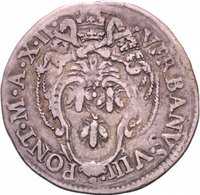
✨ Legendary