

½ gold louis – France
Add to wishlist
France
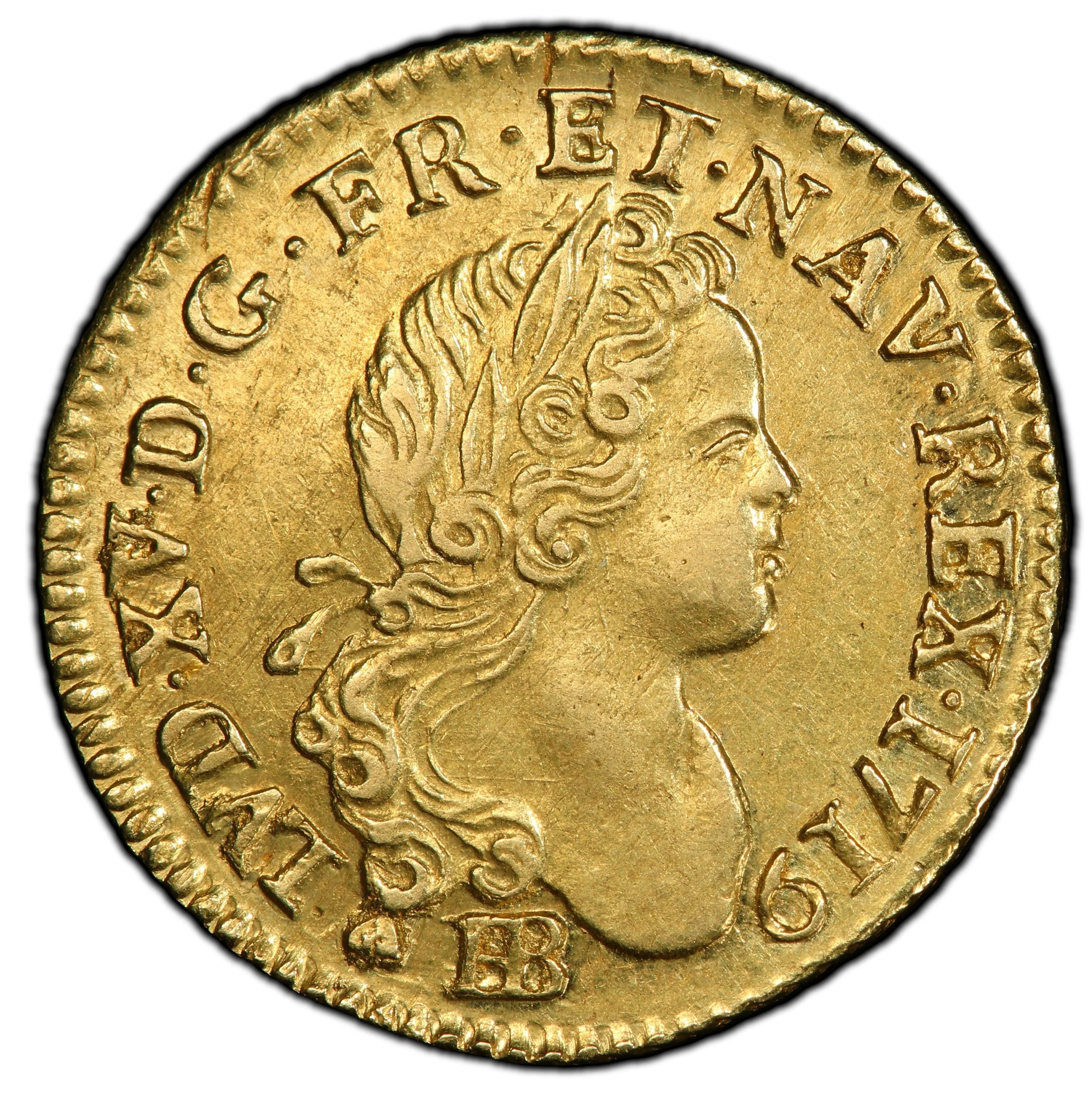
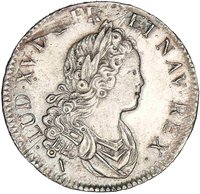
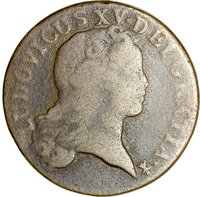
Obverse
Description:
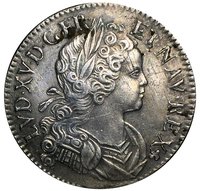
Young winner looks right.
Inscription:
LVD. XV. D. G. FR. ET. NAV. REX. 1719.
BB
BB
Script: Latin
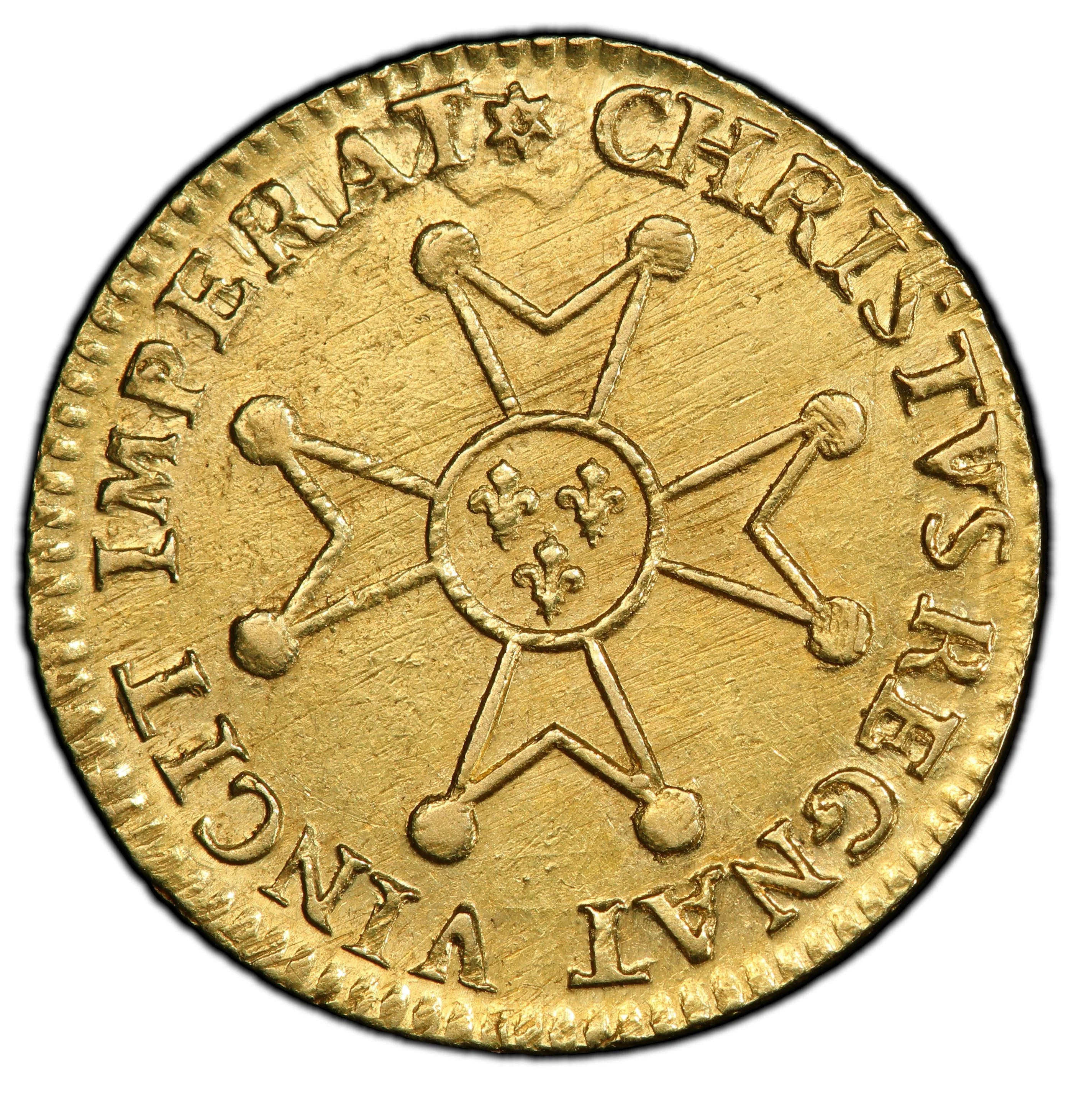
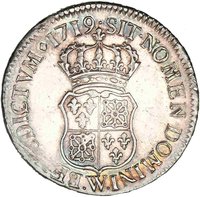
Reverse
Description:
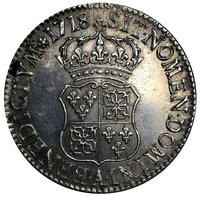
A symmetrical cross with four V-shaped arms.
Inscription:
CHRISTVS REGNAT VINCIT IMPERAT
Script: Latin
Edge
Corded edge.
Mints
| Name | Mark |
|---|---|
| Aix-en-Provence | & |
| Monnaie de Paris | A |
| Strasbourg | BB |
| Lyon | D |
| Montpellier | N |
| Lille | W |
| Grenoble | Z |
Mintings
Historical background
In 1718, France was grappling with the severe financial legacy of Louis XIV's reign, which had left the state deeply indebted and the economy strained. The regency of Philippe d'Orléans, governing for the young Louis XV, sought radical solutions to avert bankruptcy. The Scottish economist John Law, having gained the Regent's confidence, had already established the Banque Générale (a private bank authorized to issue paper money) in 1716. By 1718, this institution was being transformed into the state-controlled Banque Royale, marking a decisive shift toward a novel and ambitious financial system built on paper currency and colonial trade.
This year was a pivotal moment of transition and escalation. The bank's notes, theoretically convertible to coin, began to be granted legal tender status. Simultaneously, Law was merging his various trading companies—most significantly the Compagnie d'Occident (Mississippi Company)—into a vast conglomerate with a monopoly on French colonial commerce. The core mechanism of "the System" was now in place: the Banque Royale would issue paper money to fuel public spending and public speculation, while the company's shares, payable in state debt instruments, would absorb the government's crippling liabilities. The perceived wealth of Louisiana was used to justify soaring share prices.
Thus, the currency situation in 1718 was one of deliberate and state-driven experiment, moving away from traditional metallic coinage toward a paper currency regime. Confidence was initially high, and the early success of Law's companies created a sense of optimism that the kingdom's debts could be managed. However, this year laid the groundwork for the impending crisis, as the increasing issuance of banknotes and the frenzied speculation in company shares began to dangerously outpace real economic value, setting the stage for the infamous Mississippi Bubble that would burst in 1720.
This year was a pivotal moment of transition and escalation. The bank's notes, theoretically convertible to coin, began to be granted legal tender status. Simultaneously, Law was merging his various trading companies—most significantly the Compagnie d'Occident (Mississippi Company)—into a vast conglomerate with a monopoly on French colonial commerce. The core mechanism of "the System" was now in place: the Banque Royale would issue paper money to fuel public spending and public speculation, while the company's shares, payable in state debt instruments, would absorb the government's crippling liabilities. The perceived wealth of Louisiana was used to justify soaring share prices.
Thus, the currency situation in 1718 was one of deliberate and state-driven experiment, moving away from traditional metallic coinage toward a paper currency regime. Confidence was initially high, and the early success of Law's companies created a sense of optimism that the kingdom's debts could be managed. However, this year laid the groundwork for the impending crisis, as the increasing issuance of banknotes and the frenzied speculation in company shares began to dangerously outpace real economic value, setting the stage for the infamous Mississippi Bubble that would burst in 1720.
Series: 1718 France circulation coins

✨ Legendary