

1 gold ecu – France
Add to wishlist
France
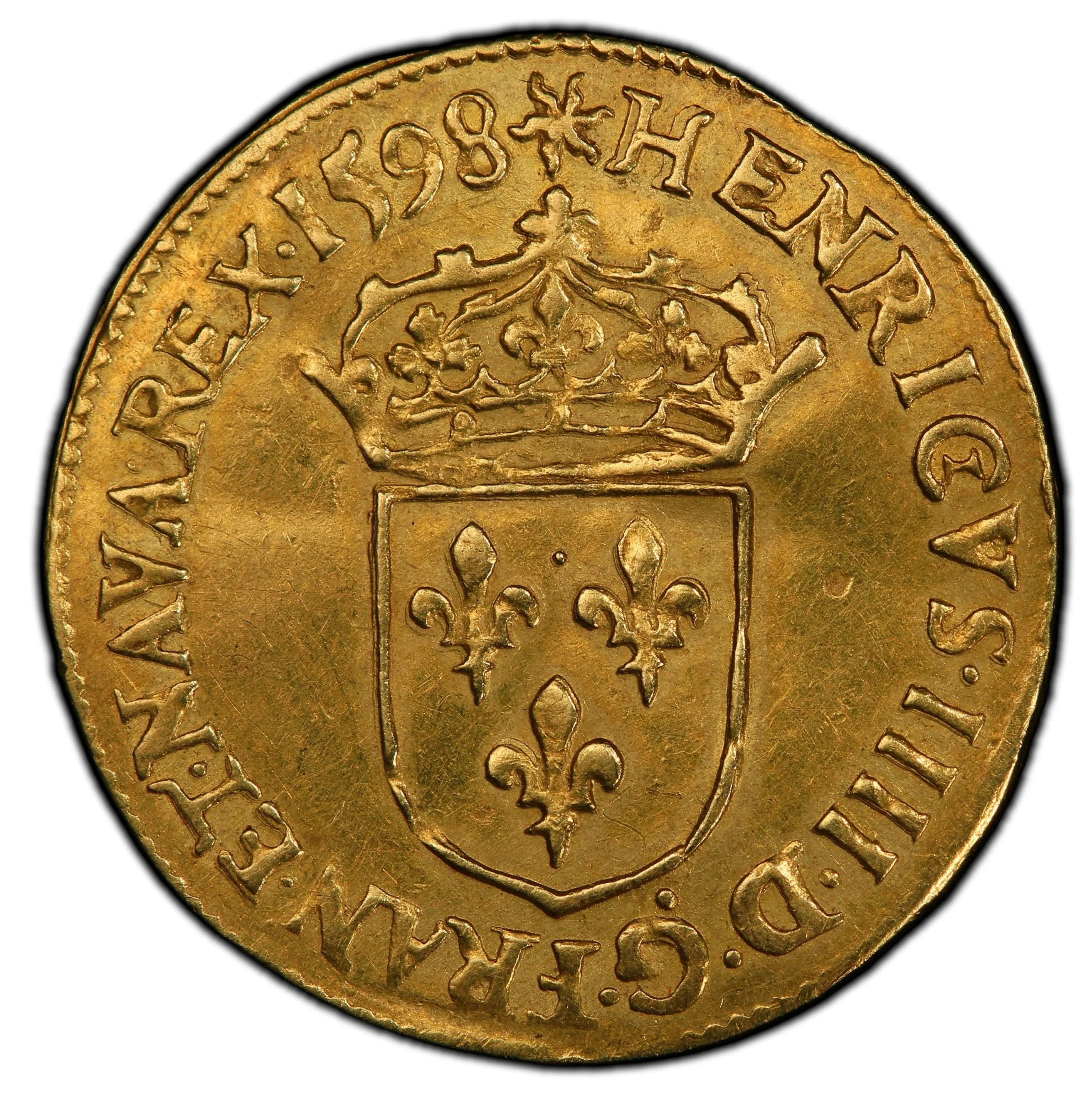
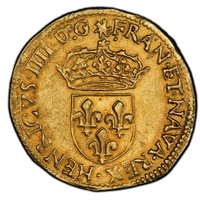
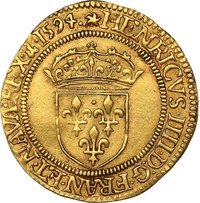
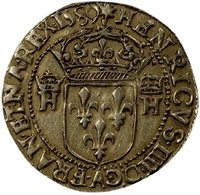
Obverse
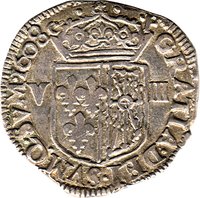
Description:
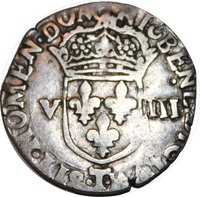
Crowned arms; legend starts upper right.
Inscription:
HENRICVS • IIII • D • G • FRAN • ET • NAVA • REX • 1598
Script: Latin
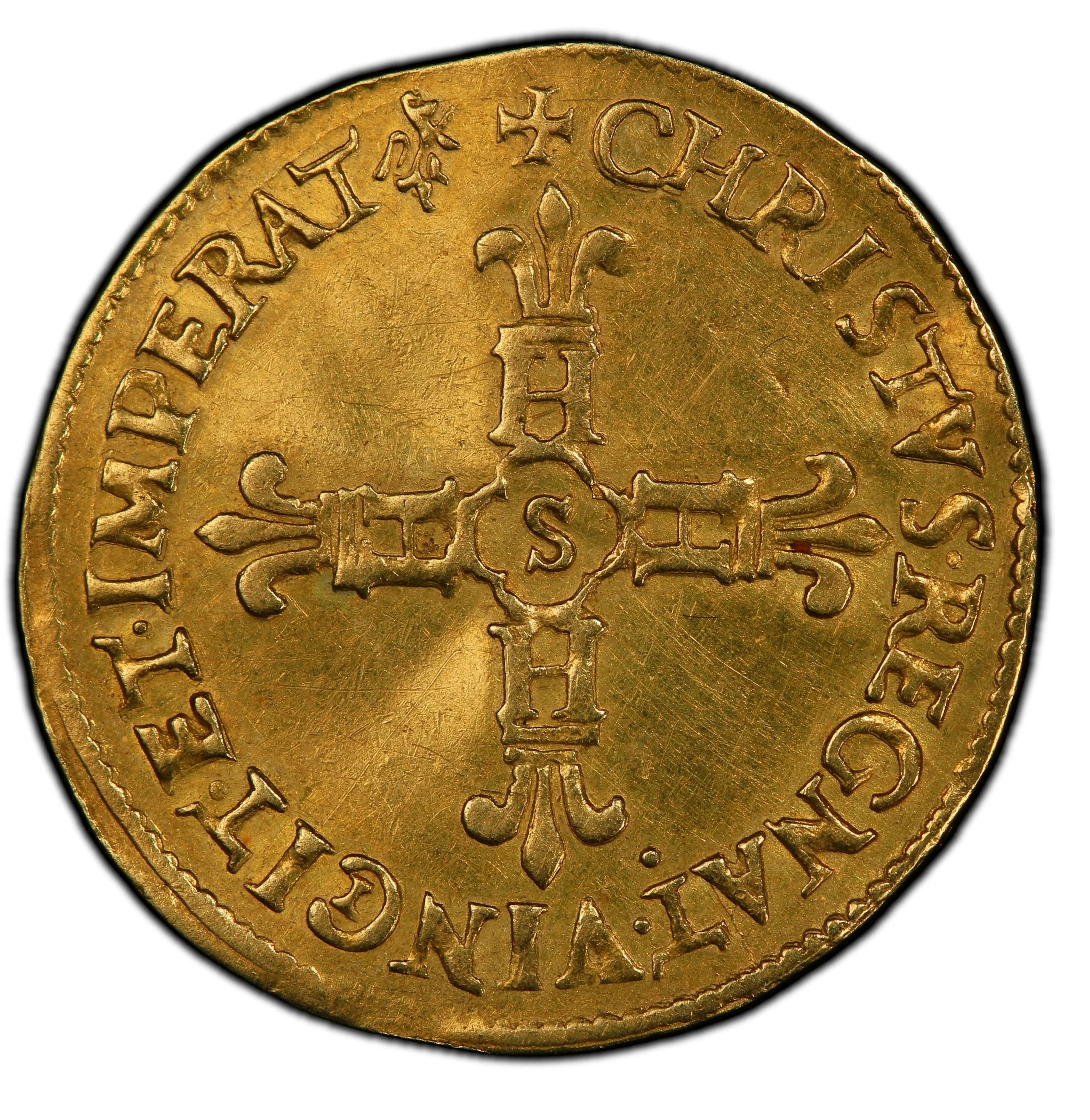
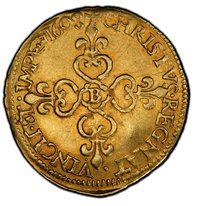
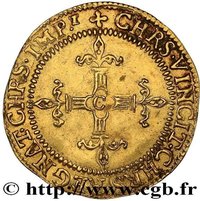
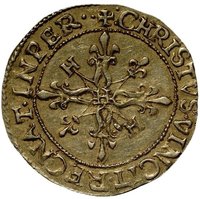
Reverse
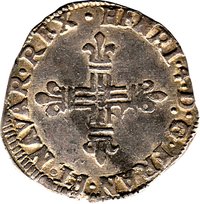
Description:
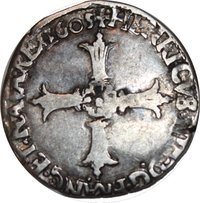
Cross fleury with an H beneath each fleur-de-lis.
Inscription:
+ CHRISTVS • REGNAT • VINCIT • ET • IMPERAT
S
S
Script: Latin
Edge
Mintings
| Year | Mint Mark | Mintage | Quality | Collection |
|---|---|---|---|---|
| 1590 | 9 | — | ||
| 1590 | E | — | ||
| 1591 | 9 | — | ||
| 1591 | E | — | ||
| 1591 | F | — | ||
| 1592 | 9 | — | ||
| 1592 | E | — | ||
| 1593 | 9 | — | ||
| 1593 | E | — | ||
| 1594 | & | — | ||
| 1594 | 9 | — | ||
| 1594 | AM | — | ||
| 1594 | E | — | ||
| 1594 | S | — | ||
| 1595 | & | — | ||
| 1595 | 9 | — | ||
| 1595 | S | — | ||
| 1596 | & | — | ||
| 1596 | 9 | — | ||
| 1596 | E | — | ||
| 1596 | S | — | ||
| 1597 | 9 | — | ||
| 1597 | E | — | ||
| 1597 | S | — | ||
| 1597 | & | — | ||
| 1598 | & | — | ||
| 1598 | E | — | ||
| 1598 | S | — | ||
| 1599 | 9 | — | ||
| 1599 | E | — | ||
| 1599 | S | — | ||
| 1600 | 9 | — | ||
| 1600 | E | — | ||
| 1600 | S | — | ||
| 1601 | 9 | — | ||
| 1601 | S | — | ||
| 1602 | 9 | — | ||
| 1602 | E | — | ||
| 1602 | S | — | ||
| 1603 | 9 | — | ||
| 1603 | S | — | ||
| 1604 | E | — |
Historical background
In 1590, France was in the throes of the French Wars of Religion, a series of devastating civil conflicts between Catholics and Protestants (Huguenots). The nation was effectively divided, with King Henry IV, a Protestant, fighting to secure his throne against the Catholic League, which was backed by Spain. This prolonged political and military instability created an economic catastrophe. Warfare disrupted agriculture, trade, and tax collection, leading to widespread famine and impoverishment, which in turn severely undermined the royal treasury and the overall monetary system.
The currency itself was in a state of severe debasement and chaos. To finance the endless wars, successive monarchs and the Catholic League in Paris resorted to repeatedly reducing the precious metal content in coins, a practice known as augmentation. This led to a proliferation of underweight and low-quality liards (small copper coins) and testons (silver coins) in circulation. The result was rampant inflation, as the nominal value of coins far exceeded their intrinsic metal worth, and a loss of public confidence in the currency. Different regions, controlled by rival factions, often issued their own coinage, further complicating commerce and creating a fragmented monetary landscape.
This monetary instability was a critical problem for Henry IV as he besieged Paris in 1590. He understood that winning the war required not just military victory but also restoring economic order. While immediate reform was impossible during the ongoing siege, the crisis of the 1590s laid the groundwork for his future policies. After his conversion to Catholicism in 1593 and his eventual coronation, one of his paramount achievements, aided by his minister the Duke of Sully, would be the systematic restoration of the French currency, stabilizing the livre tournois and re-establishing royal fiscal authority in the early 17th century.
The currency itself was in a state of severe debasement and chaos. To finance the endless wars, successive monarchs and the Catholic League in Paris resorted to repeatedly reducing the precious metal content in coins, a practice known as augmentation. This led to a proliferation of underweight and low-quality liards (small copper coins) and testons (silver coins) in circulation. The result was rampant inflation, as the nominal value of coins far exceeded their intrinsic metal worth, and a loss of public confidence in the currency. Different regions, controlled by rival factions, often issued their own coinage, further complicating commerce and creating a fragmented monetary landscape.
This monetary instability was a critical problem for Henry IV as he besieged Paris in 1590. He understood that winning the war required not just military victory but also restoring economic order. While immediate reform was impossible during the ongoing siege, the crisis of the 1590s laid the groundwork for his future policies. After his conversion to Catholicism in 1593 and his eventual coronation, one of his paramount achievements, aided by his minister the Duke of Sully, would be the systematic restoration of the French currency, stabilizing the livre tournois and re-establishing royal fiscal authority in the early 17th century.
Series: 1590 France circulation coins
✨ Legendary