

1 Ducaton – Netherlands East Indies
Indonesia
Context
Years: 1737–1738
Country: Indonesia 
Issuer: Netherlands East Indies
Period:
(1602—1800)
Currency:
(1726—1854)
Demonetized: Yes
References
KM: #Click to copy to clipboard95.1
Numista: #354719
Value
Bullion value: $88.93
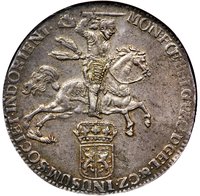
Obverse
Description:
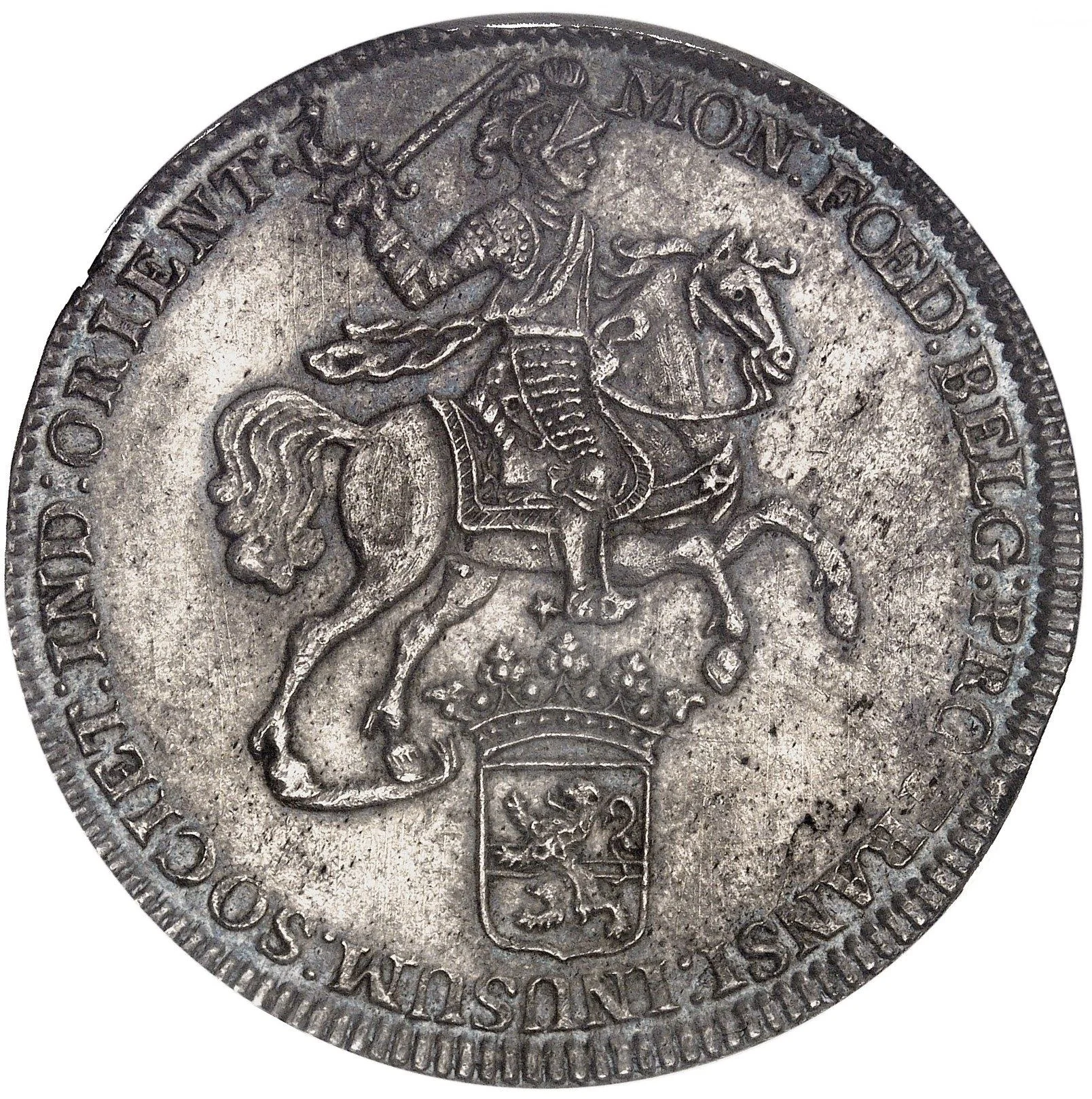
Knight on horseback right, crowned, with sword; States General arms below.
Inscription:
MON : FŒD : BELG : PRO : TRANSI : INUSUM : SOCIET : IND : ORIENT :
Script: Latin
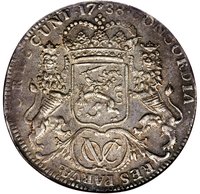
Reverse
Description:
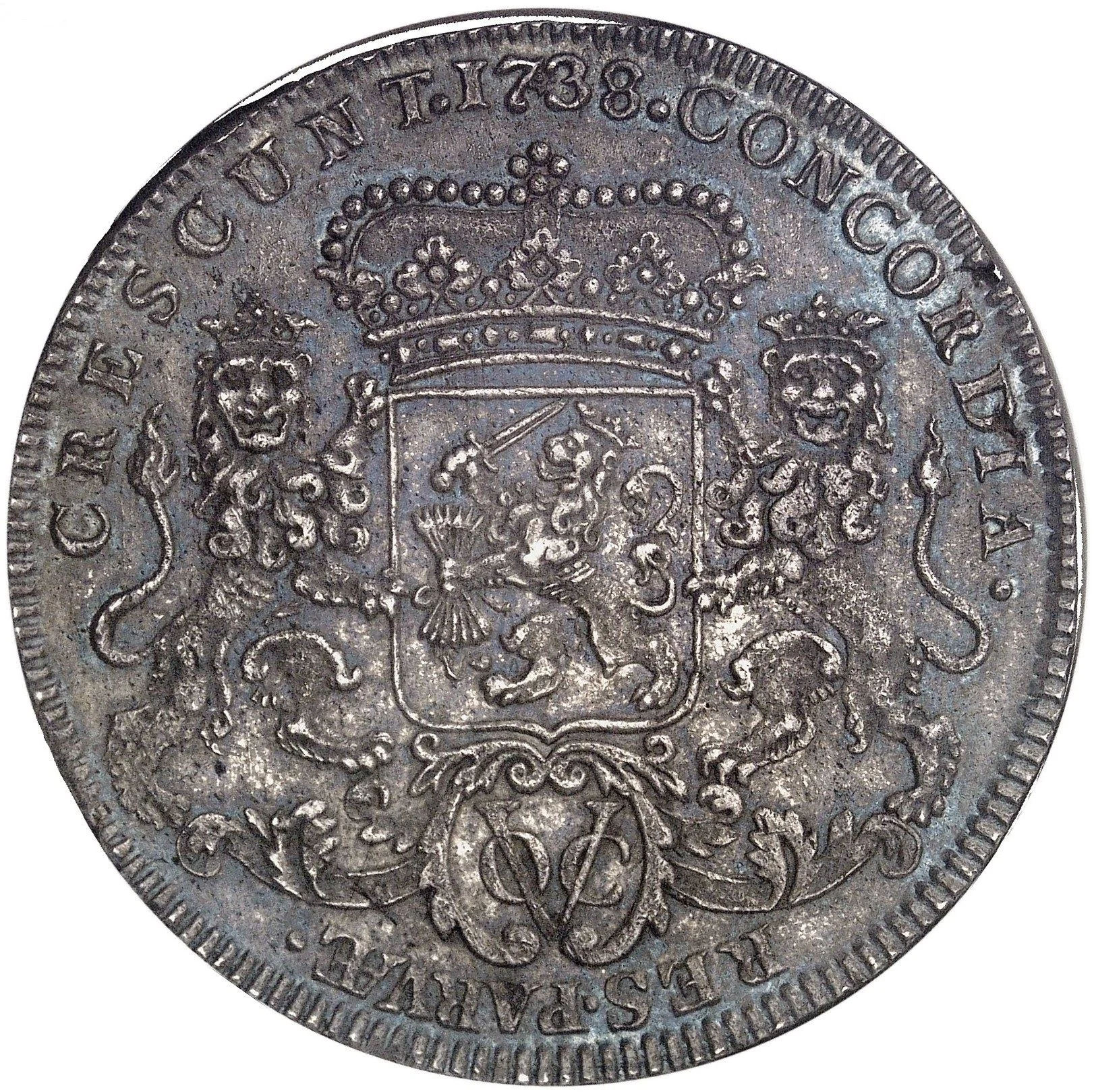
Crowned arms with lion supporters, VOC monogram below, date above.
Inscription:
CONCORDIA . RES • PARVÆ • CRESCUNT . 1738
VOC
VOC
Script: Latin
Edge
Categories
| Animal> Horse |
| Object> Cold weapons |
Mintings
| Year | Mint Mark | Mintage | Quality | Collection |
|---|---|---|---|---|
| 1737 | — | — | ||
| 1738 | — | — |
Historical background
In 1737, the currency situation in the Netherlands East Indies (NEI) was fundamentally chaotic, defined by a severe shortage of official coinage and a consequent reliance on a bewildering array of foreign and debased money. The official currency, intended to be the Dutch guilder and its subsidiary coins, was chronically absent from daily circulation. This vacuum was filled by a multitude of foreign silver coins, primarily Spanish-American pieces of eight (reales) and Mexican pesos, which served as the de facto large-denomination trade coins. For smaller, everyday transactions, a jumble of Japanese koban gold coins, Chinese copper cash (pitis), and various locally minted and heavily debased copper doits circulated, their values fluctuating wildly based on weight, metal content, and local acceptance.
This monetary disorder was a direct result of the Dutch East India Company (VOC) policy, which systematically drained the colony of sound European coinage to finance its lucrative Asian trade. Precious metals were exported to purchase spices, textiles, and porcelain, leaving the local economy starved of reliable currency. The VOC’s own response—minting vast quantities of low-quality copper doits in the 1720s and 1730s—only exacerbated the problem, leading to inflation and a deep public distrust in the Company's coinage. By 1737, the monetary system was essentially bimetallic in theory but fractured in practice, with no stable relationship between the gold, silver, and copper in circulation.
Consequently, trade and taxation were fraught with complexity. The VOC authorities were forced to publish frequent "valuation placards" (currency decrees) to assign official rates to the myriad coins, but these were often ignored in the marketplace where real value was determined by weight and assay. This unstable environment hampered local commerce, encouraged fraud, and created significant administrative challenges for the VOC, which struggled to collect taxes and pay its expenses in a predictable medium. The situation in 1737 thus represented a peak in a long-standing crisis, highlighting the contradiction between the VOC's immense regional trading power and its failure to provide a stable financial foundation for the colony it governed.
This monetary disorder was a direct result of the Dutch East India Company (VOC) policy, which systematically drained the colony of sound European coinage to finance its lucrative Asian trade. Precious metals were exported to purchase spices, textiles, and porcelain, leaving the local economy starved of reliable currency. The VOC’s own response—minting vast quantities of low-quality copper doits in the 1720s and 1730s—only exacerbated the problem, leading to inflation and a deep public distrust in the Company's coinage. By 1737, the monetary system was essentially bimetallic in theory but fractured in practice, with no stable relationship between the gold, silver, and copper in circulation.
Consequently, trade and taxation were fraught with complexity. The VOC authorities were forced to publish frequent "valuation placards" (currency decrees) to assign official rates to the myriad coins, but these were often ignored in the marketplace where real value was determined by weight and assay. This unstable environment hampered local commerce, encouraged fraud, and created significant administrative challenges for the VOC, which struggled to collect taxes and pay its expenses in a predictable medium. The situation in 1737 thus represented a peak in a long-standing crisis, highlighting the contradiction between the VOC's immense regional trading power and its failure to provide a stable financial foundation for the colony it governed.
✨ Legendary