

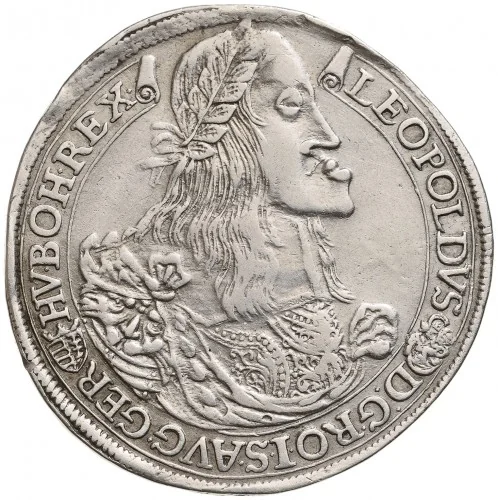
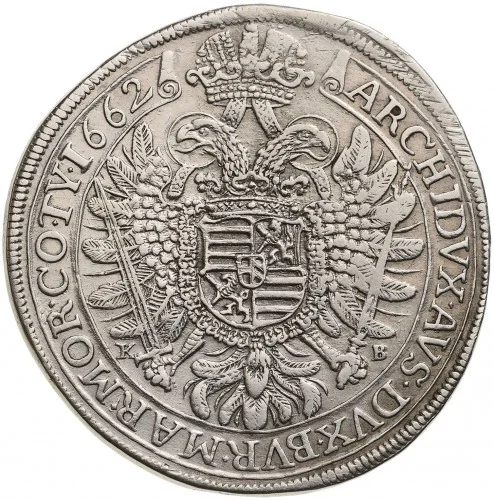

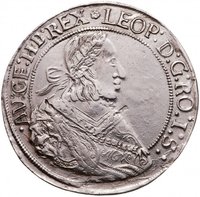
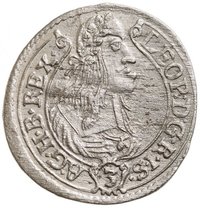
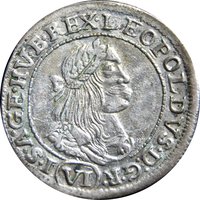
Obverse
Description:
Lion-faced bust with optional shoulder mount.
Inscription:
LEOPOLDVS D.G.ROIS.AVG.GER.HV.BOH.REX
Script: Latin
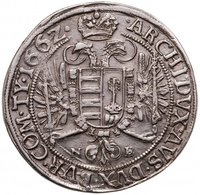
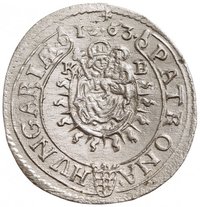
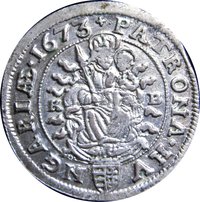
Reverse
Inscription:
ARCHIDVX.AVS.DUX.BVR.MAR.MOR.CO.TY.1662
K B
K B
Script: Latin
Edge
Mints
| Name | Mark |
|---|---|
| Kremnica | KB |
Historical background
In 1662, the Kingdom of Hungary, then part of the Habsburg Monarchy, was in a state of profound monetary crisis and economic exhaustion, a direct legacy of the preceding decades of near-constant warfare. The Long Turkish War (1593-1606) and the ongoing struggle against the Ottoman Empire, which occupied the central third of the country, had drained royal coffers and disrupted trade and agriculture. Furthermore, the region had been devastated by the Fifteen Years' War (Rákóczi's War of Independence) against the Habsburgs, which ended in 1621, and the brutal campaigns of the Thirty Years' War (1618-1648). This cycle of conflict led to massive war expenditures, depopulation, and the crippling of the traditional tax base, forcing the monarchy to seek alternative sources of revenue.
The primary response to this fiscal emergency was the relentless debasement of the silver coinage, particularly the denarius (denar). The Habsburg authorities, operating mints primarily in Körmöcbánya (now Kremnica, Slovakia) and Nagybánya (now Baia Mare, Romania), systematically reduced the silver content of coins while maintaining their face value. This practice, essentially a form of inflation, created a short-term influx of profit for the treasury (seigniorage) but had catastrophic long-term effects. By 1662, the coins in circulation contained such a minute amount of precious metal that they were virtually tokens, destroying public trust in the currency and leading to severe price inflation, as merchants demanded more coins for goods.
This monetary instability exacerbated social and political tensions within the kingdom. The debased currency harmed creditors, fixed-income earners, and soldiers paid in worthless coin, while benefiting debtors and the crown itself. The Hungarian estates, representing the nobility, repeatedly protested against these practices, viewing the arbitrary debasement conducted from Vienna as a violation of their rights and a major cause of economic hardship. Thus, the currency situation of 1662 was not merely an economic issue but a focal point of the ongoing struggle between the centralizing Habsburg court and the Hungarian nobility over fiscal control and sovereignty, set against the backdrop of a war-ravaged and partitioned land.
The primary response to this fiscal emergency was the relentless debasement of the silver coinage, particularly the denarius (denar). The Habsburg authorities, operating mints primarily in Körmöcbánya (now Kremnica, Slovakia) and Nagybánya (now Baia Mare, Romania), systematically reduced the silver content of coins while maintaining their face value. This practice, essentially a form of inflation, created a short-term influx of profit for the treasury (seigniorage) but had catastrophic long-term effects. By 1662, the coins in circulation contained such a minute amount of precious metal that they were virtually tokens, destroying public trust in the currency and leading to severe price inflation, as merchants demanded more coins for goods.
This monetary instability exacerbated social and political tensions within the kingdom. The debased currency harmed creditors, fixed-income earners, and soldiers paid in worthless coin, while benefiting debtors and the crown itself. The Hungarian estates, representing the nobility, repeatedly protested against these practices, viewing the arbitrary debasement conducted from Vienna as a violation of their rights and a major cause of economic hardship. Thus, the currency situation of 1662 was not merely an economic issue but a focal point of the ongoing struggle between the centralizing Habsburg court and the Hungarian nobility over fiscal control and sovereignty, set against the backdrop of a war-ravaged and partitioned land.
✨ Legendary