

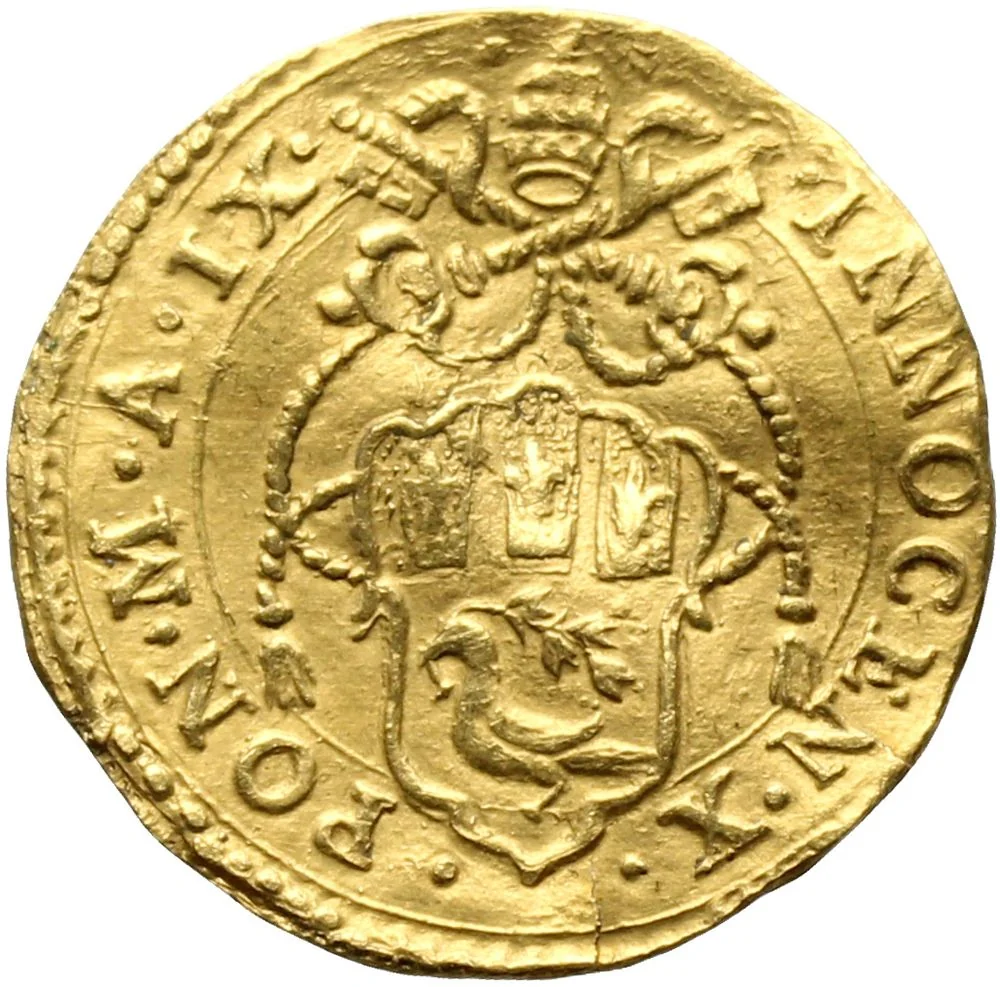
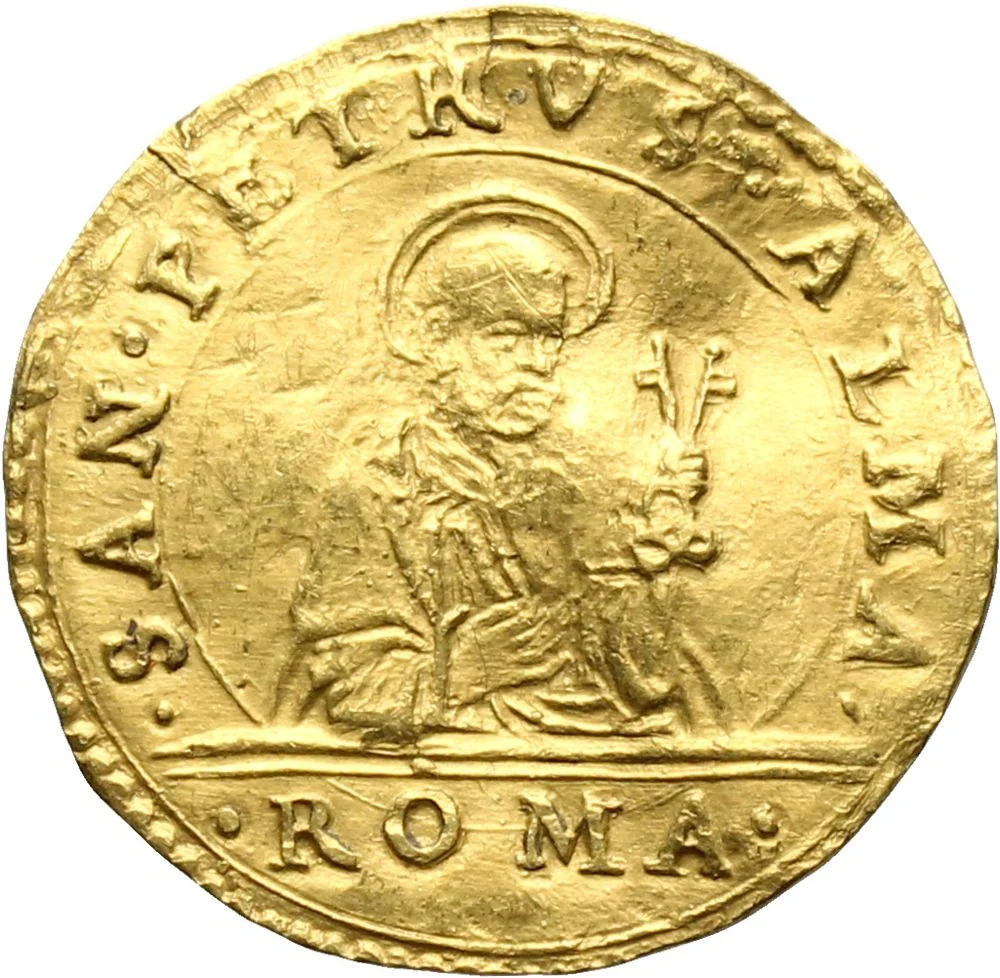
1 Scudo – Papal States
Vatican City
Context
Years: 1652–1653
Country: Vatican City 
Issuer: Papal States
Ruler: Innocent X
Currency:
(1534—1835)
Demonetized: Yes
Material
References
KM: #Click to copy to clipboard248
Numista: #367139
Value
Bullion value: $548.37
Obverse
Reverse
Edge
Mints
| Name | Mark |
|---|---|
| Rome | — |
Mintings
| Year | Mint Mark | Mintage | Quality | Collection |
|---|---|---|---|---|
| — | — | — |
Historical background
In 1652, the Papal States, under Pope Innocent X, were grappling with a severe and chronic monetary crisis that had been escalating for decades. The fundamental problem was the systematic debasement of the copper baiocco coinage, which formed the backbone of everyday transactions for the common people. The papal mint, seeking immediate revenue to cover state deficits, repeatedly issued vast quantities of these small-denomination coins with lower copper content, leading to rampant inflation. This created a destructive cycle: as the intrinsic value of the copper coins plummeted, prices for basic goods soared, causing widespread hardship and social unrest among the populace.
This inflationary spiral was exacerbated by a severe shortage of "good" high-value silver coinage, such as the giulio and scudo. Gresham's Law—where "bad money drives out good"—was in full effect; people hoarded or exported silver coins, leaving only the devalued copper in common circulation. Consequently, a damaging monetary duality emerged: large transactions and international trade required stable silver, which was scarce, while the local economy was flooded with unreliable copper. This environment stifled commerce, eroded trust in the currency, and created accounting chaos, as the fluctuating exchange rate between copper and silver became a daily uncertainty.
Pope Innocent X's administration was aware of the crisis and attempted reforms. In the early 1650s, efforts were made to recall the debased copper coinage and issue new, heavier baiocchi with a higher copper content to restore confidence. However, these measures were often temporary and insufficient. The root causes—fiscal pressure to fund lavish papal projects, urban maintenance, and military needs—remained unaddressed. Thus, in 1652, the situation was one of entrenched instability, where monetary policy was a tool for short-term fiscal survival rather than long-term economic health, leaving the Papal States' economy fragile and its population burdened by the volatile value of the coins in their pockets.
This inflationary spiral was exacerbated by a severe shortage of "good" high-value silver coinage, such as the giulio and scudo. Gresham's Law—where "bad money drives out good"—was in full effect; people hoarded or exported silver coins, leaving only the devalued copper in common circulation. Consequently, a damaging monetary duality emerged: large transactions and international trade required stable silver, which was scarce, while the local economy was flooded with unreliable copper. This environment stifled commerce, eroded trust in the currency, and created accounting chaos, as the fluctuating exchange rate between copper and silver became a daily uncertainty.
Pope Innocent X's administration was aware of the crisis and attempted reforms. In the early 1650s, efforts were made to recall the debased copper coinage and issue new, heavier baiocchi with a higher copper content to restore confidence. However, these measures were often temporary and insufficient. The root causes—fiscal pressure to fund lavish papal projects, urban maintenance, and military needs—remained unaddressed. Thus, in 1652, the situation was one of entrenched instability, where monetary policy was a tool for short-term fiscal survival rather than long-term economic health, leaving the Papal States' economy fragile and its population burdened by the volatile value of the coins in their pockets.
✨ Legendary