

1 Piastra – Papal States
Vatican City
Context
Years: 1645–1647
Country: Vatican City 
Issuer: Papal States
Ruler: Innocent X
Currency:
(1534—1835)
Demonetized: Yes
References
KM: #Click to copy to clipboard241
Numista: #275241
Value
Bullion value: $91.68
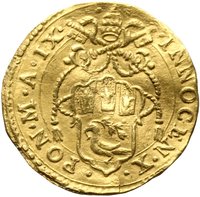
Obverse
Description:
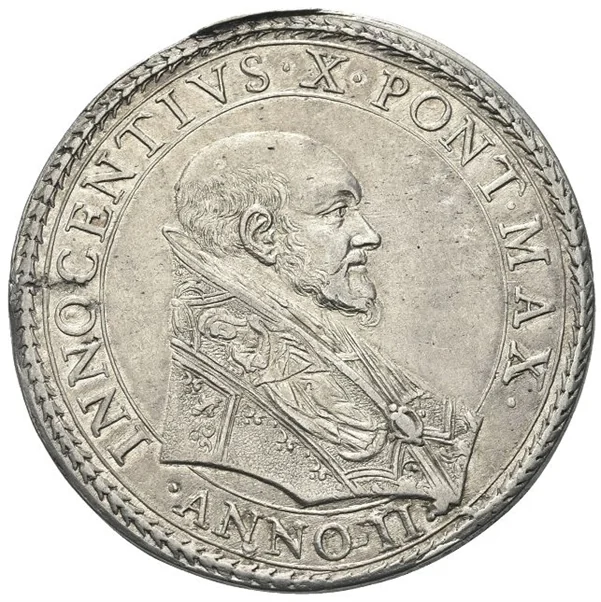
Portrait bust of Pope Innocent X
Inscription:
INNOCENTIVS X PONT MAX
ANNO II
ANNO II
Script: Latin
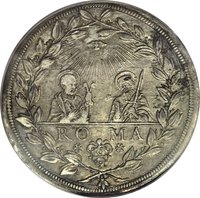
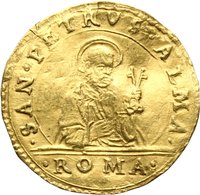
Reverse
Edge
Mintings
| Year | Mint Mark | Mintage | Quality | Collection |
|---|---|---|---|---|
| 1645 | — | — | ||
| 1646 | — | — | ||
| 1647 | — | — |
Historical background
In 1645, the Papal States, under Pope Innocent X, were grappling with a complex and deteriorating currency situation typical of many Italian states in the 17th century. The primary unit was the Papal scudo, a silver coin, but the monetary system was a chaotic bimetallic mix of gold scudi, silver giuli and baiocchi, and a plethora of debased copper quattrini and sesini. The core problem was chronic deficit spending, driven by the costs of maintaining Rome's grandeur, administrative bureaucracy, and the extensive building projects of the Barberini family under the previous pope, Urban VIII. To meet these expenses, the Papal treasury repeatedly resorted to debasement—reducing the precious metal content in coins—particularly in the low-denomination copper currency used by the common people.
This debasement triggered Gresham's Law ("bad money drives out good"), as people hoarded older, purer silver coins and passed on the new, inferior ones. The result was a severe shortage of sound silver currency in daily circulation, price inflation for basic goods, and a corrosive loss of public trust in the monetary system. Furthermore, the Papal States' economy was relatively weak, lacking a strong industrial or export base, which made it difficult to earn foreign specie (gold and silver) through trade. This internal crisis was compounded by external pressures, as the Papal States had to navigate a European economy still reeling from the price revolution and the influx of New World metals, which distorted values and trade balances across the continent.
Pope Innocent X's administration recognized the problem but struggled to implement effective reform. Efforts to recall and re-mint debased coinage were costly and often half-hearted, as the immediate fiscal temptation to generate seigniorage (profit from minting) was overwhelming. The situation created significant social tension, as wage earners and the poor bore the brunt of inflation, while creditors and those on fixed incomes suffered losses. Thus, in 1645, the Papal monetary system was in a fragile state of managed decline, a key vulnerability for a state whose temporal power was increasingly reliant on financial stability in an era of growing economic pressures.
This debasement triggered Gresham's Law ("bad money drives out good"), as people hoarded older, purer silver coins and passed on the new, inferior ones. The result was a severe shortage of sound silver currency in daily circulation, price inflation for basic goods, and a corrosive loss of public trust in the monetary system. Furthermore, the Papal States' economy was relatively weak, lacking a strong industrial or export base, which made it difficult to earn foreign specie (gold and silver) through trade. This internal crisis was compounded by external pressures, as the Papal States had to navigate a European economy still reeling from the price revolution and the influx of New World metals, which distorted values and trade balances across the continent.
Pope Innocent X's administration recognized the problem but struggled to implement effective reform. Efforts to recall and re-mint debased coinage were costly and often half-hearted, as the immediate fiscal temptation to generate seigniorage (profit from minting) was overwhelming. The situation created significant social tension, as wage earners and the poor bore the brunt of inflation, while creditors and those on fixed incomes suffered losses. Thus, in 1645, the Papal monetary system was in a fragile state of managed decline, a key vulnerability for a state whose temporal power was increasingly reliant on financial stability in an era of growing economic pressures.
✨ Legendary