

4 Gold Ecus – Comtat Venaissin
Vatican City
Context

References
KM: #Click to copy to clipboard15
Numista: #366796
Value
Bullion value: $1942.71
Obverse
Description:
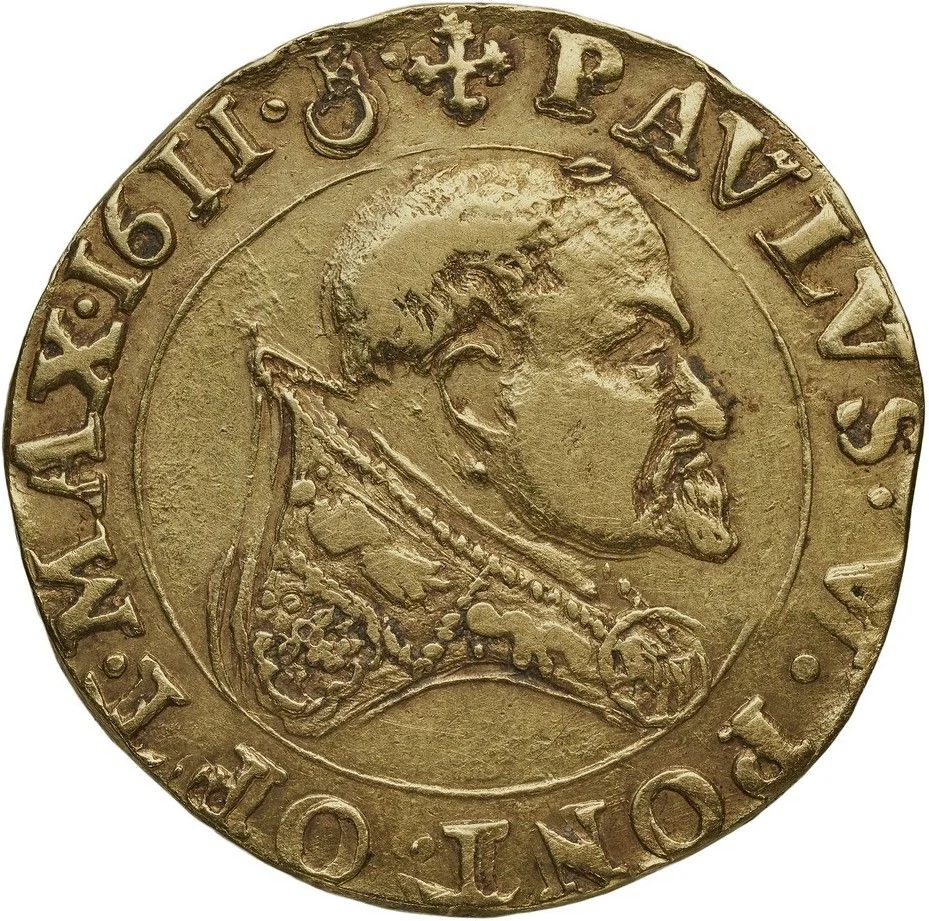
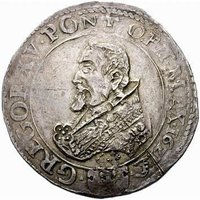
Paul V bust right, date in legend.
Inscription:
PAVLVS · V · PONT · OPT · MAX · 1611
Script: Latin
Reverse
Description:
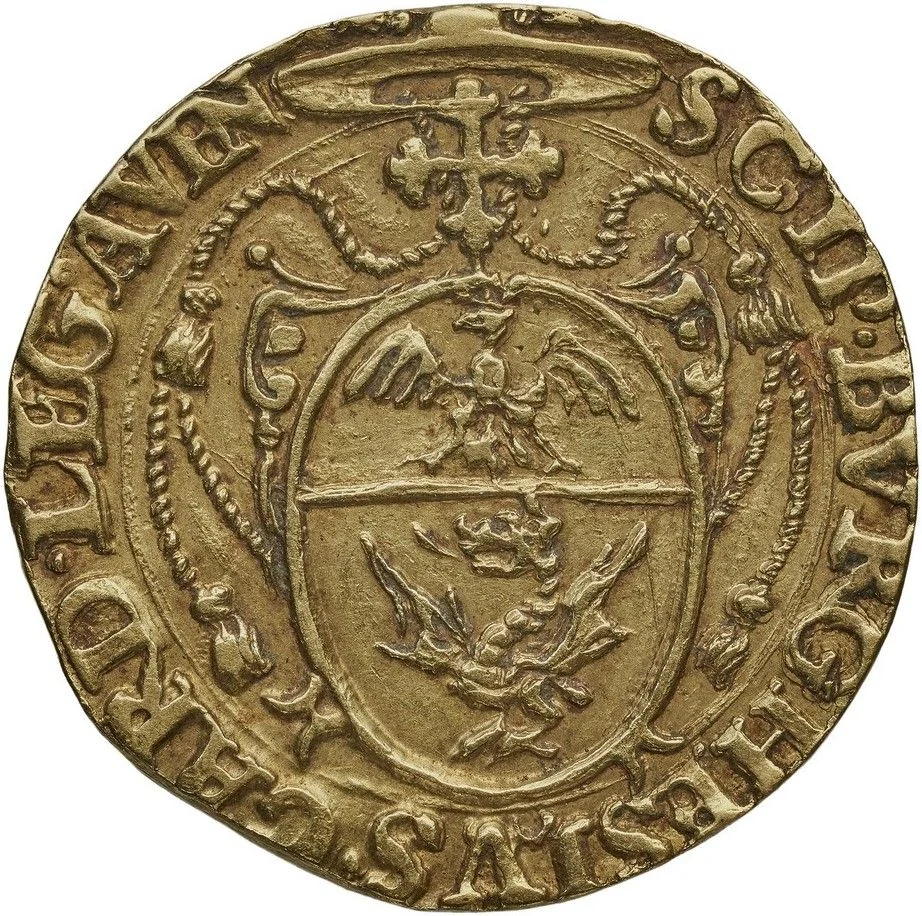
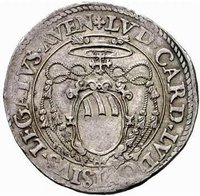
Arms of papal legate Scipio Borghese.
Inscription:
SCIP · BVRG · HESIVS · CARD · LEG · AVEN
Script: Latin
Edge
Mints
| Name | Mark |
|---|---|
| Avignon | — |
Mintings
| Year | Mint Mark | Mintage | Quality | Collection |
|---|---|---|---|---|
| 1611 | — | — |
Historical background
In 1611, the currency situation in the Comtat Venaissin, a Papal enclave within the Kingdom of France, was characterized by a complex and often chaotic monetary pluralism. As a distinct territory under the direct sovereignty of the Pope, the Comtat minted its own coinage at the mint in Avignon, producing liards, douzains, and écus. However, these local issues circulated alongside a flood of foreign coins, primarily French livres, sous, and écus, but also Spanish reales and Italian pieces, brought in by trade and the region's position on major commercial routes. This created a perpetual challenge of exchange rates and valuation.
The primary difficulty stemmed from the fluctuating intrinsic value of these coins, which were made from precious metals. Debasement—reducing the silver or gold content in coins—was a common fiscal practice by various issuing authorities, including the Papacy itself. This led to frequent monetary ordinances from the papal legate in Avignon, attempting to fix legal exchange rates for the myriad of coins in circulation. These decrees, however, were often ineffective in practice, as market forces and the inflow of underweight foreign coinage repeatedly undermined official valuations, leading to confusion, fraud, and economic tension.
Furthermore, this monetary instability had direct social consequences, particularly for the lower classes. Wages and everyday small-scale trade relied heavily on billon coins (like liards), which were prone to the most severe debasement. When the papal authorities periodically decreed a reduction in the face value of these debased coins to align with their real metal worth, it effectively reduced the purchasing power of ordinary people, sparking protests and unrest. Thus, in 1611, the currency situation was not merely an administrative nuisance but a source of economic insecurity and social friction within the enclave.
The primary difficulty stemmed from the fluctuating intrinsic value of these coins, which were made from precious metals. Debasement—reducing the silver or gold content in coins—was a common fiscal practice by various issuing authorities, including the Papacy itself. This led to frequent monetary ordinances from the papal legate in Avignon, attempting to fix legal exchange rates for the myriad of coins in circulation. These decrees, however, were often ineffective in practice, as market forces and the inflow of underweight foreign coinage repeatedly undermined official valuations, leading to confusion, fraud, and economic tension.
Furthermore, this monetary instability had direct social consequences, particularly for the lower classes. Wages and everyday small-scale trade relied heavily on billon coins (like liards), which were prone to the most severe debasement. When the papal authorities periodically decreed a reduction in the face value of these debased coins to align with their real metal worth, it effectively reduced the purchasing power of ordinary people, sparking protests and unrest. Thus, in 1611, the currency situation was not merely an administrative nuisance but a source of economic insecurity and social friction within the enclave.
✨ Legendary