

2 gold ecu – Comtat Venaissin
Add to wishlist
Vatican City
Context
References
KM: #
Numista: #366801
Value
Bullion value: $994.18
Obverse
Description:
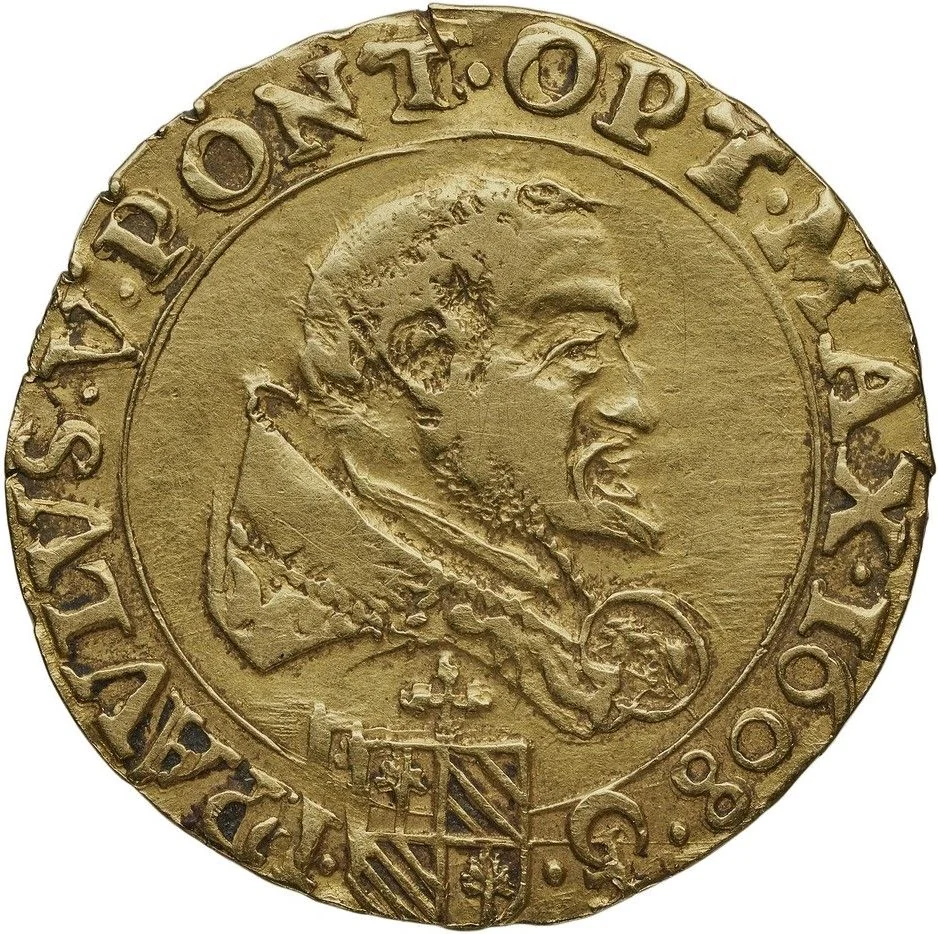
Paul V bust right, arms below, date in legend.
Inscription:
PAVLVS · V · PONT · OPT · MAX · 1608
Script: Latin
Reverse
Description:
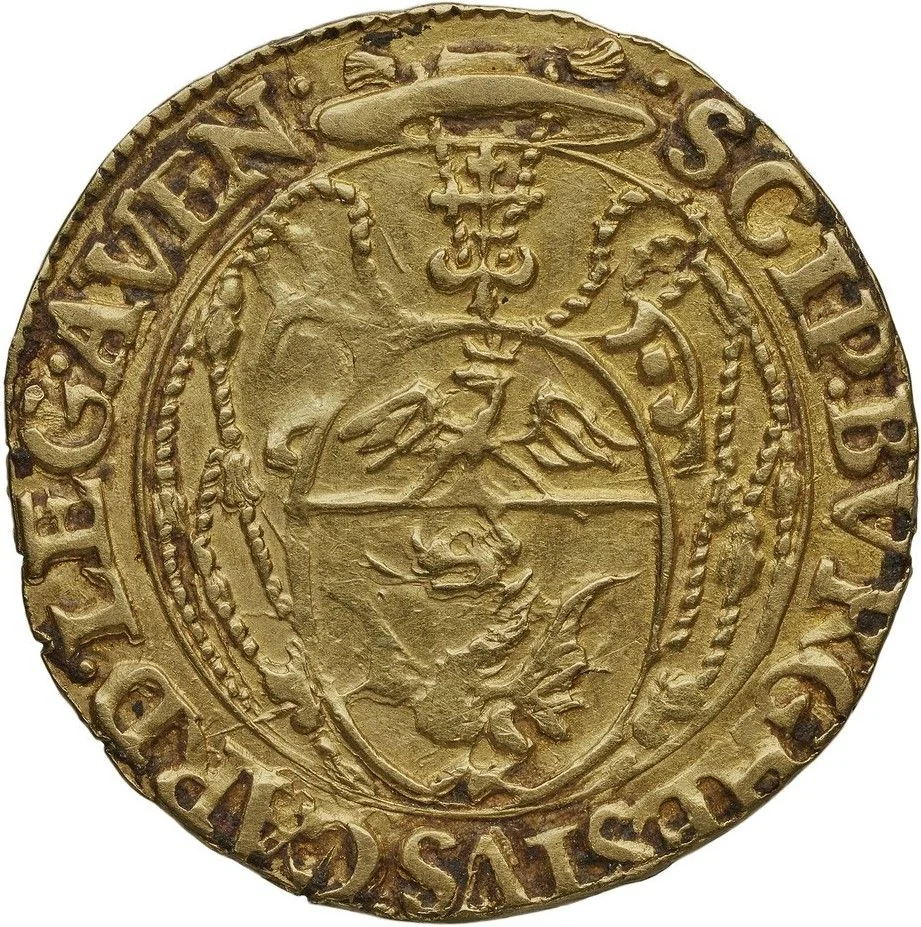
Arms of papal legate Scipio Borghese.
Inscription:
SCIP · BVRGHESIVS · CARD · LEG · AVEN
Script: Latin
Edge
Mints
| Name | Mark |
|---|---|
| Avignon | — |
Mintings
| Year | Mint Mark | Mintage | Quality | Collection |
|---|---|---|---|---|
| 1608 | — | — |
Historical background
In 1608, the currency situation in the Comtat Venaissin—a Papal territory enclaved within the Kingdom of France—was characterized by a complex and often chaotic monetary pluralism. As a direct possession of the Holy See since 1274, the Comtat did not mint its own coins but was a conduit for currencies from across Europe. The primary legal tender was the papal écu, but in practice, a multitude of coins circulated: French livres tournois, écus and testons, Spanish reales and pistoles, and various Italian coins from the Papal States and other regions. This proliferation was driven by the region's position on major trade routes and the constant movement of pilgrims, merchants, and diplomats.
This monetary diversity created significant challenges for daily commerce and administration. The value of these coins was not fixed by a central Comtadin authority but fluctuated based on their metallic content (gold or silver), their wear, and their relative acceptance in broader international markets. Local officials, particularly in the capital of Carpentras, were frequently forced to issue proclamations (cris) to set and adjust the exchange rates (cours) between these various coins and the accounting unit, the livre venaissine. These attempts at regulation were often reactive and struggled to keep pace with market realities, leading to confusion, disputes, and opportunities for profit through arbitrage.
The year 1608 falls within a period of relative stability under the administrative oversight of the Papal Legate, but the underlying tension was perennial. The Comtat's monetary system was inherently vulnerable to the monetary policies of its powerful neighbors, especially France. Any debasement or revaluation of French currency would immediately ripple across the border, destabilizing local exchanges. Thus, the currency situation was one of managed instability—a fragile equilibrium maintained through constant official intervention in a market flooded with foreign coins, reflecting the Comtat Venaissin’s unique political vulnerability and economic interdependence.
This monetary diversity created significant challenges for daily commerce and administration. The value of these coins was not fixed by a central Comtadin authority but fluctuated based on their metallic content (gold or silver), their wear, and their relative acceptance in broader international markets. Local officials, particularly in the capital of Carpentras, were frequently forced to issue proclamations (cris) to set and adjust the exchange rates (cours) between these various coins and the accounting unit, the livre venaissine. These attempts at regulation were often reactive and struggled to keep pace with market realities, leading to confusion, disputes, and opportunities for profit through arbitrage.
The year 1608 falls within a period of relative stability under the administrative oversight of the Papal Legate, but the underlying tension was perennial. The Comtat's monetary system was inherently vulnerable to the monetary policies of its powerful neighbors, especially France. Any debasement or revaluation of French currency would immediately ripple across the border, destabilizing local exchanges. Thus, the currency situation was one of managed instability—a fragile equilibrium maintained through constant official intervention in a market flooded with foreign coins, reflecting the Comtat Venaissin’s unique political vulnerability and economic interdependence.
✨ Legendary