

4 Gold Ecus – Comtat Venaissin
Vatican City
Context
Year: 1629
Country: Vatican City 
Issuer: Comtat Venaissin
Ruler: Urban VIII
Currency:
Demonetized: Yes
Material
References
KM: #Click to copy to clipboard46
Numista: #366050
Value
Bullion value: $2136.66
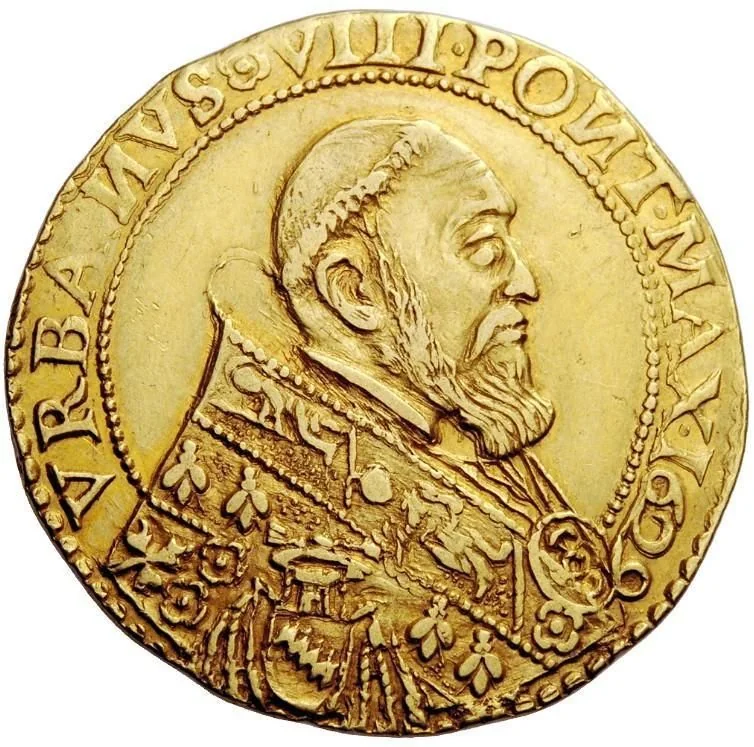
Obverse
Description:
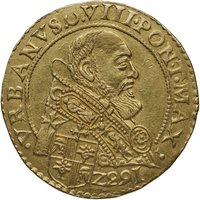
Urban VIII bust right, date around; small Bardi shield beneath.
Inscription:
VRBANVS · VIII · PONT · MAX · 1629
Script: Latin
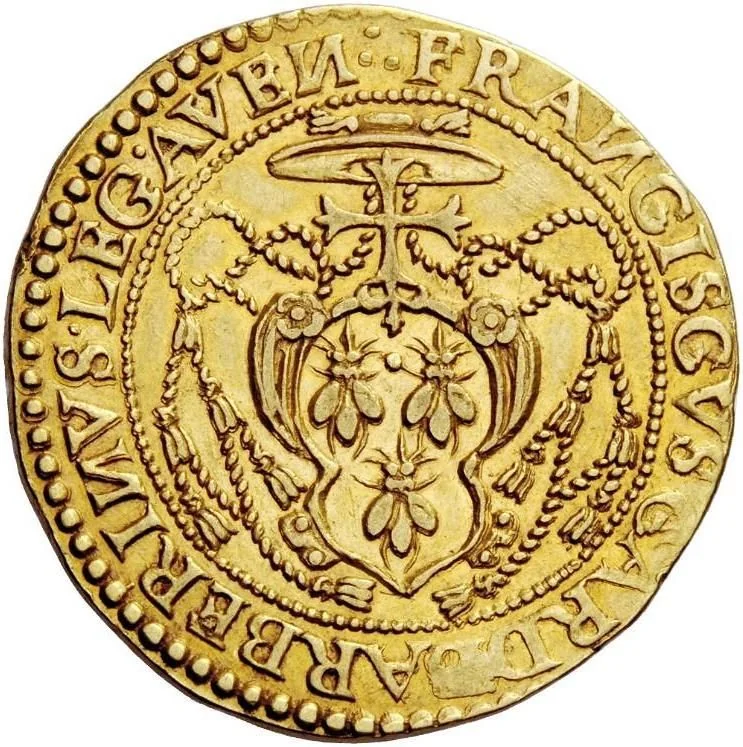
Reverse
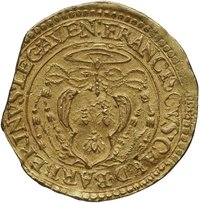
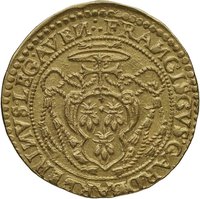
Description:
Arms of papal legate Francis Barberini.
Inscription:
FRANCISCVS · CARD · BARBERINVS · LEG · AVEN ·
Script: Latin
Edge
Mints
| Name | Mark |
|---|---|
| Avignon | — |
Mintings
| Year | Mint Mark | Mintage | Quality | Collection |
|---|---|---|---|---|
| 1629 | — | — |
Historical background
In 1629, the currency situation in the Comtat Venaissin, a Papal enclave within the Kingdom of France, was defined by monetary duality and external pressure. The region officially operated on a bimetallic system based on the Papal scudo (gold) and giulio (silver), but its economy was profoundly influenced by the massive influx of French coinage. This was primarily due to the Comtat's geographical and economic integration with neighboring French provinces like Provence and Dauphiné, where trade and daily transactions heavily relied on French livres, sols, and deniers. Consequently, a complex and often unstable exchange rate between the two monetary spheres persisted, managed by local authorities and money-changers.
This year fell within a period of significant monetary turmoil across Europe, driven by the influx of precious metals from the Americas and the debasement of coinage by various states. France itself was experiencing severe instability, culminating in the monetary edict of December 1629. While this edict aimed to stabilize French currency, its effects rippled into the Comtat, disrupting established exchange rates and trade flows. The enclave's monetary authorities, under the Papal Legate in Avignon, faced the constant challenge of maintaining the value of their own currency while accommodating the de facto circulation of French coins, which often led to inflation and merchant uncertainty.
Thus, the background of 1629 is one of a fragile balance. The Comtat Venaissin's currency system was not sovereign but was caught between the formal authority of the Papal mint and the practical dominance of French monetary currents. This created an environment where the value of money was in constant flux, complicating taxation, contracts, and commerce. The situation underscored the enclave's vulnerable political and economic position, striving to manage its internal affairs while being unavoidably shaped by the fiscal policies and crises of the much larger kingdom that surrounded it.
This year fell within a period of significant monetary turmoil across Europe, driven by the influx of precious metals from the Americas and the debasement of coinage by various states. France itself was experiencing severe instability, culminating in the monetary edict of December 1629. While this edict aimed to stabilize French currency, its effects rippled into the Comtat, disrupting established exchange rates and trade flows. The enclave's monetary authorities, under the Papal Legate in Avignon, faced the constant challenge of maintaining the value of their own currency while accommodating the de facto circulation of French coins, which often led to inflation and merchant uncertainty.
Thus, the background of 1629 is one of a fragile balance. The Comtat Venaissin's currency system was not sovereign but was caught between the formal authority of the Papal mint and the practical dominance of French monetary currents. This created an environment where the value of money was in constant flux, complicating taxation, contracts, and commerce. The situation underscored the enclave's vulnerable political and economic position, striving to manage its internal affairs while being unavoidably shaped by the fiscal policies and crises of the much larger kingdom that surrounded it.
✨ Legendary