

4 gold ecus – Comtat Venaissin
Add to wishlist
Vatican City
Context
Years: 1635–1636
Country: Vatican City
Issuer: Comtat Venaissin
Ruler: Urban VIII
Currency:
Demonetized: Yes
References
KM: #
Numista: #365931
Value
Bullion value: $1927.35
Obverse
Description:
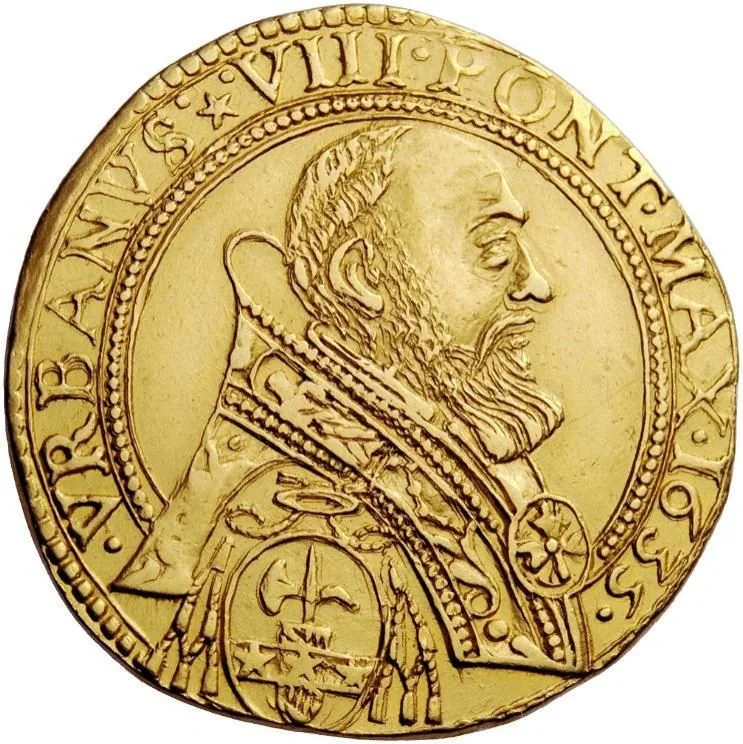
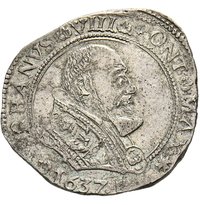
Urban VIII bust right, date around, Mazarin shield below.
Inscription:
VRBANVS · VIII · PONT · MAX · 1635
Script: Latin
Reverse
Description:
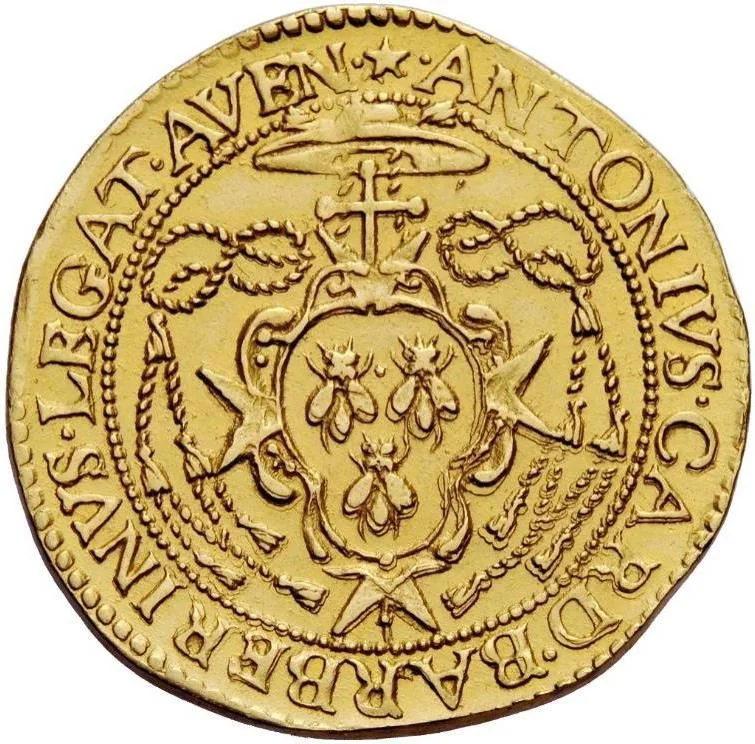
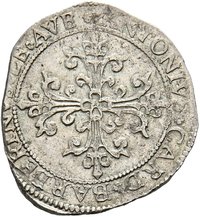
Cardinal's hat over ornate legate arms.
Inscription:
ANTONIVS · CARD · BARBERINVS · LEGAT · AVEN ·
Script: Latin
Edge
Mints
| Name | Mark |
|---|---|
| Avignon | — |
Mintings
| Year | Mint Mark | Mintage | Quality | Collection |
|---|---|---|---|---|
| 1635 | — | — | ||
| 1636 | — | — |
Historical background
In 1635, the currency situation in the Comtat Venaissin—a Papal territory enclaved within the Kingdom of France—was characterized by a complex and often chaotic monetary duality. Officially, the region operated under the Papal monetary system, with the Roman scudo and giulio as standard coins. However, due to its geographical and economic entanglement with France, a vast quantity of French coinage, particularly the livre tournois, écus, and deniers, circulated daily. This created a constant challenge of exchange rates and valuation, as the intrinsic metal value and official decree values of these coins rarely aligned, leading to frequent disputes in markets and legal contracts.
The primary authority, the Papal Legate in Avignon, issued regular tariffs (official exchange rate bulletins) in an attempt to stabilize this bimetallic environment. These edicts fixed the value of dozens of foreign coins, especially French and Spanish, against the Papal standard. However, these fixed rates often failed to reflect the rapid fluctuations in the European bullion market or the deliberate debasement of currencies by neighboring states. Consequently, the most advantageous coins (those with higher precious metal content than their official tariff value) were frequently hoarded or exported, while weaker coins flooded into the Comtat, a classic example of Gresham’s Law in action.
This monetary instability had direct social and economic consequences. For peasants and merchants, everyday transactions required careful calculation and often led to losses if forced to accept payment in a depreciated currency. The situation also strained relations with France, as the Papal administration often accused French authorities of currency manipulation to drain the Comtat of its good silver. Ultimately, the currency chaos of 1635 was a microcosm of the wider European "Price Revolution" and monetary crises of the 17th century, exacerbated by the Comtat's unique political status as a sovereign island within a powerful and often monetarily aggressive kingdom.
The primary authority, the Papal Legate in Avignon, issued regular tariffs (official exchange rate bulletins) in an attempt to stabilize this bimetallic environment. These edicts fixed the value of dozens of foreign coins, especially French and Spanish, against the Papal standard. However, these fixed rates often failed to reflect the rapid fluctuations in the European bullion market or the deliberate debasement of currencies by neighboring states. Consequently, the most advantageous coins (those with higher precious metal content than their official tariff value) were frequently hoarded or exported, while weaker coins flooded into the Comtat, a classic example of Gresham’s Law in action.
This monetary instability had direct social and economic consequences. For peasants and merchants, everyday transactions required careful calculation and often led to losses if forced to accept payment in a depreciated currency. The situation also strained relations with France, as the Papal administration often accused French authorities of currency manipulation to drain the Comtat of its good silver. Ultimately, the currency chaos of 1635 was a microcosm of the wider European "Price Revolution" and monetary crises of the 17th century, exacerbated by the Comtat's unique political status as a sovereign island within a powerful and often monetarily aggressive kingdom.
✨ Legendary