

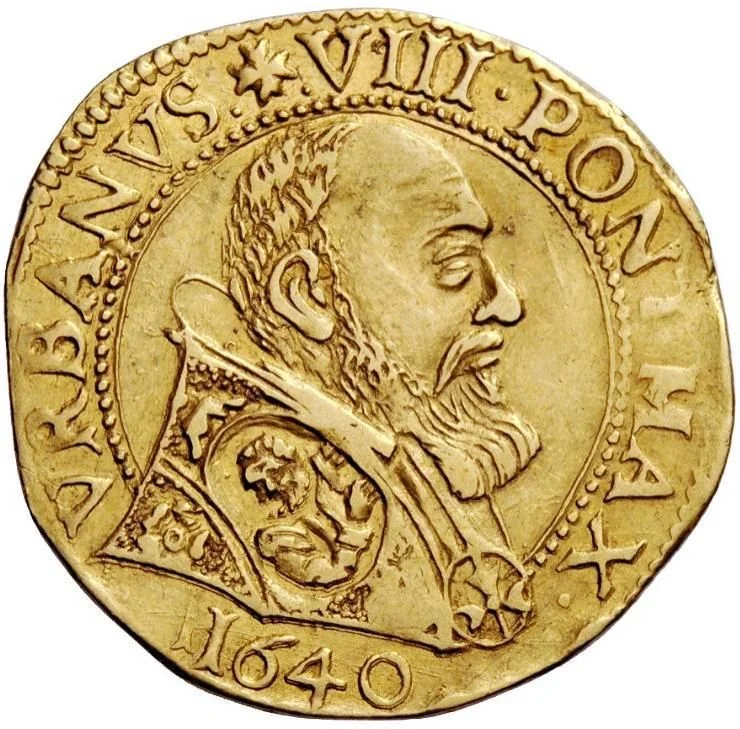
2 gold ecu – Comtat Venaissin
Add to wishlist
Vatican City
Context
Year: 1640
Country: Vatican City
Issuer: Comtat Venaissin
Ruler: Urban VIII
Currency:
Demonetized: Yes
References
KM: #
Numista: #365910
Value
Bullion value: $1015.43
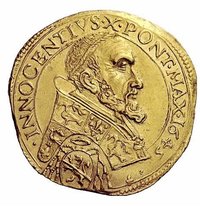
Obverse
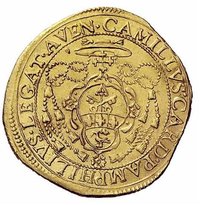
Reverse
Description:
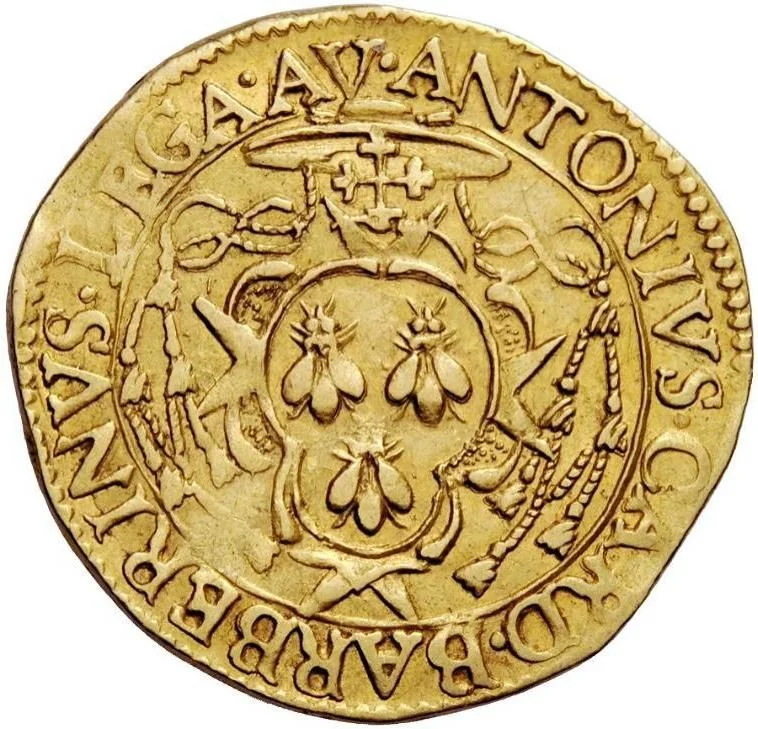
Arms with a cardinal's hat.
Inscription:
ANTONIVS · CARD · BARBERINVS · LEGA · AV ·
Script: Latin
Edge
Mints
| Name | Mark |
|---|---|
| Avignon | — |
Mintings
| Year | Mint Mark | Mintage | Quality | Collection |
|---|---|---|---|---|
| 1640 | — | — |
Historical background
In 1640, the currency situation in the Comtat Venaissin—a papal enclave surrounding the city of Avignon—was complex and strained, caught between its political allegiance to the Papacy and its deep economic integration with the Kingdom of France. The region operated under a monetary system dominated by French coinage, particularly the livre tournois, which was essential for daily commerce. However, the Comtat also minted its own distinct coins, such as the liard and sol comtadin, at the papal mint in Avignon. These local issues were often of lower silver content and value than their French counterparts, leading to frequent disputes over exchange rates and inherent instability.
This period was marked by severe monetary manipulation and inflation, exacerbated by the Thirty Years' War (1618-1648). French monarchs, notably Louis XIII, repeatedly debased the national currency to fund military campaigns, flooding neighboring regions like the Comtat with poor-quality coins. As "bad money" (debased coin) drove out "good money" (full-weight coin) via Gresham's Law, the Comtat faced hoarding of valuable currency, scarcity of sound money, and rising prices. The papal authorities struggled to respond, often adjusting the legal valuation of various circulating coins through official tariffs, but these measures were reactive and failed to stabilize the system.
Consequently, by 1640, merchants and the populace in the Comtat Venaissin navigated a chaotic monetary environment. They dealt with a confusing mix of local papal coins, debased French issues, and older, full-weight coins from various states, all with fluctuating and contested values. This instability eroded trust, hindered trade, and placed a practical burden on daily transactions, reflecting the enclave's vulnerable position at the mercy of larger European fiscal policies and the economic pressures of war.
This period was marked by severe monetary manipulation and inflation, exacerbated by the Thirty Years' War (1618-1648). French monarchs, notably Louis XIII, repeatedly debased the national currency to fund military campaigns, flooding neighboring regions like the Comtat with poor-quality coins. As "bad money" (debased coin) drove out "good money" (full-weight coin) via Gresham's Law, the Comtat faced hoarding of valuable currency, scarcity of sound money, and rising prices. The papal authorities struggled to respond, often adjusting the legal valuation of various circulating coins through official tariffs, but these measures were reactive and failed to stabilize the system.
Consequently, by 1640, merchants and the populace in the Comtat Venaissin navigated a chaotic monetary environment. They dealt with a confusing mix of local papal coins, debased French issues, and older, full-weight coins from various states, all with fluctuating and contested values. This instability eroded trust, hindered trade, and placed a practical burden on daily transactions, reflecting the enclave's vulnerable position at the mercy of larger European fiscal policies and the economic pressures of war.
✨ Legendary