

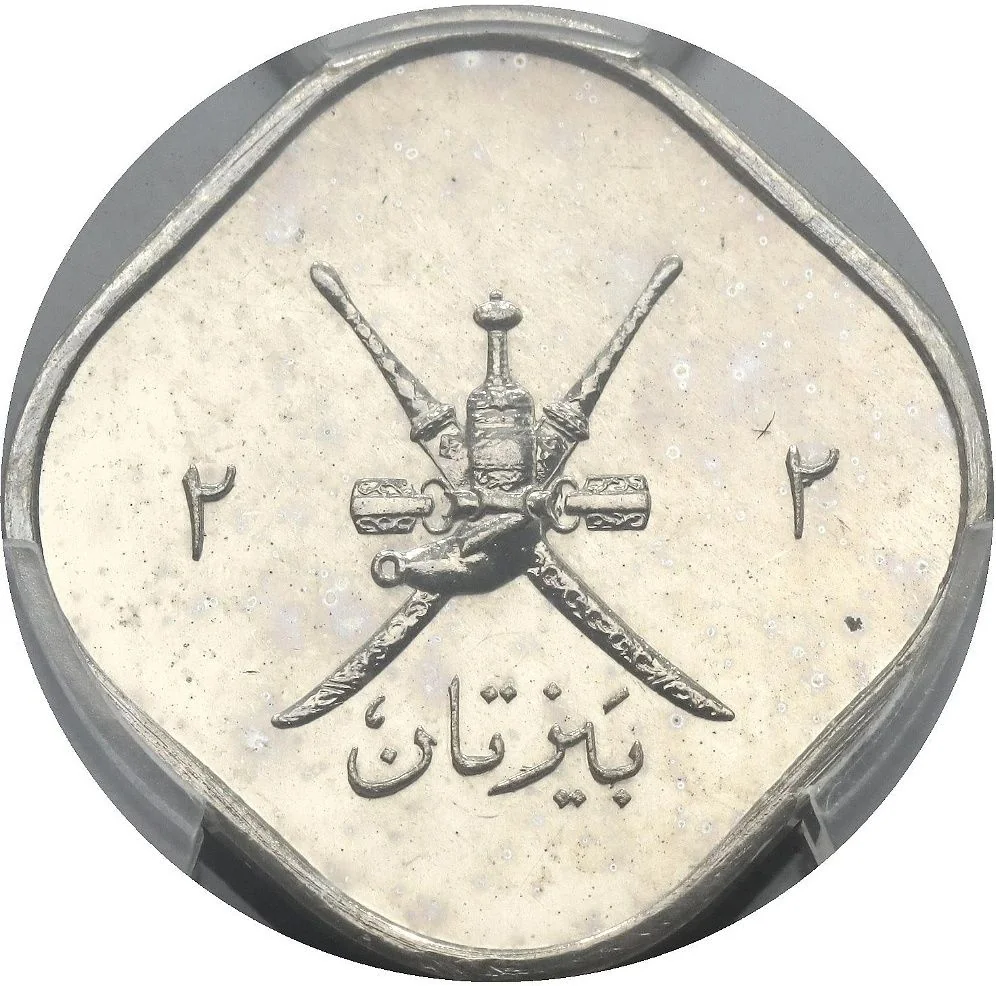
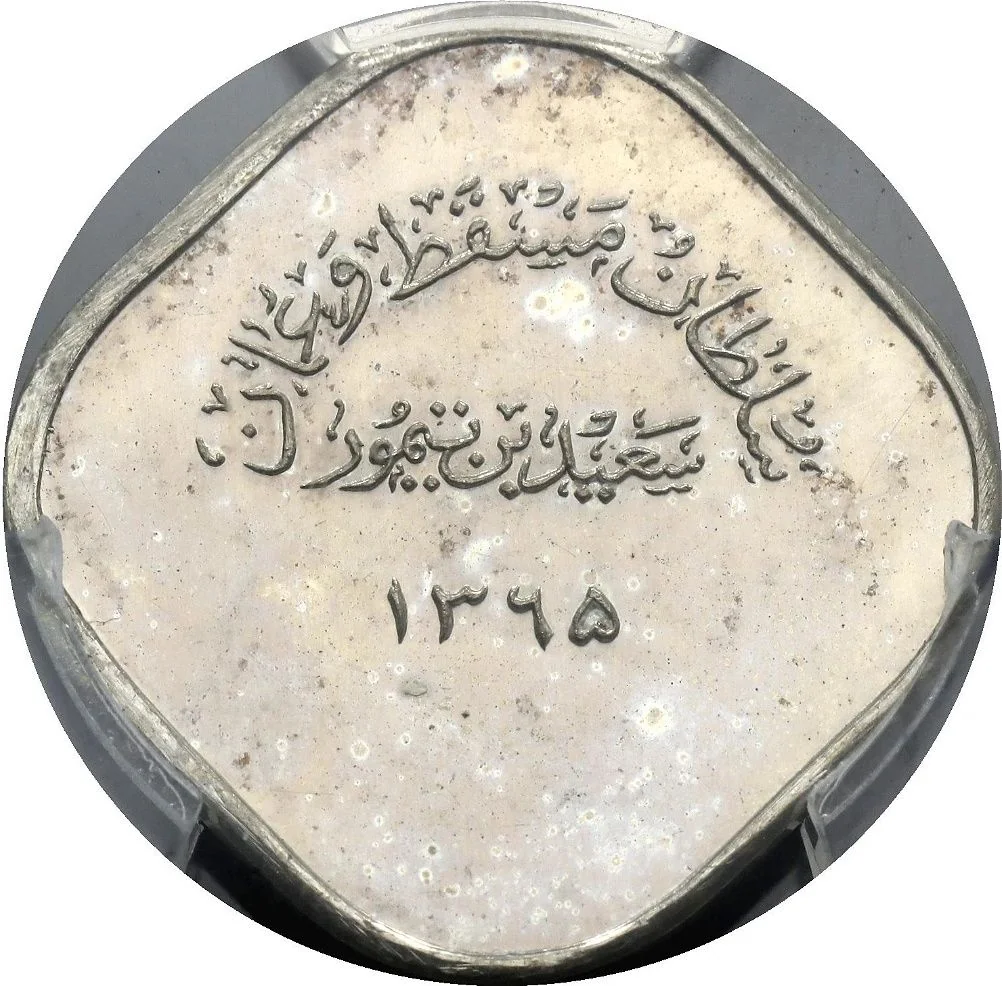
2 baisa – Muscat and Oman
Add to wishlist
Oman
Context
Year: 1946
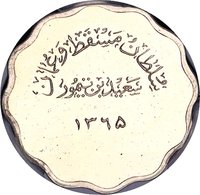
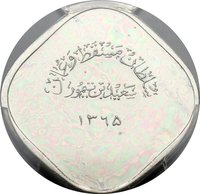
Islamic (Hijri) Year:: 1365
Country: Oman
Issuer: Muscat and Oman
Ruler: Said bin Taimur
Currency:
(1946—1970)
Demonetized: Yes
Total mintage: 1,500,000
Material
Weight: 2.9 g
Thickness: 1.25 mm
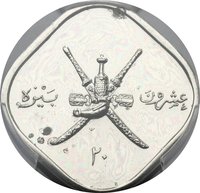
Shape: Square with rounded corners
Composition: Copper-nickel
Technique: Milled
Alignment: Medal alignment
flip
References
KM: #
Numista: #11740
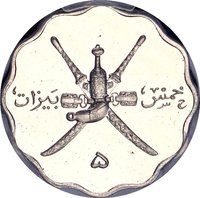
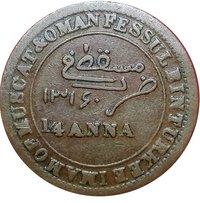
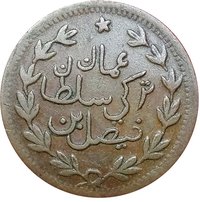
Obverse
Reverse
Edge
Plain
Categories
| Symbols> Coat of Arms |
| Object> Cold weapons |
Mints
| Name | Mark |
|---|---|
| Mumbai / Bombay | — |
Mintings
| Year | Mint Mark | Mintage | Quality | Collection |
|---|---|---|---|---|
| 1946 | — | — | Proof | |
| 1946 | — | 1,500,000 |
Historical background
In 1946, the currency situation in Muscat and Oman was a complex reflection of its historical trade ties and lack of formalized central banking. The primary currency in circulation was the Indian Rupee (INR), which had been formally adopted by treaty in the 19th century due to the Sultanate's deep economic and political connections with British India. The rupee existed in both coin and note form, with notes issued by the Government of India and the Reserve Bank of India being legal tender. This arrangement provided stability and facilitated the region's crucial maritime trade, particularly with the Indian subcontinent.
However, this system was not exclusive. Alongside the Indian rupee, the Maria Theresa Thaler (MTT), a silver trade coin minted in the 18th century, continued to circulate, especially in the interior and for specific high-value transactions. Its enduring popularity stemmed from its trusted silver content and wide acceptance across the Arabian Peninsula and East Africa. Furthermore, other silver coins, including British sovereigns and local, informally struck coins, were also used, creating a multi-currency environment where value was often determined by weight and metallic purity rather than just face value.
This period represented the twilight of this traditional monetary order. The impending independence of India in 1947 would soon trigger a currency crisis for the Gulf states tied to the rupee. While not yet felt in 1946, the groundwork for change was being laid. Within a few years, the collapse of the Gulf rupee system would force Muscat and Oman, along with its neighbors, to develop their own distinct currency, leading to the creation of the Gulf Rupee in 1959 and eventually the Omani Rial in 1970.
However, this system was not exclusive. Alongside the Indian rupee, the Maria Theresa Thaler (MTT), a silver trade coin minted in the 18th century, continued to circulate, especially in the interior and for specific high-value transactions. Its enduring popularity stemmed from its trusted silver content and wide acceptance across the Arabian Peninsula and East Africa. Furthermore, other silver coins, including British sovereigns and local, informally struck coins, were also used, creating a multi-currency environment where value was often determined by weight and metallic purity rather than just face value.
This period represented the twilight of this traditional monetary order. The impending independence of India in 1947 would soon trigger a currency crisis for the Gulf states tied to the rupee. While not yet felt in 1946, the groundwork for change was being laid. Within a few years, the collapse of the Gulf rupee system would force Muscat and Oman, along with its neighbors, to develop their own distinct currency, leading to the creation of the Gulf Rupee in 1959 and eventually the Omani Rial in 1970.
🌟 Uncommon