

4 Gold Ecus – Comtat Venaissin
Vatican City
Context
Year: 1647
Country: Vatican City 
Issuer: Comtat Venaissin
Ruler: Innocent X
Currency:
Demonetized: Yes
References
KM: #Click to copy to clipboard76
Numista: #365617
Value
Bullion value: $2157.24
Obverse
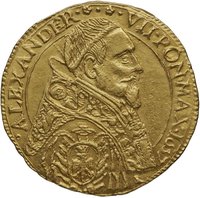
Description:
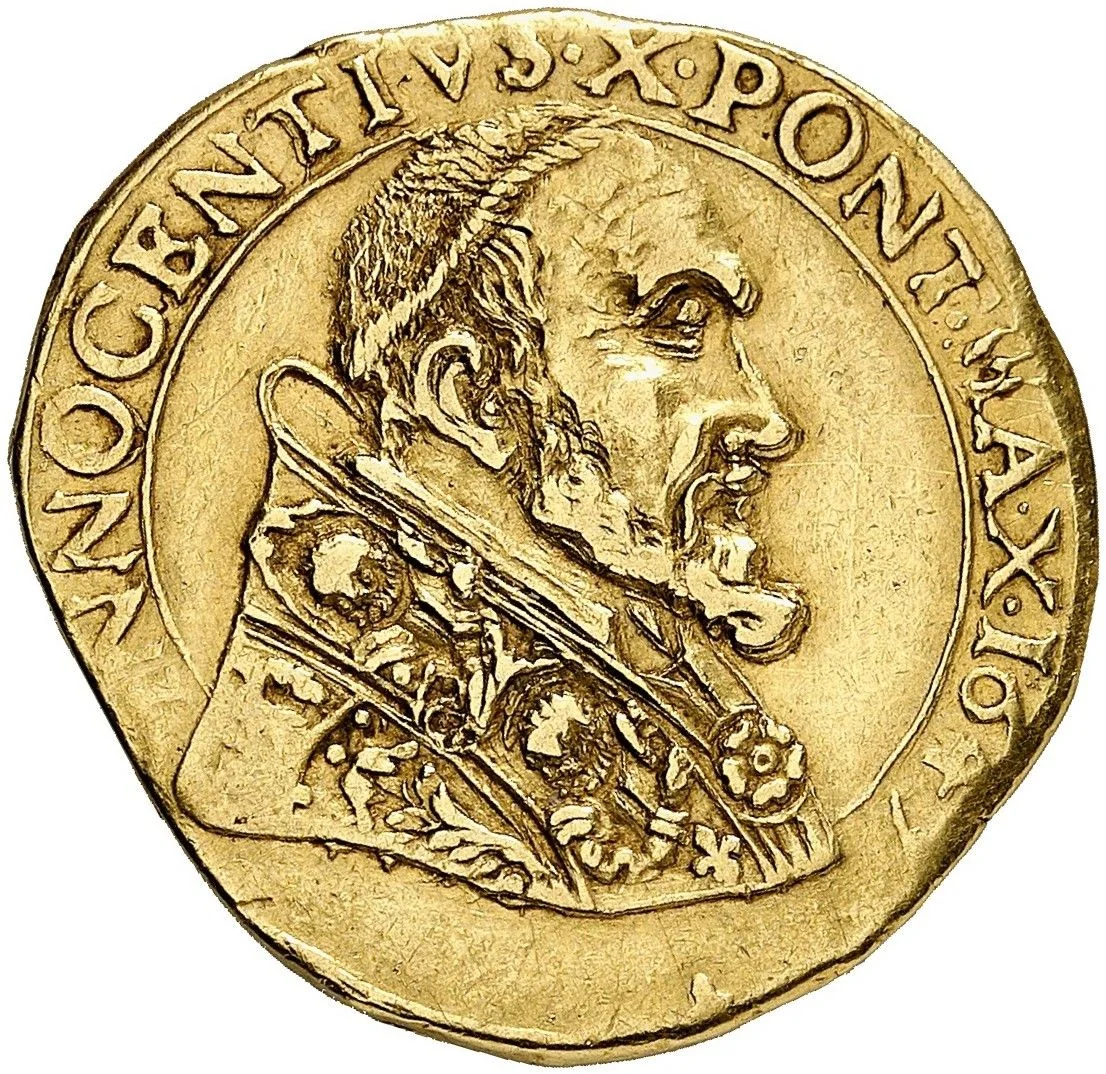
Innocent X bust in center, date in legend.
Inscription:
INNOCENTIVS • X • PONT • MAX • 1647
Script: Latin
Reverse
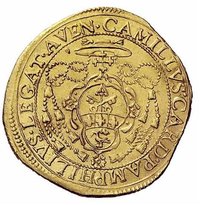
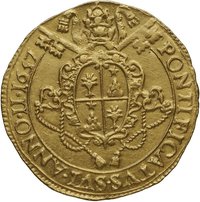
Description:
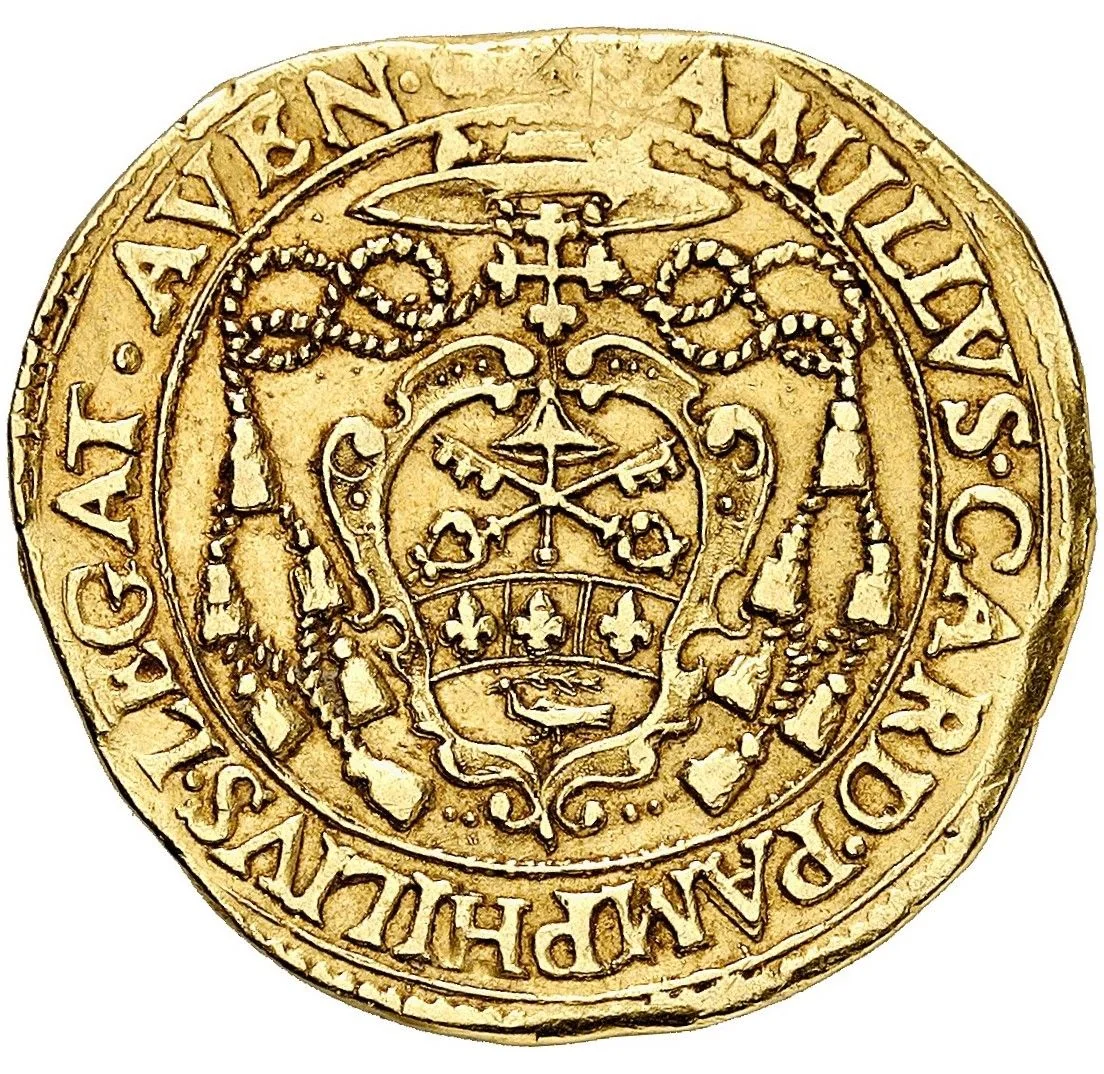
Arms of papal legate Camillo Pamphili.
Inscription:
CAMILLVS • CARD • PAMPHILIVS • LEGAT • AVEN •
Script: Latin
Edge
Categories
| Symbols> Coat of Arms |
Mints
| Name | Mark |
|---|---|
| Avignon | — |
Mintings
| Year | Mint Mark | Mintage | Quality | Collection |
|---|---|---|---|---|
| 1647 | — | — |
Historical background
In 1647, the currency situation in the Comtat Venaissin, a Papal enclave within the Kingdom of France, was defined by monetary duality and significant instability. The local economy operated on a bimetallic system, but one heavily dominated by foreign coinage, particularly French livres, sous, and deniers, alongside various Spanish, Italian, and other European coins that circulated through trade. Officially, the Papal administration in Avignon minted its own coins, such as the liard and the écu, yet these were often insufficient in quantity and authority to establish a stable, sovereign monetary standard. This proliferation of heterogeneous currencies created chronic confusion in commerce, as their metallic content and exchange rates fluctuated constantly.
The core of the problem lay in the enclave's political and economic vulnerability. As a small territory surrounded by France, the Comtat was inevitably swept into the monetary turmoil of the wider region, especially the deliberate currency manipulations practiced by the French crown under Louis XIV and his minister, Cardinal Mazarin. France frequently debased its own coinage to finance military campaigns during the Thirty Years' War and the ongoing Franco-Spanish War, a practice that directly devalued the very coins that formed the bulk of the Comtat's circulating medium. Local authorities struggled to issue timely tarifs (official exchange rate bulletins) to fix values, but these were often reactive and failed to keep pace with market realities and speculative trading.
Consequently, the year 1647 was marked by inflationary pressures, commercial disputes, and a crisis of confidence. Merchants and peasants alike faced uncertainty, as the real value of payments and savings could erode without warning. This monetary chaos exacerbated social tensions and hindered economic recovery in the aftermath of plague and harvest failures earlier in the decade. The situation underscored the Comtat Venaissin's lack of true monetary sovereignty, making its economy a passive casualty of the fiscal policies of its powerful neighbor and the volatile European bullion markets of the mid-17th century.
The core of the problem lay in the enclave's political and economic vulnerability. As a small territory surrounded by France, the Comtat was inevitably swept into the monetary turmoil of the wider region, especially the deliberate currency manipulations practiced by the French crown under Louis XIV and his minister, Cardinal Mazarin. France frequently debased its own coinage to finance military campaigns during the Thirty Years' War and the ongoing Franco-Spanish War, a practice that directly devalued the very coins that formed the bulk of the Comtat's circulating medium. Local authorities struggled to issue timely tarifs (official exchange rate bulletins) to fix values, but these were often reactive and failed to keep pace with market realities and speculative trading.
Consequently, the year 1647 was marked by inflationary pressures, commercial disputes, and a crisis of confidence. Merchants and peasants alike faced uncertainty, as the real value of payments and savings could erode without warning. This monetary chaos exacerbated social tensions and hindered economic recovery in the aftermath of plague and harvest failures earlier in the decade. The situation underscored the Comtat Venaissin's lack of true monetary sovereignty, making its economy a passive casualty of the fiscal policies of its powerful neighbor and the volatile European bullion markets of the mid-17th century.
✨ Legendary