

1 Thaler – Landgraviate of Hesse-Darmstadt
Context
Year: 1623
Issuer: Landgraviate of Hesse-Darmstadt
Ruler: Louis V
Currency:
(1568—1805)
Demonetized: Yes
References
KM: #Click to copy to clipboard22
Numista: #365271
Value
Bullion value: $79.68
Obverse
Description:
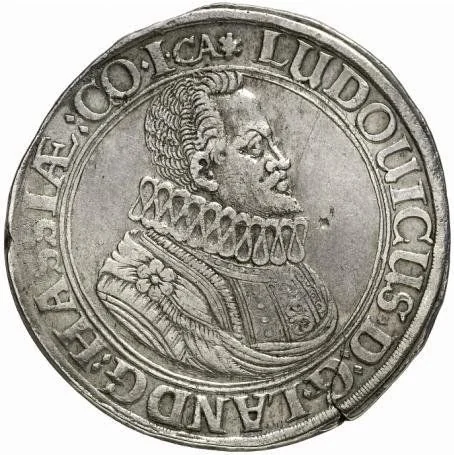
Ludwig V bust, right profile.
Inscription:
LVDOUICUS • D: G • LANDG: HASSIÆ: CO • I • CA *
Script: Latin
Reverse
Description:
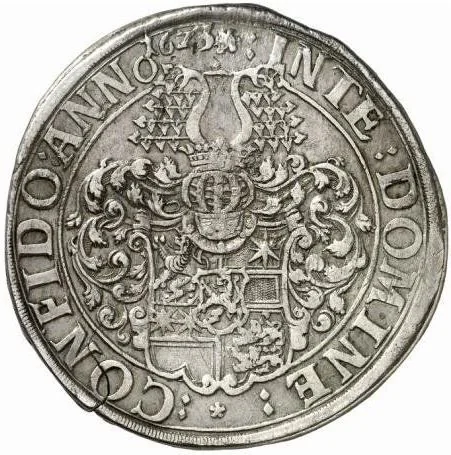
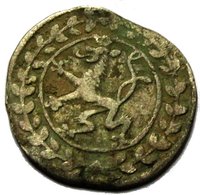
German shield with Hessian arms, helmet above, flanked by ornaments, date in legend.
Inscription:
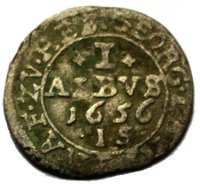
INTE: DOMINE: * : CONFIDO: ANNO 16Z3
Script: Latin
Edge
Mintings
| Year | Mint Mark | Mintage | Quality | Collection |
|---|---|---|---|---|
| 1623 | — | — |
Historical background
In 1623, the Landgraviate of Hesse-Darmstadt, like much of the Holy Roman Empire, was engulfed in the monetary chaos of the Kipper- und Wipperzeit (literally "Clipper and Tipper Time"). This was a period of severe currency debasement and inflation triggered by the outbreak of the Thirty Years' War in 1618. The immense financial strain of mobilizing armies led numerous states, prince-bishops, and even cities to debase their coinage by reducing the precious metal content while maintaining the same face value, generating short-term profit at the cost of economic stability.
Landgrave Ludwig V of Hesse-Darmstadt, known as "the Faithful," attempted to resist this trend initially, adhering to the old, reliable Reichstaler standard. However, the competitive devaluation by neighboring territories flooded the region with inferior coins, forcing Hesse-Darmstadt to engage in defensive debasement to prevent its "good" money from being withdrawn, hoarded, or melted down. The result was a confusing and unstable monetary environment where the value of coins fluctuated wildly based on their origin and metal content, crippling trade and imposing hardship on the population, who saw prices for essential goods skyrocket.
This crisis culminated in 1623 with the Imperial Münzedikt (Coinage Edict) of Regensburg, an attempt by Emperor Ferdinand II to restore order. The edict aimed to end the Kipper- und Wipperzeit by mandating a return to the pre-war Reichstaler standard. For Hesse-Darmstadt, this meant a painful and costly recoinage process, exchanging the debased currency for new, regulated coins. While stabilizing the currency in the long term, the immediate effect in 1623 was further economic disruption, as the landgraviate navigated the complex transition from a broken system while the war continued to drain its resources.
Landgrave Ludwig V of Hesse-Darmstadt, known as "the Faithful," attempted to resist this trend initially, adhering to the old, reliable Reichstaler standard. However, the competitive devaluation by neighboring territories flooded the region with inferior coins, forcing Hesse-Darmstadt to engage in defensive debasement to prevent its "good" money from being withdrawn, hoarded, or melted down. The result was a confusing and unstable monetary environment where the value of coins fluctuated wildly based on their origin and metal content, crippling trade and imposing hardship on the population, who saw prices for essential goods skyrocket.
This crisis culminated in 1623 with the Imperial Münzedikt (Coinage Edict) of Regensburg, an attempt by Emperor Ferdinand II to restore order. The edict aimed to end the Kipper- und Wipperzeit by mandating a return to the pre-war Reichstaler standard. For Hesse-Darmstadt, this meant a painful and costly recoinage process, exchanging the debased currency for new, regulated coins. While stabilizing the currency in the long term, the immediate effect in 1623 was further economic disruption, as the landgraviate navigated the complex transition from a broken system while the war continued to drain its resources.
✨ Legendary