

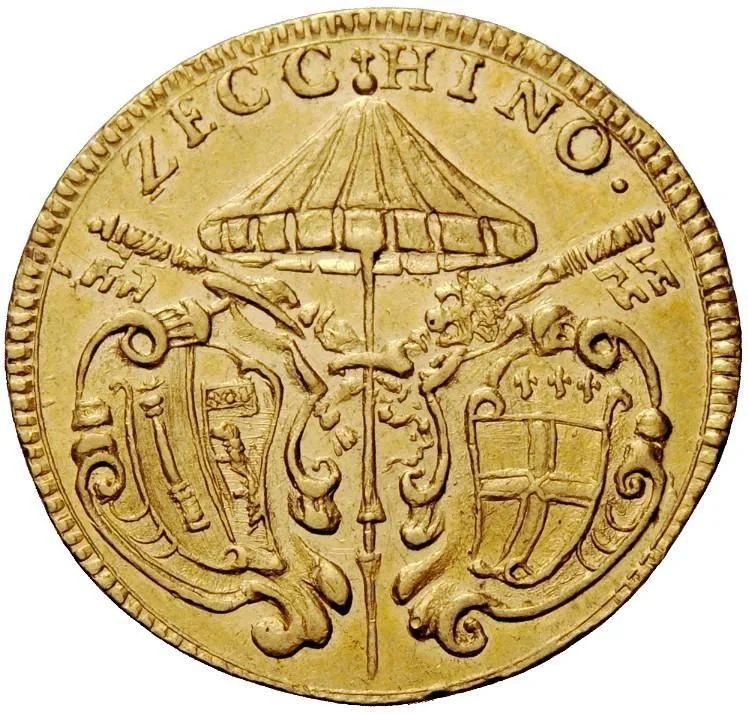
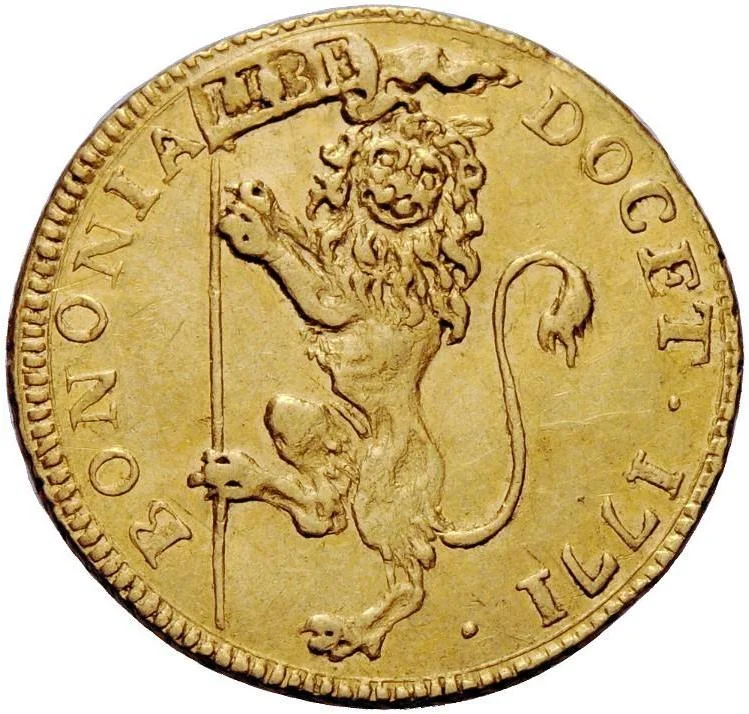
1 zecchino – Bologna
Add to wishlist
Italy
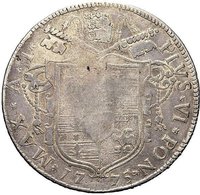
Obverse
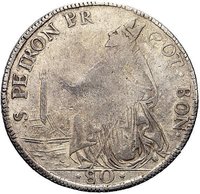
Reverse
Edge
Mints
| Name | Mark |
|---|---|
| Bologna | — |
Mintings
| Year | Mint Mark | Mintage | Quality | Collection |
|---|---|---|---|---|
| 1771 | — | — |
Historical background
In 1771, Bologna operated within the complex monetary landscape of the Papal States, to which it belonged. The city did not mint its own coinage but used a mixture of papal and foreign currencies, leading to a chronic situation of confusion and instability. The official papal scudo (divided into 100 baiochi or 500 quattrini) was the theoretical standard, but in daily commerce, a plethora of coins circulated, including Spanish reales, Venetian ducats, and French louis d’or, each with fluctuating values based on metal content and market trust.
This multiplicity created significant practical problems for merchants, artisans, and the populace. Exchange rates between coins were not fixed, varying between different money changers (banchi di cambio) and even city districts, facilitating fraud and discouraging trade. The Papal government’s attempts to impose official exchange rates (corso forzoso) often failed in practice, as the intrinsic value of silver or gold in a foreign coin might exceed its assigned papal value, causing those coins to be hoarded or exported, thus draining good currency from the local economy.
Consequently, Bologna in 1771 exemplified the pre-modern challenges of a fragmented monetary system. The lack of a uniform, trusted currency hindered economic transactions and was a frequent source of public grievance and administrative difficulty. This unstable environment persisted until the Napoleonic invasions decades later would impose a more centralized and simplified monetary order across the region.
This multiplicity created significant practical problems for merchants, artisans, and the populace. Exchange rates between coins were not fixed, varying between different money changers (banchi di cambio) and even city districts, facilitating fraud and discouraging trade. The Papal government’s attempts to impose official exchange rates (corso forzoso) often failed in practice, as the intrinsic value of silver or gold in a foreign coin might exceed its assigned papal value, causing those coins to be hoarded or exported, thus draining good currency from the local economy.
Consequently, Bologna in 1771 exemplified the pre-modern challenges of a fragmented monetary system. The lack of a uniform, trusted currency hindered economic transactions and was a frequent source of public grievance and administrative difficulty. This unstable environment persisted until the Napoleonic invasions decades later would impose a more centralized and simplified monetary order across the region.
✨ Legendary