

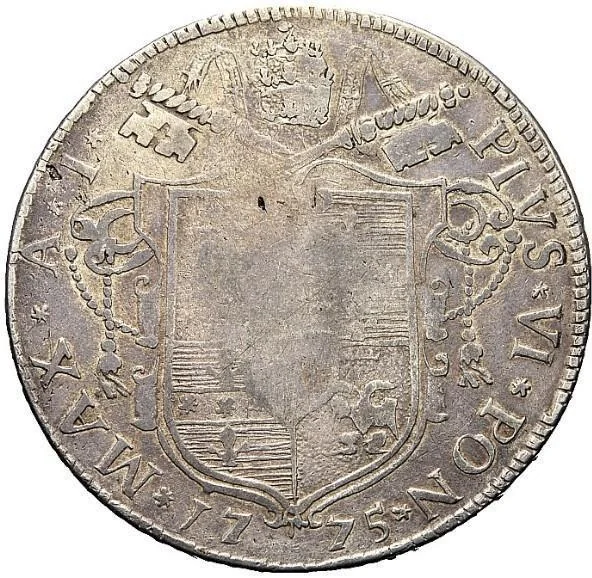
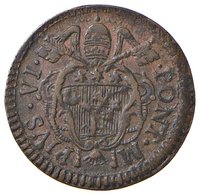
Obverse
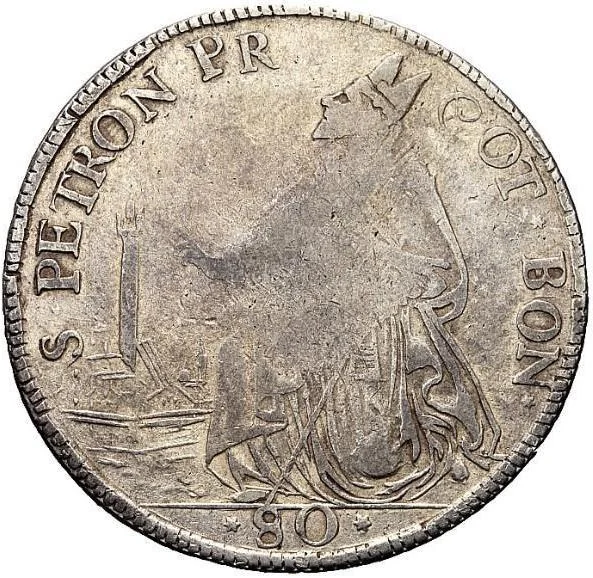
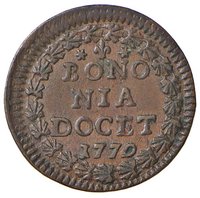
Reverse
Description:
St. Peter kneeling above denomination.
Inscription:
S PETRON PR OT BON·
·80·
·80·
Script: Latin
Edge
Categories
| Person> Religious figure |
| Symbol> Crown |
| Religion> Religious objects |
| Symbols> Coat of Arms |
Mintings
| Year | Mint Mark | Mintage | Quality | Collection |
|---|---|---|---|---|
| 1775 | — | — |
Historical background
In 1775, Bologna operated within the complex monetary landscape of the Papal States, to which it belonged. The city did not mint its own coins; instead, its currency system was dominated by the papal scudo, which was divided into 100 baiochi or 10 paoli. However, this official system existed alongside a persistent reality of multiple, concurrent currencies. Foreign coins, particularly the silver Tallero (Thaler) from Austrian Lombardy to the north and gold Zecchini from Venice, circulated widely for larger commercial transactions, their value fluctuating against the papal coinage based on intrinsic metal content and market demand.
This multiplicity created constant challenges for merchants and citizens alike. Exchange rates between gold, silver, and copper coinages (the latter used for small daily purchases) were not fixed, leading to confusion, frequent disputes, and opportunities for money-changers (banchieri) to profit. The Papal government in Rome periodically issued edicts to try to stabilize values and curb the circulation of foreign coin, but these were often ineffective on the ground in a major mercantile and academic crossroads like Bologna, where regional trade demanded flexible monetary instruments.
Furthermore, the period was marked by a chronic shortage of small-denomination coinage, causing hardship for the lower classes. This "divisionary crisis" meant that while large silver and gold coins were available for wholesale trade, the lack of baiochi and quattrini for everyday market purchases often forced vendors and buyers to resort to credit tokens or inefficient barter. Thus, Bologna's currency situation in 1775 was one of official papal authority, de facto monetary pluralism, and practical inefficiency, reflecting the city’s position at the intersection of regional economies and centralized papal rule.
This multiplicity created constant challenges for merchants and citizens alike. Exchange rates between gold, silver, and copper coinages (the latter used for small daily purchases) were not fixed, leading to confusion, frequent disputes, and opportunities for money-changers (banchieri) to profit. The Papal government in Rome periodically issued edicts to try to stabilize values and curb the circulation of foreign coin, but these were often ineffective on the ground in a major mercantile and academic crossroads like Bologna, where regional trade demanded flexible monetary instruments.
Furthermore, the period was marked by a chronic shortage of small-denomination coinage, causing hardship for the lower classes. This "divisionary crisis" meant that while large silver and gold coins were available for wholesale trade, the lack of baiochi and quattrini for everyday market purchases often forced vendors and buyers to resort to credit tokens or inefficient barter. Thus, Bologna's currency situation in 1775 was one of official papal authority, de facto monetary pluralism, and practical inefficiency, reflecting the city’s position at the intersection of regional economies and centralized papal rule.
✨ Legendary