

1 Quattrino – Ferrara
Italy
Context
Years: 1644–1655
Country: Italy 
Issuer: Ferrara
Ruler: Innocent X
Currency:
(1534—1835)
Demonetized: Yes
Material
Diameter: 22 mm
Weight: 2.4 g
Shape: Irregular round
Composition: Copper
Magnetic: No
Technique: Hammered
References
KM: #Click to copy to clipboard65
Numista: #364025
Obverse
Description:
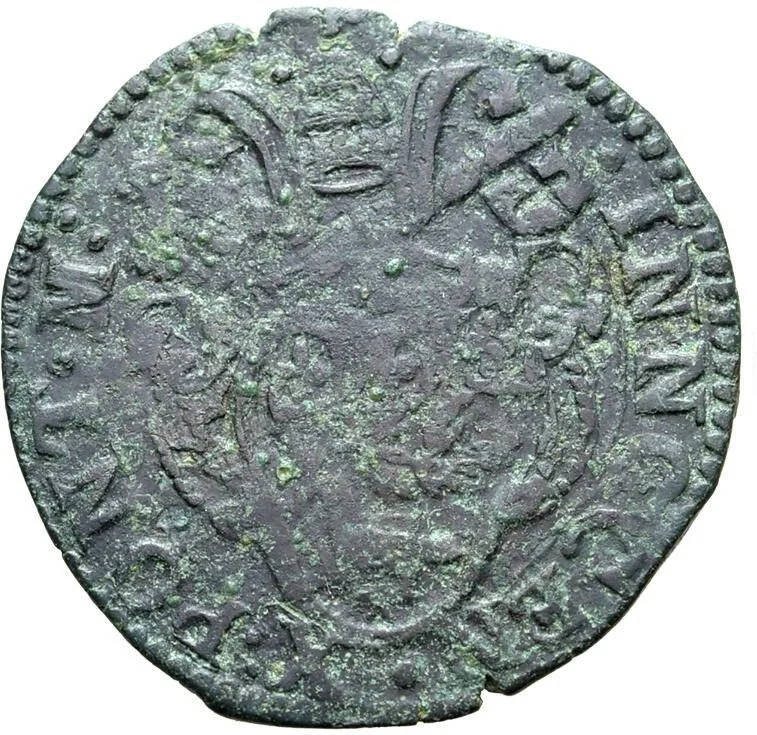
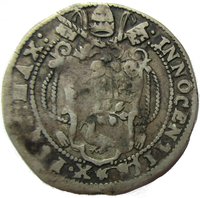
Pamphili arms: a trilobe beneath crossed keys and Papal tiara.
Inscription:
• INNOCEN • X • PONT • M :
Script: Latin
Reverse
Description:
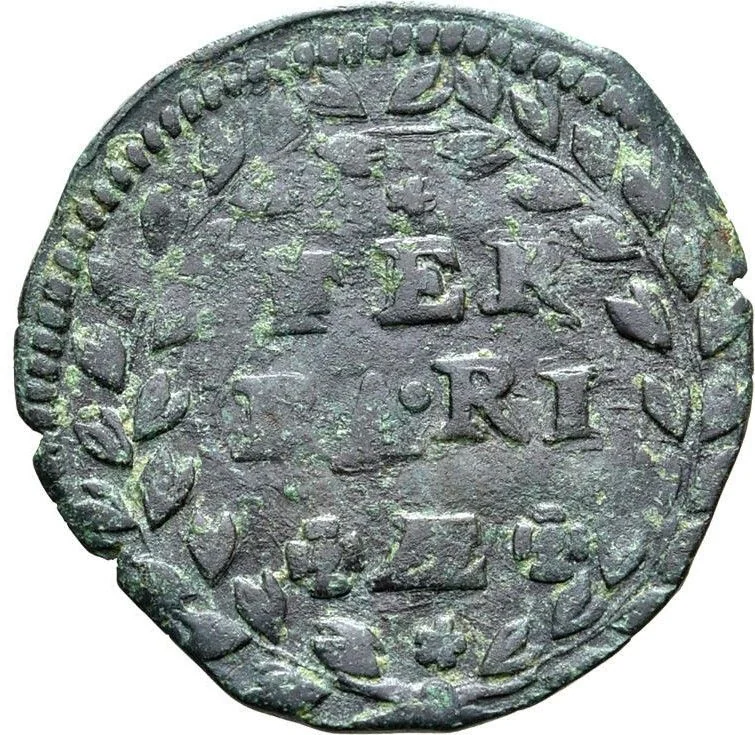
Wreath encircling three-line place name.
Inscription:
✿
FER
RA · RI
✠ Æ ✠
✿
FER
RA · RI
✠ Æ ✠
✿
Script: Latin
Edge
Mints
| Name | Mark |
|---|---|
| Ferrara | — |
Mintings
| Year | Mint Mark | Mintage | Quality | Collection |
|---|---|---|---|---|
| — | — | — |
Historical background
In 1644, Ferrara existed in a complex monetary landscape shaped by its political status. Since 1598, the city and its territory had been directly incorporated into the Papal States following the extinction of the Este dynasty. Consequently, Ferrara no longer minted its own coinage but operated within the broader Roman monetary system. The primary official currency was the Papal scudo, a large silver coin, alongside its subdivisions like giuli and baiochi. However, the practical economy also relied heavily on a multitude of foreign coins, particularly Venetian ducats and lire, due to the Duchy's historic economic ties with the Veneto and ongoing trade along the Po River.
This created a persistent situation of bimetallic tension and exchange rate volatility. The value of silver coins relative to gold, and the fluctuating silver content of various regional issues, led to frequent edicts from the papal legate attempting to fix exchange rates. These official valuations often conflicted with market rates, leading to Gresham's Law in action: "good" full-weight coins were hoarded or exported, while "bad" debased coins circulated locally. For ordinary transactions, people used a confusing array of small silver and billon coins from neighbouring states like Milan and Mantua, making everyday commerce a calculation of intrinsic metal value.
The year 1644 itself fell within the broader European crisis of the mid-17th century, marked by the Thirty Years' War and economic downturn. While not on the front lines, Ferrara felt indirect pressures, including potential disruptions to trade and heightened demands for papal taxation, often required in specific coinage. Thus, the currency situation was one of fragmented circulation, administrative struggle for control, and underlying economic strain, reflecting Ferrara's transition from an independent Renaissance capital to a provincial centre within a larger, financially stressed papal domain.
This created a persistent situation of bimetallic tension and exchange rate volatility. The value of silver coins relative to gold, and the fluctuating silver content of various regional issues, led to frequent edicts from the papal legate attempting to fix exchange rates. These official valuations often conflicted with market rates, leading to Gresham's Law in action: "good" full-weight coins were hoarded or exported, while "bad" debased coins circulated locally. For ordinary transactions, people used a confusing array of small silver and billon coins from neighbouring states like Milan and Mantua, making everyday commerce a calculation of intrinsic metal value.
The year 1644 itself fell within the broader European crisis of the mid-17th century, marked by the Thirty Years' War and economic downturn. While not on the front lines, Ferrara felt indirect pressures, including potential disruptions to trade and heightened demands for papal taxation, often required in specific coinage. Thus, the currency situation was one of fragmented circulation, administrative struggle for control, and underlying economic strain, reflecting Ferrara's transition from an independent Renaissance capital to a provincial centre within a larger, financially stressed papal domain.
✨ Legendary